Denver Furnace Repair: What to Do When Heat Stops
Few things ruin a winter morning faster than waking up to a cold house. When your heater stops working, you need reliable furnace repair service Denver CO right away. Local weather brings unique challenges that test your heating system harder than mild climates do. Knowing what causes these failures and how to handle them keeps your home safe and comfortable.
Signs Your Denver Home Needs Furnace Repair
Furnaces rarely fail without warning. Paying attention to early signs helps you catch problems before the system quits completely.
You might notice strange rattling noises, weak airflow, or a burner flame that flickers yellow instead of burning a steady blue. Unexplained spikes in your energy bills also point to a struggling system. When these symptoms appear, schedule a diagnostic check before a minor part failure leaves you completely without heat.
Need an HVAC repair pro in Denver, CO?
Talk to an independent local contractor who serves your area.
📞 Call (833) 669-0233HVAC repair in Denver, COCall hours: 8am–8pm ET, 7 daysYour call may first be answered by a short screening service that asks what the problem is and where you are. Stay on the line and you will be connected to an independent local pro.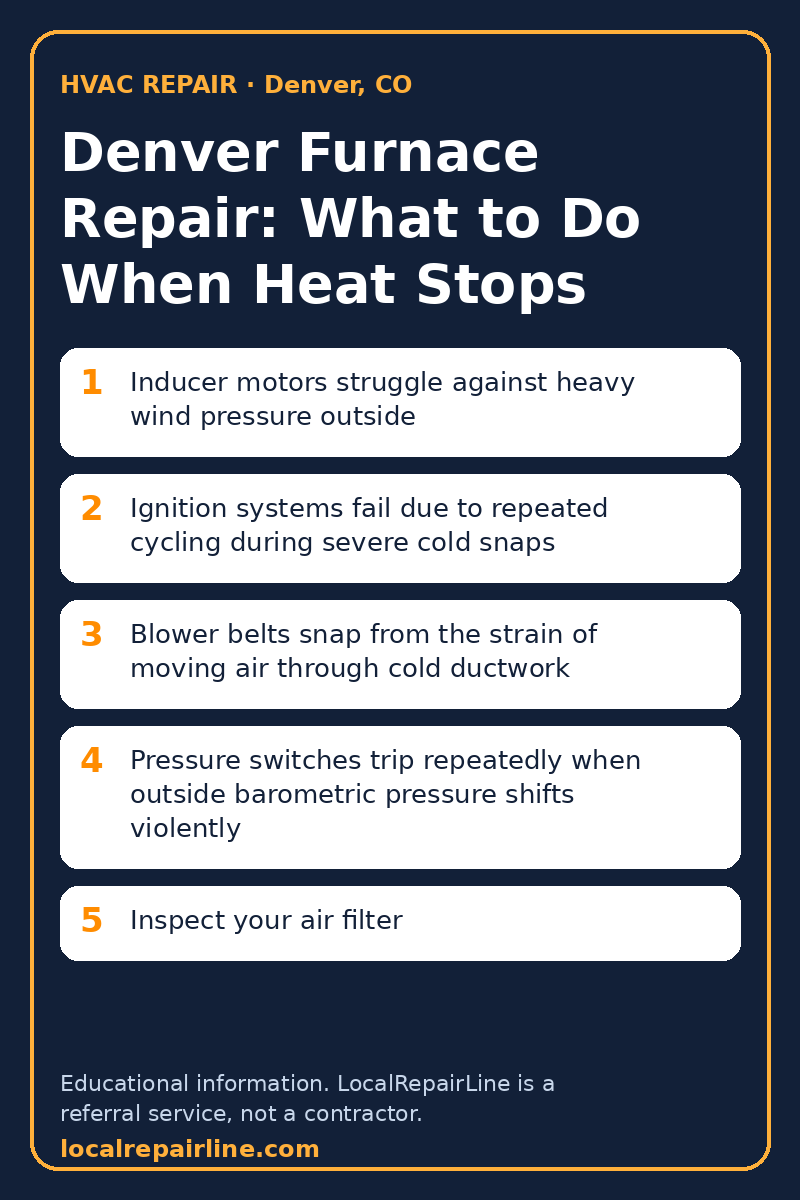
How High Altitude Affects Your Gas Furnace Performance
Living a mile high changes the way mechanical systems operate. High altitude reduces air density, which means your furnace receives less oxygen per cubic foot of air than it would at sea level.
Gas furnaces require specific pressure adjustments and burner orifice sizing to ensure proper combustion and heating efficiency. If a unit lacks proper altitude calibration, the gas valve regulation suffers. This imbalance creates incomplete combustion, soot buildup, and extra stress on internal components.
Common Heating Failures Caused by Sudden Temperature Drops
Denver winters bring dramatic weather shifts. Rapid temperature drops during winter cold fronts cause heating systems to cycle constantly.
This non-stop operation accelerates mechanical wear on inducer motors, igniters, and blower assemblies. Metal components expand and contract rapidly during sudden freezes, putting unexpected stress on heat exchangers. Heavy spring snowstorms and lingering sub-freezing mornings put unexpected demand on heating equipment outside of core winter months, catching many homeowners off guard.
- Inducer motors struggle against heavy wind pressure outside.
- Ignition systems fail due to repeated cycling during severe cold snaps.
- Blower belts snap from the strain of moving air through cold ductwork.
- Pressure switches trip repeatedly when outside barometric pressure shifts violently.
Troubleshooting Steps Before Calling a Technician
Before you call for help, run through a few basic checks. Sometimes the fix is simple and takes just a minute of your time.
- Check your thermostat settings to make sure the switch is set to heat and the target temperature is set higher than the current room temperature.
- Inspect your air filter. A clogged filter blocks airflow and trips safety limits that shut the burner down.
- Look at your circuit breaker panel to see if the furnace switch tripped. Reset it once if necessary, but leave it alone if it trips again immediately.
- Verify that the emergency switch on the side of the furnace or on the ceiling hasn't been accidentally bumped off.
What to Expect During a Professional Heating Diagnosis
When basic checks fail to restore heat or the system exhibits dangerous signs like a yellow burner flame or persistent electrical burning odors, you can LocalRepairLine instead of guessing.
A qualified technician arrives with specialized tools to test electrical voltage, gas pressure, and carbon monoxide levels. They will inspect the heat exchanger for cracks, test safety switches, and measure motor amperage. Once they find the root cause, they explain the issue and outline your repair choices clearly.
Repair Versus Replacement: Making the Right Call
Deciding whether to fix an aging furnace or buy a new one depends on a few clear factors. Age is the biggest clue. Most gas furnaces last fifteen to twenty years with proper maintenance.
If your unit is past that age range and needs a major part like a heat exchanger or a main control board, replacement usually makes more financial sense. Minor fixes like a new igniter or flame sensor are almost always worth doing on a younger system. Repair costs vary by house and the specific parts needed, but your technician can help you weigh the long-term reliability of your current unit against the investment of a new installation.
FAQ
Why is my furnace blowing lukewarm air?
Lukewarm air often points to a dirty air filter restricting airflow or a burner issue where the gas valve isn't opening fully. It can also happen if the blower fan runs continuously while the burners cycle on and off improperly. Check your filter first, and if new airflow doesn't warm things up, call a technician to check the gas supply and limit switch.
How long do gas furnaces typically last in this climate?
Gas furnaces in this region generally last between fifteen and twenty years. The heavy cycling required during harsh winter cold fronts and sudden spring snowstorms can shorten this lifespan if maintenance is neglected. Scheduling annual tune-ups helps your system reach the higher end of that age range.
What causes a loud banging noise when my heater starts?
A loud bang usually stems from delayed ignition caused by a dirty burner or a faulty igniter. Gas builds up inside the combustion chamber before finally igniting, creating a small mini-explosion that shakes the ductwork. This problem needs prompt attention because the force can eventually crack your heat exchanger.
Should I repair my older furnace or replace the entire unit?
If your furnace is past its mid-teens and faces a costly repair, replacement is usually the smarter path. Minor fixes on a younger unit are worth the investment to keep things running. A local technician can assess the overall condition of your heat exchanger and safety controls to help you decide.
Need an HVAC repair pro in Denver, CO?
Talk to an independent local contractor who serves your area.
📞 Call (833) 669-0233HVAC repair in Denver, COCall hours: 8am–8pm ET, 7 days