Does Homeowners Insurance Cover Roof Leaks in South Bend?
Not every drip from the ceiling gets a payout from your insurance company. If you're sitting under a bucket and wondering does homeowners insurance cover roof leak South Bend IN, the short answer is that it depends entirely on what caused the water to get inside your house.
Insurance policies in Indiana generally pay for sudden, accidental damage from storms. They don't pay for old age, deferred maintenance, or slow leaks that you let go for months.
When Does South Bend Homeowners Insurance Cover a Roof Leak?
Your standard homeowners policy covers your house and personal belongings against specific "perils." For a roof leak, coverage usually hinges on the root cause of the problem.
If a severe thunderstorm rolls across St. Joseph County and rips half your shingles off, sending water pouring into your living room, you're likely in good shape. That's sudden storm damage.
Insurance usually covers: * Wind tearing away shingles and exposing the underlayment. * Heavy tree branches falling through your roof during a storm. * Hail puncturing your roofing materials and causing leaks. * Resulting interior water damage to drywall and flooring.
Policies often cover the ruined drywall inside your house even if they argue about the age of the roof itself. Just remember that you still have to pay your deductible before the insurance money kicks in.
Need a roof repair pro in South Bend, IN?
Talk to an independent local contractor who serves your area.
📞 Call (888) 815-2998Roof repair in South Bend, INCall hours: 8am–8pm ET, 7 daysYour call may first be answered by a short screening service that asks what the problem is and where you are. Stay on the line and you will be connected to an independent local pro.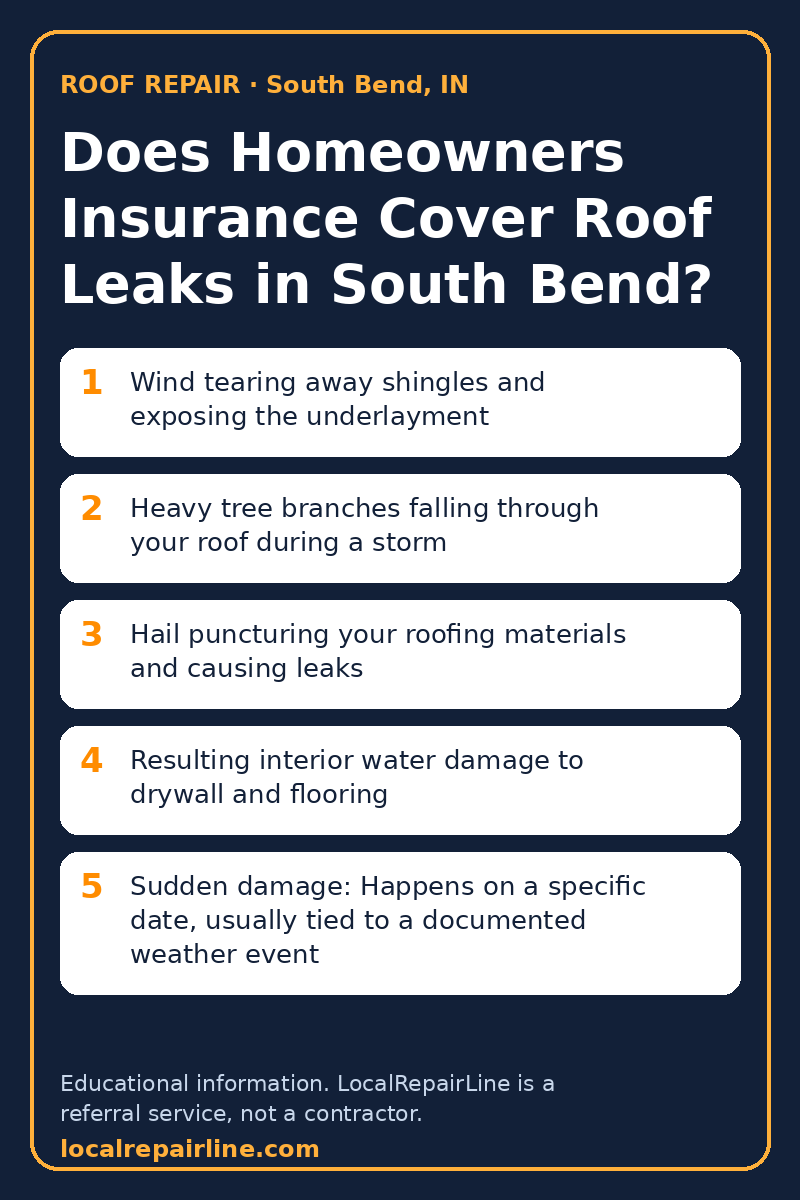
Sudden Storm Damage Versus Long-Term Wear and Tear
Adjusters draw a thick line between a sudden act of nature and the normal aging process of building materials. Asphalt shingles simply wear out over time.
Policies, deadlines and adjuster practices vary, so check your own policy and ask your insurer what's covered. They expect homeowners to replace roofs before they fail.
- Sudden damage: Happens on a specific date, usually tied to a documented weather event.
- Wear and tear: Happens slowly over years due to sun exposure, aging granules, and brittle materials.
If an adjuster inspects your attic and finds rotting plywood that has been wet for three summers, your claim will likely face a denial. Insurance companies view ongoing neglect as a homeowner responsibility.
How Local Winter Weather and Ice Dams Impact Insurance Claims
Winters in South Bend bring heavy snowfall and ice accumulation that frequently lead to ice dams along roof eaves. Frequent temperature fluctuations during late winter and early spring cause rapid melting and refreezing on residential roofs.
Ice dams happen when heat escapes your attic, melting the bottom layer of snow. That water runs down to the cold overhang and freezes into a ridge of ice, trapping subsequent meltwater behind it.
Water backs up under your shingles and drips into your walls. Insurance coverage for ice dams can be tricky.
Many policies cover the interior water damage caused by ice dams, but they might deny the cost of fixing the actual roof defect that allowed the heat to escape in the first place. Keeping your attic properly insulated and ventilated prevents these winter headaches.
Steps to Document Roof Damage Before Filing a Claim
When you spot a leak, don't wait to take action. Water moves fast, and mold grows even faster.
- Catch the water in buckets and move furniture or rugs away from the drip zone.
- Take clear photos and videos of the active leak, the stained ceiling, and any damaged belongings.
- Check your yard for fallen tree limbs, missing shingles, or granules washed down your downspouts.
- Look at local weather reports from the day the leak started to note heavy winds or hail.
- Reach out to the LocalRepairLine team instead of guessing. You need an objective professional assessment of the leak source and damage severity to submit to your insurance adjuster.
What to Do If a Claim Is Not Approved
Getting a denial letter stings, but it isn't always the final word. Adjusters sometimes miss hidden storm damage or attribute wind-lifted shingles to old age.
Ask the insurance company for a detailed, written explanation of why they denied the claim. Compare their findings with the notes and photos from your local roof inspection.
You can request a re-inspection if you have clear proof that a storm caused the failure. Some policies also include an appraisal clause if you and the insurance company disagree heavily on the repair cost or cause.
Working with Local Roofers to Advocate for Proper Repairs
A claim takes patience and careful paperwork. A local roofer who understands regional weather patterns can help you communicate with your insurance adjuster.
They can point out wind creases, granule loss, and bruising that an untrained eye might miss. Having a contractor's detailed written scope side-by-side with the insurance paperwork helps clear up disputes quickly.
Focus on getting a complete repair rather than a quick patch. South Bend weather demands a roof that can handle heavy snow loads in January and severe thunderstorms in July.
FAQ
Will insurance pay for a roof leak caused by an old roof in Indiana?
Standard homeowners insurance policies exclude damage caused by normal aging, lack of maintenance, or gradual wear and tear. If your roof is old and simply reached the end of its lifespan, you'll have to pay for the repairs or replacement out of pocket. Insurance only steps in when a specific, sudden event like a storm damages an otherwise sound roof.
How do I know if wind or hail caused my roof to leak?
Wind damage usually leaves behind missing, creased, or lifted shingles, often exposing the sticky strip underneath. Hail leaves distinct, bruised spots where granules are missing, making the fiberglass mat underneath feel soft to the touch. If you notice these signs shortly after a severe local storm, it points directly to weather-related damage rather than old age.
Should I call my insurance company or a local roofer first?
Many homeowners find it helpful to call a local roofer for an initial inspection before filing a formal claim. A professional can tell you if the damage is severe enough to exceed your deductible and whether it looks like storm damage or wear and tear. Filing a claim for minor damage that falls below your deductible can lead to unnecessary claims history on your record.
What is the average deductible for roof damage claims in Indiana?
Deductibles vary widely depending on your specific policy and whether you have a flat-rate deductible or a percentage-based wind and hail deductible. Many policies use a percentage of your total home structure coverage rather than a flat sum for storm claims. Check your policy declarations page or speak with your insurance agent to find your exact out-of-pocket responsibility.
Need a roof repair pro in South Bend, IN?
Talk to an independent local contractor who serves your area.
📞 Call (888) 815-2998Roof repair in South Bend, INCall hours: 8am–8pm ET, 7 days