Frozen Pipes Burst in Grove City OH: What to Do Now
Hearing that sudden sound of running water behind a wall when all the faucets are off is a homeowner's worst nightmare. Central Ohio winters have a habit of shifting from mild autumn days straight into bitter polar vortex deep freezes almost overnight. That sudden drop catches many houses off guard before crawlspaces and exterior garage walls can hold up against the chill. When winter temperatures routinely plunge well below freezing, unprotected water lines freeze solid in a hurry. Rapid winter temperature fluctuations from daytime melting to hard overnight freezes put immense stress on residential plumbing joints. If your frozen pipes burst in Grove City OH, you need to act fast to keep indoor flooding under control.
Immediate Steps When You Discover Burst Pipes in Grove City
Panic usually sets in right away, but taking a few quick, clear steps makes a massive difference. First, find out where the water is coming from and stop it at the source. Grab old towels, buckets, or even blankets to corral any pooling water on hardwood or carpet.
Here is a quick checklist to follow right now: 1. Shut off the main water supply immediately. 2. Open all indoor faucets to drain remaining water from the lines. 3. Turn off your electrical breaker if water is near outlets or light fixtures. 4. Call a local plumbing pro in Grove City, OH to handle the repair instead of guessing how to patch a split line. 5. Take photos of the damage for insurance records.
Need a plumbing repair pro in Columbus, OH?
Talk to an independent local contractor who serves your area.
📞 Call (833) 350-0420Plumbing repair in Columbus, OHCall hours: 8am–8pm ET, 7 daysYour call may first be answered by a short screening service that asks what the problem is and where you are. Stay on the line and you will be connected to an independent local pro.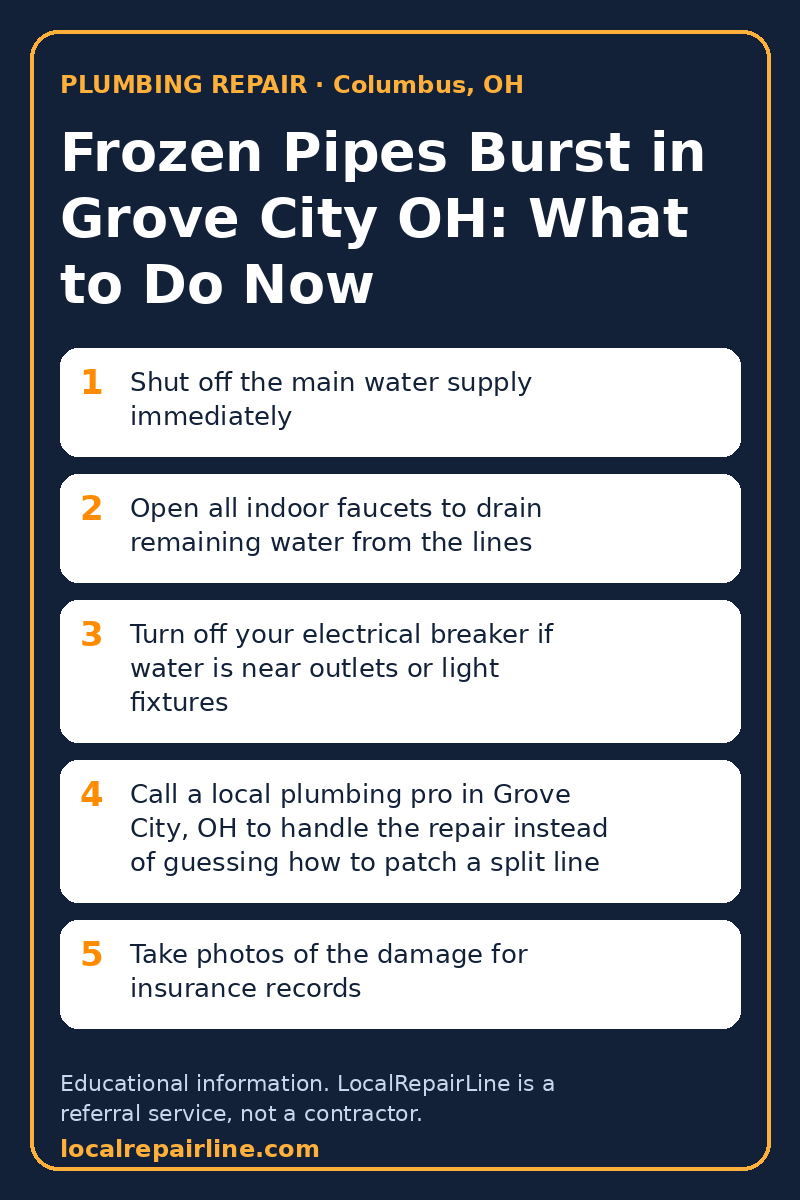
How to Locate and Shut Off Your Main Water Valve Fast
Stopping the flow saves your drywall, insulation, and flooring from major ruin. In newer central Ohio homes, the main shut-off valve usually sits near the front foundation wall in the basement or utility room, often right where the service line enters the house. If your home sits on a slab or a crawlspace, look in the garage near the water heater or inside an indoor utility closet.
Older houses around the area might have a main valve located near the street inside a sidewalk meter pit. Keep a specialized meter key or a pair of pliers handy if you need to turn off water outside. Once you close that valve, test a nearby bathroom sink to make sure the water stops running completely.
Safe Methods to Thaw Frozen Sections Before They Split
Sometimes you catch a frozen pipe before it actually cracks wide open. You might notice a trickle coming from a tap or frost coating an exposed pipe in the basement.
Avoid using open flames like propane torches, as they start house fires in seconds. Instead, try these safe thawing approaches: * Wrap the frozen section in electric heating pads set to a low heat. * Direct a standard household hair dryer back and forth along the cold pipe. * Place a safe portable space heater nearby to warm up the drafty air in the room. * Wrap hot, wet towels around the pipe and refresh them frequently with steaming water.
Start thawing from the faucet side and work your way back toward the frozen blockage. This lets melted ice escape as steam and liquid rather than building up pressure and bursting the pipe anyway.
Signs That a Pipe Has Already Ruptured Inside Your Walls
Not all pipe failures happen out in the open where you can spot them immediately. High humidity and prolonged cold snaps during Midwestern winters create deep frost lines that affect underground service lines and hidden wall cavities.
Keep an eye out for these warning signs of a hidden rupture: * Bulging drywall or sagging ceiling plaster with water stains. * The sound of rushing water inside a wall when no fixtures are running. * A sudden drop in water pressure at a single sink or shower. * Damp, musty smells coming from baseboards or closets.
The moment the homeowner realizes water is spraying behind drywall or ceiling plaster, things move past a DIY fix. For more assistance, consult this homeowner resource instead of guessing. A professional has specialized tools to track down hidden breaks behind finished surfaces without tearing up your entire house.
Mitigating Water Damage While Waiting for Professional Help
Standing water ruins subfloors, rots wood framing, and invites mold growth within days. Pull up wet area rugs and prop up soggy furniture legs using pieces of aluminum foil or plastic wrap to prevent wood stains on carpets.
Open interior doors and windows if the outdoor air is dry enough to encourage cross-ventilation. Set up heavy-duty box fans and dehumidifiers to pull moisture out of the air and dry out soaked drywall. Throw away ruined items that can't be salvaged, but leave them in the garage or yard until the insurance adjuster inspects the scene.
Preventing Future Winter Plumbing Disasters in Central Ohio Homes
Once the emergency repairs finish up, take steps to protect your plumbing from the next hard freeze. Insulate all pipes running through unheated crawlspaces, exterior walls, and detached garages using foam pipe sleeves.
Seal up exterior foundation vents when winter arrives, but remember to open them back up when spring rolls around. Disconnect garden hoses from outdoor spigots before the first major freeze and shut off the interior valves feeding those exterior lines.
Leaving a cabinet door open beneath Grove City kitchen sinks on bitter nights lets warm indoor air circulate around vulnerable supply lines. Taking these small precautions now saves you from another stressful plumbing emergency down the road. Costs vary by house depending on the extent of pipe insulation needed.
FAQ
How do I know if my pipe is frozen or actually burst?
A frozen pipe usually results in a complete lack of water flow when you turn on a faucet, or you might see visible frost on the outside of the metal or plastic pipe. If the pipe has actually burst, you'll often hear water hissing inside the wall, notice sudden puddles forming on the floor, or see water dripping through your ceiling. Once you shut off the main valve and open the taps, a split pipe will often hiss or leak continuously even after pressure drops.
Should I keep my faucets open while trying to thaw a frozen pipe?
Yes, always open the faucet connected to the frozen line before you start applying heat. This gives the expanding water and melting ice a clear exit path out of the system. Leaving the tap open relieves internal pressure, which dramatically lowers the chances that the pipe will burst while you're trying to warm it up.
Where is the main water shut-off valve typically located in Grove City homes?
In houses with basements, the main valve is usually near the front foundation wall where the main water line enters the structure. If your home has a crawlspace or slab foundation, look inside the garage near the water heater or inside a designated utility room. Homes built on crawlspaces sometimes also feature an outdoor shut-off box buried near the property line by the street.
How long does it take for a frozen pipe to thaw safely?
The thawing process usually takes anywhere from a few minutes to over an hour depending on how badly the pipe is frozen and where it's located. Exposed pipes in a basement thaw much faster when warmed with a hair dryer or heating pad. Pipes hidden deep inside exterior walls take considerably longer because the surrounding framing and insulation block the heat.
Need a plumbing repair pro in Columbus, OH?
Talk to an independent local contractor who serves your area.
📞 Call (833) 350-0420Plumbing repair in Columbus, OHCall hours: 8am–8pm ET, 7 days