Roof Leak Repair Kettering OH: What to Do Before You Call
You spot a brown ring on the ceiling or hear a drip during a storm, and your stomach drops. If you're looking into roof leak repair Kettering OH, the first goal is simple: slow the water down, protect your home, and gather what you need to get the right fix.
This guide covers how to read the signs, what to do in the first hour, what drives repair costs, and when it's time to bring in a local roofer.
Signs Your Roof Is Leaking (and Why the Stain Isn't Always Under the Problem Spot)
Some leaks announce themselves with a drip. Many don't. Look for these:
- Brown, yellow, or tan stains on ceilings or upper walls
- Paint that bubbles, peels, or looks blistered
- A musty smell in the attic or top-floor rooms
- Damp or compressed insulation in the attic
- Dark streaks or damp wood on rafters and the underside of the roof deck
- Missing, curled, or cracked shingles when you look from the ground
Here's the part that trips people up. Water rarely drops straight down from the hole. It runs along rafters, sheathing, and the top of insulation before it finds a spot to soak through.
So the stain in your hallway may sit several feet from the real opening. Don't assume the roof above the stain is the culprit.
Why leaks show up weeks after the storm
In Kettering, the weather that causes damage and the day you notice it can be far apart. A spring thunderstorm with strong wind can lift a shingle edge or loosen flashing. The roof may stay dry through a few light rains, then leak during the next heavy one.
Winter does something similar. Temperatures in southwest Ohio often swing above and below 32°F. Water that seeps into a small gap turns to ice, expands, then melts again, and over time the gap widens. The stain may not appear until a thaw or a spring rain pushes water through.
Need a roof repair pro in Dayton, OH?
Talk to an independent local contractor who serves your area.
📞 Call (888) 815-2998Roof repair in Dayton, OHCall hours: 8am–8pm ET, 7 daysYour call may first be answered by a short screening service that asks what the problem is and where you are. Stay on the line and you will be connected to an independent local pro.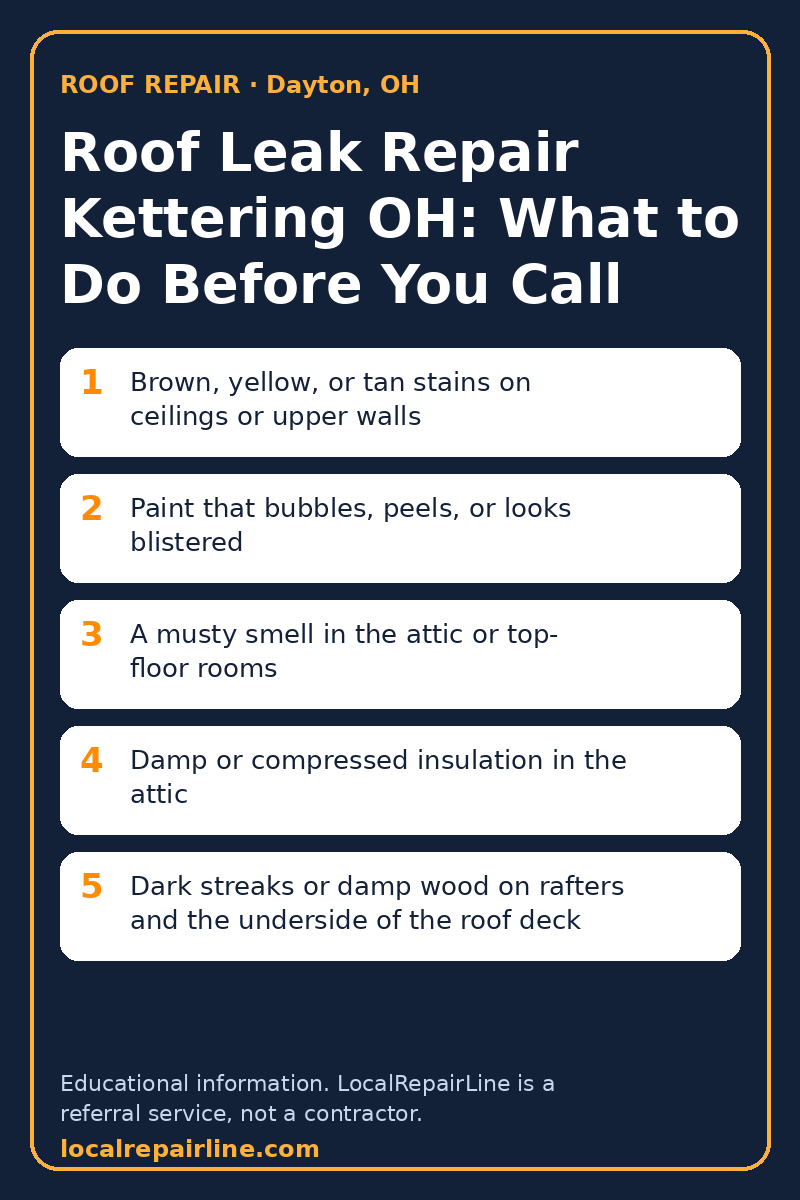
What to Do in the First Hour: Stop the Damage Before the Roofer Arrives
You can't fix a roof from your living room, but you can limit what the water ruins. Work from the inside first.
- Stay safe. If water is near a light fixture, outlet, or ceiling fan, keep clear and shut off power to that area at the breaker.
- Move belongings. Pull furniture, rugs, and electronics out from under the leak.
- Catch the water. Set a bucket or wide tub under the drip and lay towels around it.
- Relieve a bulging ceiling. If the drywall bulges with trapped water, poke a small hole at the bottom of the bulge with a screwdriver, standing to the side, with a bucket below. Some homeowners do this to let the water drain into a bucket instead of releasing on its own, but if you're unsure, stay clear and leave it for a pro.
- Check the attic if you can reach it safely. Look for wet insulation or a clear trail of water. A flashlight is enough.
- Take photos and notes before you clean up. More on that below.
Can you tarp the roof yourself?
Sometimes, but be honest about the risk. A wet, windy, or icy roof is dangerous, and falls cause far worse problems than a stained ceiling.
If you can't reach the damaged area from solid, dry footing, skip it. Interior containment will buy you time. A properly secured tarp on a low-slope section can help, but it's a stopgap, not a repair.
Avoid slathering roofing tar or caulk on shingles in a panic. It can trap moisture and make the real repair harder.
Common Causes of Roof Leaks in Kettering Homes
Most leaks come from a short list of trouble spots. Knowing them helps you describe the problem to a roofer.
- Damaged or missing shingles. High winds from summer thunderstorms can lift tabs, crack them, or tear them away.
- Worn flashing. The metal around chimneys, vents, skylights, and wall joints is a frequent entry point once sealant dries out or edges lift.
- Ice and snow buildup. Melting snow can refreeze near the eaves and back water up under shingles.
- Clogged gutters. Debris can hold water against the roof edge and the fascia.
- Cracked pipe boots. The rubber collars around plumbing vents age and split.
- Age. Humid summers and cold winters wear on asphalt shingles. Granule loss, curling, and brittleness all raise the odds of leaks.
Repair or Replace? How to Tell When a Patch Won't Hold
A small, clear problem on a fairly sound roof is a good candidate for repair. Think one lifted shingle, a worn pipe boot, or a bit of flashing that needs resealing.
An older roof is a different story. If shingles are curling, shedding granules, or cracking across large areas, a patch fixes one spot while the rest keeps aging. You may pay for a repair, then another, then a replacement anyway.
A few questions help you decide:
- Is the damage in one spot, or does the whole slope look tired?
- Has this same area leaked before?
- Are there signs of rot in the decking or wet insulation across a wide area?
- How old is the roof, and what condition were the shingles in before this leak?
A cheap patch can look like a bargain until it fails during the next heavy rain. A fair roofer will tell you when a repair makes sense and when it only delays the inevitable.
What Roof Leak Repair Kettering OH Homeowners Should Expect to Pay
Costs vary by house, so be wary of anyone who names a firm number without seeing the roof. Here's what moves the price:
- Size of the damaged area. A few shingles are very different from a full section.
- Type of problem. Flashing and chimney work usually take more skill and time than replacing a pipe boot.
- Roof pitch and height. Steeper or taller roofs are harder to work on safely.
- Access. Tight spaces, multiple layers of shingles, or awkward rooflines add labor.
- Hidden damage. Rotted decking, wet insulation, and interior drywall repair can add to the job.
- Materials. Matching older shingles can be tricky.
- Timing. Busy storm seasons can affect scheduling and availability.
A repair is usually a smaller job than a full replacement, though the total depends on your roof, and repeated repairs on the same trouble spot can add up over time. Ask for a written breakdown that spells out what's included.
Leaks, Storms, and Your Insurance Claim: Documenting Damage the Right Way
If a storm caused your leak, clear records give you something solid to share with your insurer. Start before you repair anything beyond emergency steps.
- Photograph the interior damage: stains, drips, wet insulation, and affected belongings, from wide shots and close-ups.
- Photograph the exterior from the ground: missing shingles, debris, dented gutters, and fallen branches.
- Note the date and time of the storm and when you first noticed the leak.
- Save receipts for tarps, buckets, and any emergency work.
- Hold onto damaged items, if you can, until you've checked with your insurer about what they need.
- Contact your insurer and ask how they want you to proceed.
Policies differ in what they cover and how they treat the cause of a leak, so read your policy or ask your agent how yours applies. Also check what your deductible is, since it affects how your policy comes into play.
When to Call a Local Roofer and What to Ask Them
Here's the point to stop guessing and call a local roofing pro in Kettering, OH, like Local Repair Line. Consider contacting one if you see any of these:
- Water keeps coming in even after you've contained it or tarped the roof
- The ceiling is sagging or bulging
- Insulation in the attic is wet
- The leak returns after every rain
- You can't find the source or can't reach it safely
Those signs usually point to a hidden failure, like damaged decking, failed flashing, or water traveling along the framing. A roofer can inspect the roof and attic to track down the cause, and an inspection can show whether moisture has reached the insulation and wood.
Questions to ask before you hire
- Can you inspect the roof and attic, not just the visible stain?
- What do you think caused the leak, and how would you confirm it?
- Is this a repair, or is the roof near the end of its life?
- What does your written scope of work include and exclude?
- Do you provide proof of liability and workers' compensation coverage?
- What warranty applies to the labor and materials?
- How will you protect landscaping and clean up?
- Can you provide photos of the damage you find?
Get more than one opinion if the recommended work is large. Be cautious of pressure to sign immediately, especially right after a storm.
FAQ
How much does roof leak repair cost in Kettering, OH?
Costs vary by house. The size of the damage, type of repair, roof pitch, access, and any hidden decking or interior damage all shape the price. Smaller jobs, like a pipe boot, tend to involve less work than flashing or decking repairs, but what your roof needs depends on what an inspection finds.
Can I temporarily fix a roof leak myself until a roofer arrives?
You can contain the water inside with buckets, towels, and by moving belongings out of the way. A tarp may help on a low-slope section if you can reach it from solid, dry footing, but it
Need a roof repair pro in Dayton, OH?
Talk to an independent local contractor who serves your area.
📞 Call (888) 815-2998Roof repair in Dayton, OHCall hours: 8am–8pm ET, 7 days