Burst Pipe Plumber Kalamazoo MI: What to Do First
If you're searching for a burst pipe plumber Kalamazoo MI homeowners can turn to, you may be standing in a wet room right now. Take a breath. The first few minutes matter more than most people expect, and most of them don't require a single tool.
This guide covers how to stop the water, stay safe, document the damage, and decide what comes next.
Signs You Have a Burst Pipe (Including the Hidden Kind)
Sometimes it's obvious: water spraying from a pipe in the basement or pouring from a ceiling. Other times the clues are quieter.
Watch for these:
- Water stains or bubbling paint on a ceiling or wall that weren't there yesterday
- A musty smell near a wall, closet, or under a floor
- Low water pressure, or faucets that sputter or run brown
- The sound of running water when everything is turned off
- Warm or damp spots on a floor, which can point to a leaking line under the slab or flooring
- A water meter that keeps moving when nothing in the house is in use
That last one is a handy test. Turn off every faucet and appliance, then watch the meter's small dial or leak indicator for a few minutes. If it moves, water is going somewhere it shouldn't.
Need a plumbing repair pro in Kalamazoo, MI?
Talk to an independent local contractor who serves your area.
📞 Call (833) 350-0420Plumbing repair in Kalamazoo, MICall hours: 8am–8pm ET, 7 daysYour call may first be answered by a short screening service that asks what the problem is and where you are. Stay on the line and you will be connected to an independent local pro.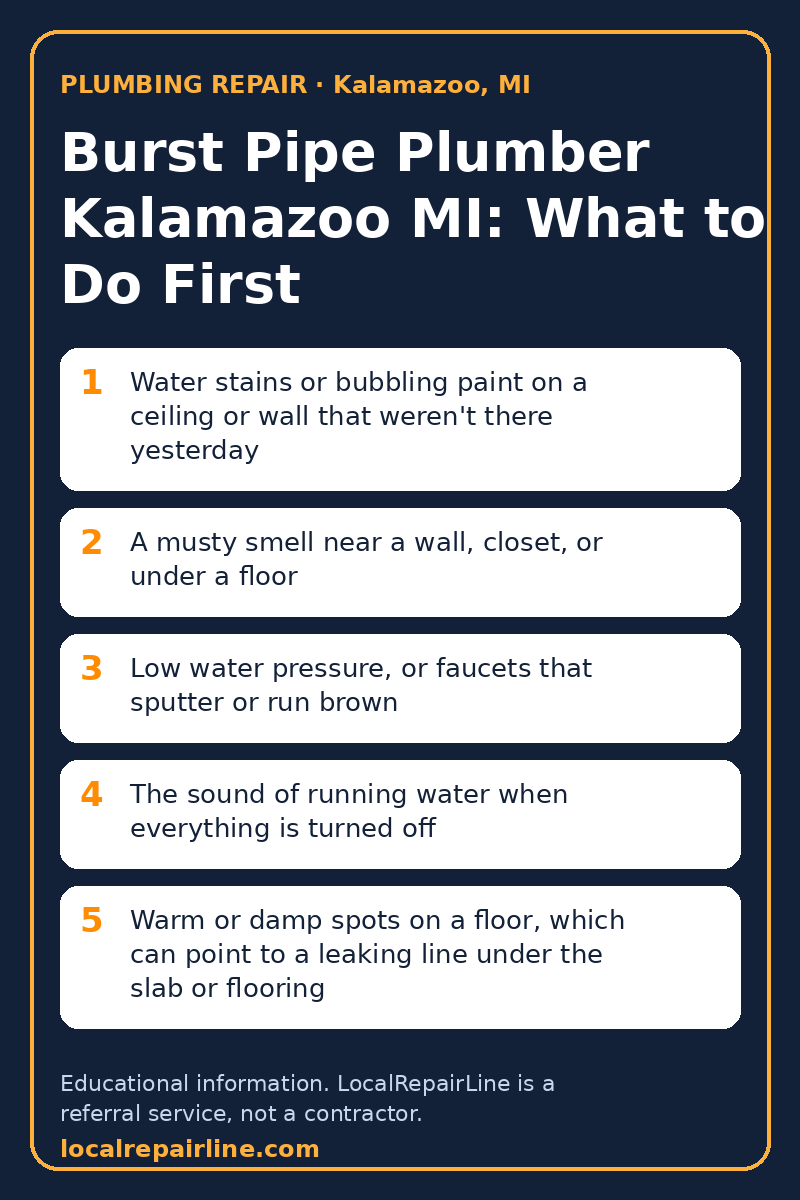
What to Do in the First 15 Minutes After a Pipe Bursts
Work through this list in order. Speed counts, but so does safety.
- Shut off the main water valve. It's usually where the water line enters the house, often in a basement, utility room, or crawl space. Turn it clockwise until it stops. Ball-style handles turn a quarter turn.
- Think about electricity. If water is near outlets, appliances, or your electrical panel, don't wade in. Only switch off power at the breaker if the panel is dry and you can reach it without stepping through water. If you can't, stay out and tell the plumber and an electrician.
- Open faucets to drain the lines. Start with a faucet on the upper floor, then open one on the ground floor or in the basement. This relieves pressure and drains water still sitting in the pipes.
- Turn off the water heater if the lines are draining. An electric or gas heater shouldn't run while the system empties. Follow the shutoff steps on the unit if you're unsure.
- Contain what you can. Move rugs, electronics, and boxes out of the wet area. Use towels, buckets, or a wet/dry vacuum for standing water.
- Take photos and video before you clean up. Capture the pipe, the wet walls, floors, and ceilings, and any damaged belongings. They can also help if you file an insurance claim.
If you can't find the main shutoff, or the valve won't turn, that's a signal to call a plumber right away. Don't force a stuck valve with a wrench so hard that it breaks.
When to Stop Guessing and Call a Local Plumber
Once the water is off, you might think the emergency is over. Often it isn't.
This is the moment to call a local plumbing pro in Kalamazoo, MI like the LocalRepairLine team instead of guessing. Call if any of these apply:
- Water is still showing up in a ceiling, wall, or basement after the main is off
- You can't see or reach the damaged pipe
- The water won't stay off, or the main valve is stuck or leaking
- The leak is somewhere hidden, like under a floor or inside a finished wall
A plumber's job here isn't only fixing the pipe. It's also finding where the water went and deciding what has to be opened up, repaired, and dried before it turns into mold or rot. That's hard to judge from the outside.
Why Pipes Burst in Kalamazoo Winters and During the Thaw
Kalamazoo gets four real seasons, and the winters can be hard on plumbing. Southwest Michigan sits close enough to Lake Michigan that lake-effect weather can bring heavy snow and sudden, sharp cold snaps.
When water in a pipe turns to ice, it expands. That pressure can crack or split the pipe, usually in a weak spot such as a joint, a bend, or a section running along an exterior wall.
Here's the part that surprises people: the pipe often doesn't start leaking until the thaw. A plug of ice can hold the water back like a cork. When late-winter and early-spring swings bring milder days after cold nights, that ice melts, and the crack suddenly shows itself.
Common trouble spots include:
- Pipes in exterior walls
- Lines in crawl spaces, unheated garages, or near basement rim areas
- Pipes under sinks on outside walls
- Outdoor spigots and the lines feeding them
If you had a hard cold snap recently and the weather just warmed up, treat a new stain or drop in pressure seriously.
What a Plumber Does On a Burst Pipe Call
Knowing the process helps you feel less in the dark. A typical visit goes something like this.
First, the plumber confirms the water is off and finds the source. That can involve checking visible lines, listening, and sometimes using tools to locate a leak inside a wall or floor.
Next comes the repair: cutting out the damaged section and replacing it with new pipe and fittings. Then the system is turned back on and checked for leaks and pressure problems.
A good plumber will also tell you what they see beyond the burst itself, such as the condition of nearby pipe, how it was installed, and why it likely failed. Some jobs also need drywall opened or flooring pulled up to reach the pipe. Drying out the space may be a separate job with its own specialists.
Repair vs. Repipe: Costs Homeowners Often Regret Overlooking
The quick fix is to patch the one broken section. Sometimes that's exactly right. A newer system with one damaged spot from a clear cause, like a single exposed run, is often a straightforward repair.
But there's a common regret: patching one section of aging pipe when the rest is about to fail. If the line is old, corroded, or has been repaired several times, a new fix can just move the pressure to the next weak spot. You end up paying for another visit, another opened wall, and another round of cleanup.
Costs vary by house, and these factors drive them:
- How accessible the pipe is (open basement versus behind a finished wall)
- The pipe material and how much of it needs replacing
- How many repairs the system has already had
- How much drywall, flooring, or insulation must be removed and restored
- Whether the work is an emergency call or scheduled
Ask your plumber plainly: "Is this pipe a one-time failure, or is the rest of the line near the end of its life?" Ask for the repair option and the larger replacement option written out, so you can compare. A full repipe costs more upfront, but it can make sense when the existing pipe is clearly worn out.
Burst Pipes, Water Damage, and Your Homeowners Insurance
Insurance policies differ, so read yours or call your agent. Coverage for sudden water damage versus slow leaks can vary, so ask how your policy handles each, including any wording about maintenance or heating the home.
A few habits help no matter what your policy says:
- Document everything with photos and video before cleanup
- Stop the water and take reasonable steps to limit further damage
- Keep receipts for emergency repairs and drying work
- Ask the plumber for a written description of what failed and what was done
- Contact your insurer promptly instead of waiting
If you plan to file a claim, consider holding onto damaged materials until you've photographed them thoroughly and checked with your insurer.
Choosing a Burst Pipe Plumber Kalamazoo MI Homeowners Can Count On
When water is pouring, it's tempting to call the first name you find. A few questions up front can save you trouble later.
- Do they handle burst pipes and emergency calls, and how soon can they come?
- How do they explain pricing, and will they put repair and replacement options in writing?
- Can they tell you what they think caused the failure, and whether other pipe in the house is at risk?
A plumber who answers these plainly, without rushing you, is usually a good sign.
FAQ
What should I do first when a pipe bursts?
Shut off the main water valve right away. Then open faucets to drain the lines, stay clear of any water near electrical outlets or the panel, and take photos before you clean up. After that, call a plumber to find and fix the break.
Can I wait to call a plumber once the water is off?
Sometimes, but it's risky to assume the problem is solved. Water may still be trapped in a wall, ceiling, or floor, and damp materials can lead to mold or rot. If water keeps showing up, the leak is hidden, or the main valve won't hold, call a plumber promptly.
How can I tell if a pipe burst inside a wall?
Look for stains or bubbling paint, a musty smell, falling water pressure, or the sound of running water when nothing is on. You can also check your water meter with everything turned off. If the dial keeps moving, water is escaping somewhere, and a plumber can help locate it.
Will homeowners insurance cover a burst pipe?
It depends on your policy. Sudden damage and slow leaks may be handled differently, so read your policy or ask your agent. Photos, receipts, and a written description of the repair will make the process easier.
How much does burst pipe repair cost?
Costs vary by house. The biggest factors are how easy the pipe is to reach, the pipe material, how much of it needs replacing, and how much wall or flooring has to be opened and restored. Ask
Need a plumbing repair pro in Kalamazoo, MI?
Talk to an independent local contractor who serves your area.
📞 Call (833) 350-0420Plumbing repair in Kalamazoo, MICall hours: 8am–8pm ET, 7 days