Burst Pipe Plumber Pittsburgh PA: What to Do Before They Arrive
If you're searching for a burst pipe plumber Pittsburgh PA homeowners can reach quickly, you're probably standing near a wet floor right now. Take a breath. The next few minutes count a lot, and most of what helps is simple.
This guide covers stopping the water, protecting your stuff, and what to tell the plumber.
First Steps When a Pipe Bursts in Your Pittsburgh Home
Work through this list in order. Don't try to fix the pipe yet.
- Shut off the water at the main valve (details in the next section).
- If you can reach the electrical panel without stepping in water, turn off power to the wet area. If you can't do that safely, stay out and call a pro.
- Open a faucet at the bottom and top levels of the house to drain the lines.
- Move furniture, rugs, and electronics out of the wet zone.
- Take photos and video before you clean anything up.
- Call a plumber and tell them what you see.
Water and electricity are a bad mix. If water is dripping through a light fixture, pooling around outlets, or reaching the panel, leave that area alone.
Need a plumbing repair pro in Pittsburgh, PA?
Talk to an independent local contractor who serves your area.
📞 Call (833) 350-0420Plumbing repair in Pittsburgh, PACall hours: 8am–8pm ET, 7 daysYour call may first be answered by a short screening service that asks what the problem is and where you are. Stay on the line and you will be connected to an independent local pro.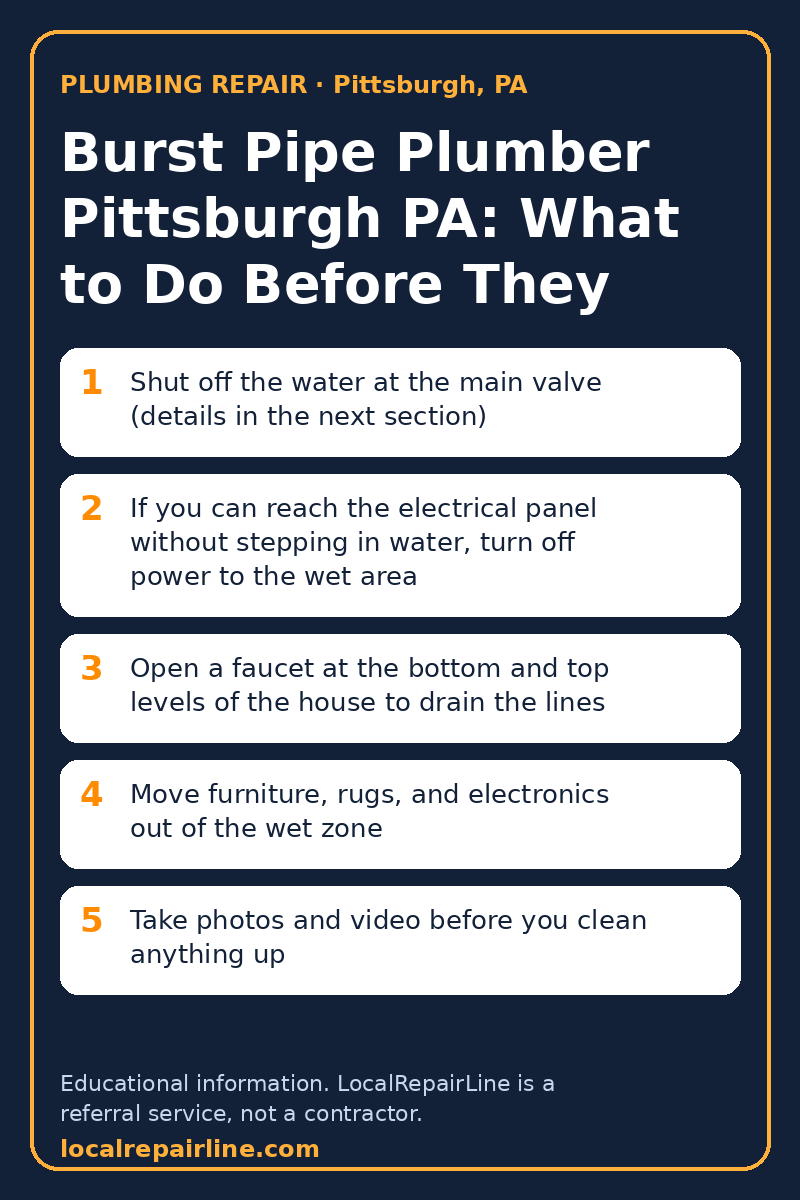
How to Shut Off Your Water and Protect Your Home in the Meantime
Most houses have a main shutoff where the water line enters, often in the basement near the front wall or by the meter. It's usually a round wheel handle or a lever. Wheel handles turn clockwise to close, and levers close when they sit crosswise to the pipe.
Older valves can be stiff or stuck. Turn firmly but don't force it with a wrench if it feels like it will snap. A broken valve makes things worse.
If your main won't budge, look for a second shutoff at the meter. Don't tamper with anything on the utility's side of it. Call for help instead.
What you can safely do yourself
- Mop, towel, and wet-vac standing water (only if the power to that area is off).
- Move belongings up and out of the wet area.
- Place buckets under drips.
- Turn on a fan if the area is dry and electrical items aren't wet.
- Turn off the water heater if the main is closed, so it doesn't run dry.
What to leave alone
- Cutting into walls or ceilings to hunt for the break.
- Clamping or wrapping a split pipe and calling it fixed.
- Using an open flame near a pipe.
- Touching anything electrical in a wet room.
A wrap or clamp can slow a drip for a while. It isn't a repair, and the pipe around it may be just as thin.
When to stop and talk to a local plumbing pro in Pittsburgh, PA
Here is the line. The water is off, and you still see stains spreading, hear water running with every fixture closed, or the break is inside a wall, a ceiling, or under a slab.
That's the moment to call a local plumbing pro in Pittsburgh, PA instead of guessing, and LocalRepairLine is one place to start. Finding a hidden break takes the right tools, and every extra hour lets water soak into drywall, insulation, and subfloor.
Why Pipes Burst Here: Cold Snaps, Thaws, and Older Plumbing
Pittsburgh winters bring cold snaps and snow. Pipes in unheated spaces take the brunt of it, like basements, garages, crawl spaces, and exterior walls.
Water expands as it turns to ice. The pressure builds in the pipe, and it often splits somewhere between the ice plug and a closed faucet, not right at the ice itself.
Here's the tricky part. A pipe can crack during a cold spell and show no sign until the weather warms up. Then the ice melts, water flows through the crack, and you find a mess.
Cold isn't the only cause. Older plumbing can fail on its own, especially where pipes are corroded, joints are worn, or the material has simply aged out. Many Pittsburgh homes have a mix of old and newer pipe from past repairs, and the spots where they join can be weak.
Other common causes:
- Water pressure that runs too high for the age of the plumbing
- Pipes that rub or vibrate against framing
- A past repair that wasn't done well
- Roots or shifting ground pressing on a buried line
Knowing the likely cause helps the plumber. It also helps you decide whether this is a one-spot fix or a sign that more of the system needs attention.
Calling a Burst Pipe Plumber Pittsburgh PA Homeowners Can Reach Fast
When you call, the more clear details you give, the better the plumber can plan. Have your answers ready before you dial.
Be ready to say:
- Where the water is coming from, as far as you can tell
- Whether you got the main shut off
- Whether water is near the electrical panel, outlets, or fixtures
- What kind of pipe you see (copper, plastic, or older steel)
- Whether the area is a finished room, a basement, or a crawl space
Ask a few questions back. How soon can someone arrive? Is there a minimum charge just to show up? How do they handle finding a hidden leak?
Costs vary by house. A split pipe in an open basement is a very different job from a leak behind a finished wall. Access, pipe material, how much needs replacing, and the time of day all change the final bill. A plumber should be willing to explain what drives the price before they start.
Get the paperwork ready
Keep your photos and video, and write down the time you found the leak and when you shut off the water. If you plan to contact your homeowner's insurance company, those details help. Ask the plumber for a written note of what they found and repaired.
Don't toss damaged materials until you know whether you'll need to show them. Check your policy for what it covers, since water damage rules differ from one policy to the next.
What Repairs and Cleanup Usually Involve
Once the plumber arrives, expect a few steps. They'll confirm the water is off, find the break, and decide whether to patch a section or replace more pipe.
A short section can often be cut out and replaced. If the pipe is old and brittle in several spots, replacing a longer run may make more sense. That costs more up front, but it can save you a second emergency later.
After the pipe is fixed, the wet materials still need attention. Drywall, insulation, and carpet can hold moisture for a long time. If they stay damp, mold can start to grow.
You may need drying equipment, or a water-damage company, if the soaking was heavy. Small, quick spills can often be dried with fans and open air. Costs vary by house, so ask what's needed for yours.
How to Lower the Odds of a Repeat
Once things settle down, take a little time to protect your pipes before the next cold snap.
- Insulate pipes in basements, garages, and crawl spaces.
- Seal gaps where cold air gets in near pipes.
- Keep your home heated, even if you're away.
- During extreme cold, open cabinet doors under sinks on exterior walls.
- Let a faucet drip slightly on the coldest nights.
- Know where your main shutoff is, and test that it turns.
Exercising your main valve once a year is a small habit that pays off. If it's stiff now, ask a plumber about replacing it during a calm visit, not in the middle of a flood.
FAQ
What should I do first if a pipe bursts?
Shut off the main water valve right away. Then, if you can do it safely, turn off power to the wet area and open faucets to drain the lines. Take photos before you start cleaning up.
Can I fix a burst pipe myself?
You can slow the damage by shutting off the water and removing standing water. A clamp or wrap might hold for a short time, but it isn't a lasting repair. Call a plumber to replace the damaged section properly.
What if I can't find where the water is coming from?
Check the basement ceiling, the area under sinks, and around the water heater. If the main is closed and you still hear water running or see stains growing, the break may be inside a wall or under a slab. That's when you need a plumber with the right tools to locate it.
Does homeowner's insurance cover a burst pipe?
It depends on your policy and what caused the damage. Some policies cover sudden water damage but not slow leaks or neglected maintenance. Call your insurance company, share your photos and notes, and ask what they need from you.
How much does burst pipe repair cost?
Costs vary by house. The main factors are how easy the pipe is to reach, what the pipe is made of, how much needs replacing, and how much water damage there's to clean up. Ask the plumber to explain the work and what affects the price before they begin.
Need a plumbing repair pro in Pittsburgh, PA?
Talk to an independent local contractor who serves your area.
📞 Call (833) 350-0420Plumbing repair in Pittsburgh, PACall hours: 8am–8pm ET, 7 days