Does Homeowners Insurance Cover Roof Leaks in Jersey City?
Watching water stain your ceiling during a heavy storm is a sinking feeling. You probably grab a bucket and immediately wonder if your policy will pay for the mess. If you're asking does homeowners insurance cover roof leak Jersey City NJ issues, the short answer is that it depends entirely on what caused the water to get inside your house.
Insurance companies draw a hard line between sudden storm damage and normal aging. Knowing where your leak falls on that spectrum makes all the difference for your wallet.
When Does Jersey City Homeowners Insurance Actually Cover a Roof Leak?
Most standard home policies cover roof leaks if they happen because of a sudden, unexpected event. If a heavy branch crashes through your shingles during a severe thunderstorm, your insurance usually covers the damage to the roof and the interior drywall.
Jersey City experiences heavy nor'easters that bring high winds and driving rain capable of finding vulnerabilities in roofing materials. When these fierce winds rip off shingles and let water pour into your attic, you have a solid claim.
Policies also typically cover damage caused by sudden downpours and wind-blown debris impacts during humid summer storms. The key word for insurance companies is sudden. If a weather event punches a hole in your roof, you're generally in good shape to file.
Need a roof repair pro in Jersey City, NJ?
Talk to an independent local contractor who serves your area.
📞 Call (888) 815-2998Roof repair in Jersey City, NJCall hours: 8am–8pm ET, 7 daysYour call may first be answered by a short screening service that asks what the problem is and where you are. Stay on the line and you will be connected to an independent local pro.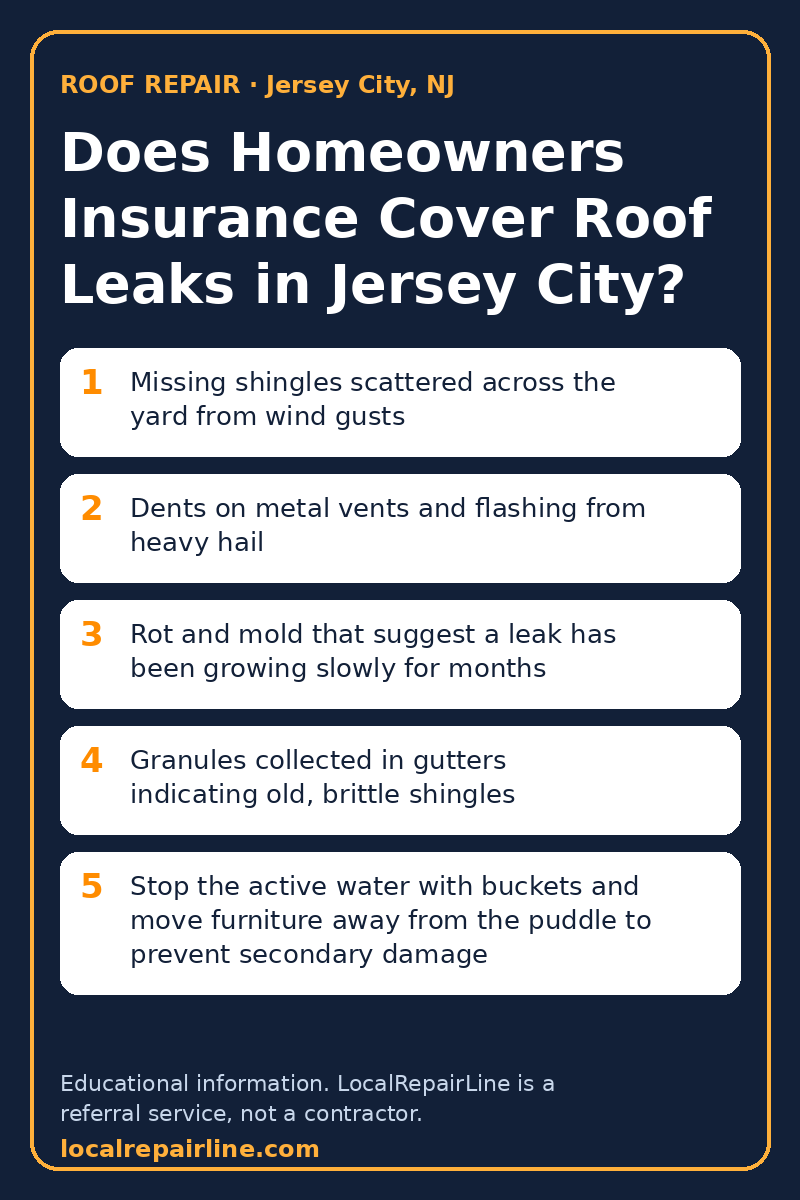
Sudden Storm Damage Versus Long-Term Wear and Tear
Insurance doesn't act as a maintenance fund. If your roof is past its prime and leaks because the materials simply wore out over decades, the insurance company will deny the claim.
The local climate involves freezing winter temperatures and heavy snow accumulation, which frequently leads to ice dam formation along eaves and subsequent interior leaks. If ice dams form because your attic lacks proper insulation and ventilation over many winters, property insurance providers often categorize that as deferred maintenance rather than a sudden act of nature.
Here's what adjusters look for when deciding your payout:
- Missing shingles scattered across the yard from wind gusts.
- Dents on metal vents and flashing from heavy hail.
- Rot and mold that suggest a leak has been growing slowly for months.
- Granules collected in gutters indicating old, brittle shingles.
How Historic and Older Jersey City Roofs Impact Insurance Claims
Many homes in the area feature older architecture, such as historic brownstones and Victorian rooflines with complex slopes, flat sections, or intricate slate tiles. These classic structures add incredible character to the neighborhood, but they create unique headaches for insurance claims.
Older roofs often feature materials that are tough to match or require specialized labor to repair. When wind-driven rain sneaks past aging flashing on a complex Victorian roof, adjusters sometimes point to the age of the materials rather than the storm itself.
If your roof is old, an adjuster might argue that the wind only exposed existing weaknesses. Proving that the storm was severe enough to damage a structurally sound roof requires clear evidence.
Step-by-Step Guide to Documenting Your Roof Leak for the Adjuster
When water starts dripping, you need to act quickly to protect your home and your potential insurance claim. Insurance companies require proof before they write a check, so thorough documentation is mandatory.
Insurance adjusters require professional documentation of storm damage versus wear and tear to approve a claim. When you reach this point, you can LocalRepairLine instead of guessing about the cause of the leak.
Follow these steps to build a strong record of the damage:
- Stop the active water with buckets and move furniture away from the puddle to prevent secondary damage.
- Take clear, wide-angle photos and videos of the damaged ceilings, walls, and flooring inside your home.
- Photograph the exterior and the roof from the ground, capturing any missing shingles, fallen branches, or dented metal.
- Check local weather reports for the date of the storm to match the exact time high winds or heavy rain hit your street.
- Keep every receipt for emergency supplies, like tarps or plywood, that you bought to prevent further water intrusion.
What to Do If Your Insurance Claim Gets Denied
Getting a denial letter from your insurance company can feel frustrating, but it isn't always the final word. Many initial claims get rejected because the first adjuster missed storm-related details or blamed the wrong cause.
You have the right to request a re-inspection if you disagree with the decision. Bringing in an independent expert to go over the roof can uncover wind damage or impact marks that the insurance company overlooked.
Costs vary by house, but hiring a public adjuster or getting a second opinion from a qualified tradesperson can help you present a stronger case. Always keep a written paper trail of every conversation and email exchange with your insurance provider.
Working with Local Roofers to Streamline Your Claim Process
A claim takes patience and clear communication. Teaming up with a local contractor who understands regional weather patterns helps bridge the gap between you and the insurance adjuster.
A knowledgeable local roofer can inspect the damage, write a detailed report, and even meet the insurance adjuster on your roof to point out storm impacts. This collaboration ensures that subtle damage from heavy nor'easters or severe thunderstorms doesn't get ignored.
FAQ
Will homeowners insurance pay for a roof leak caused by old age?
Standard policies don't cover leaks that happen due to normal wear, tear, and aging materials. Insurance only covers sudden, accidental damage like a tree branch falling or wind ripping off shingles. If your roof is simply old and worn out, you'll have to pay for the repairs out of pocket.
How do I prove storm damage to my insurance adjuster in Jersey City?
You need to take clear photos of the damage both inside and outside your house immediately after the storm. Saving local weather reports that document high winds or heavy rain on the day of the leak also helps. Having a local professional inspect the roof provides the detailed evidence adjusters look for.
Does insurance cover water damage inside my house from a leaky roof?
Yes, if the roof leak itself was caused by a covered event like a severe storm or wind damage, the resulting interior water damage is usually covered. This includes ruined drywall, soaked insulation, and warped flooring. However, if the roof leak stems from ignored maintenance, the interior water damage will also be denied.
Should I call my insurance company or a roofer first after discovering a leak?
It's often smart to have a local roofer inspect the damage before filing a formal claim. A roofer can tell you if the repair cost will likely fall below your deductible or if there's legitimate storm damage present. Filing a claim for minor damage that gets denied can sometimes raise your insurance rates.
Need a roof repair pro in Jersey City, NJ?
Talk to an independent local contractor who serves your area.
📞 Call (888) 815-2998Roof repair in Jersey City, NJCall hours: 8am–8pm ET, 7 days