Does Homeowners Insurance Cover Roof Leaks in Paterson, NJ?
Finding water staining on your ceiling ruins your day instantly. You wonder right away if does homeowners insurance cover roof leak Paterson NJ claims, or if you'll end up paying for the repairs out of your own pocket. The short answer depends entirely on what caused the water to get inside your house in the first place. Insurance policies generally cover sudden, accidental damage, but they almost always exclude damage tied to old age or neglected maintenance.
Understanding how your specific policy views roof damage makes all the difference. When you spot a drip during a heavy rainstorm, you need to know how to separate normal wear from actual storm damage. Let's look at how local weather patterns and insurance rules intersect in Passaic County.
When Homeowners Insurance Covers a Roof Leak in Paterson
Most standard home insurance policies follow a named-perils or open-perils structure. This means sudden events like falling tree branches, windstorms, and heavy hail receive coverage. If a severe storm rips shingles off your roof and rain pours through the opening into your living room, you likely have a strong claim.
Insurance companies expect you to keep your property in working order. If your shingles are twenty years old, brittle, and curling up at the edges, a routine rainstorm that leaks through those worn spots is usually your responsibility to fix. The policy steps in when an external, unexpected event creates the opening in your roof.
Need a roof repair pro in Paterson, NJ?
Talk to an independent local contractor who serves your area.
📞 Call (888) 815-2998Roof repair in Paterson, NJCall hours: 8am–8pm ET, 7 daysYour call may first be answered by a short screening service that asks what the problem is and where you are. Stay on the line and you will be connected to an independent local pro.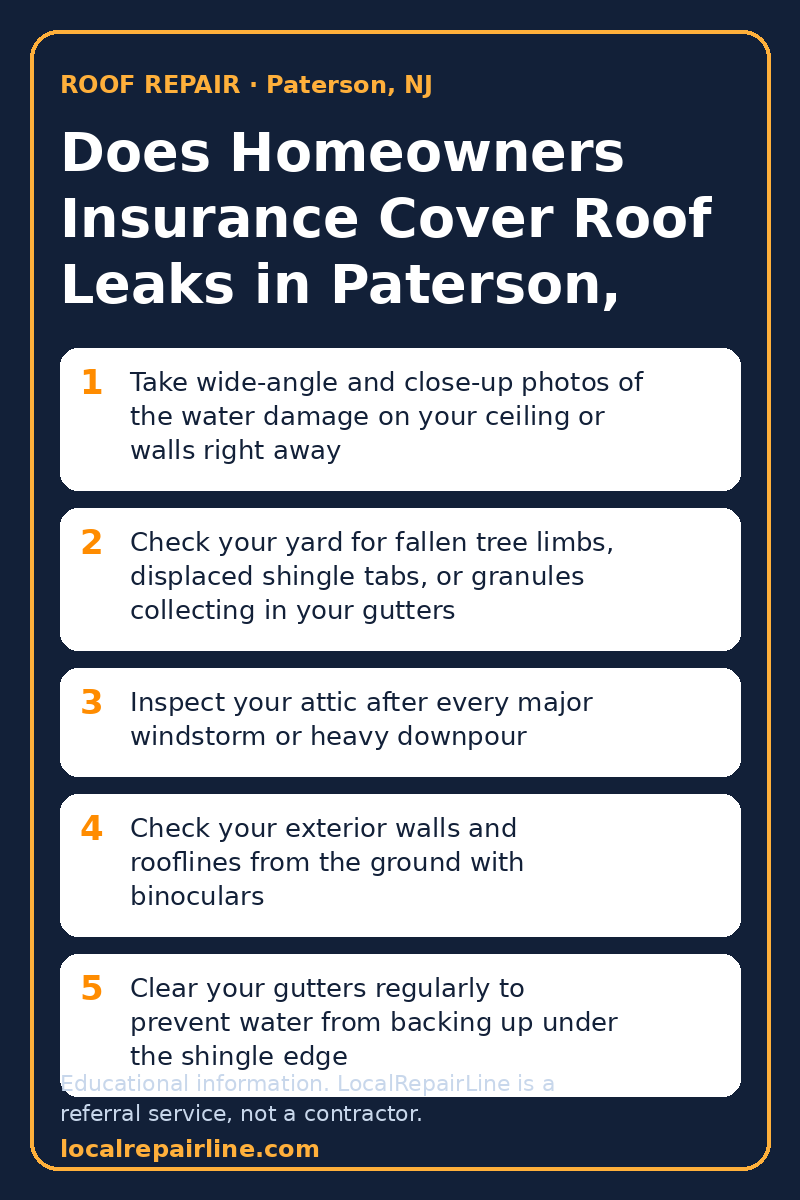
Why Sudden Storm Damage Beats Gradual Wear and Tear Claims
Adjusters spend a lot of time looking for reasons to label roof damage as gradual wear and tear. If water has been seeping slowly through a deteriorated pipe boot for months, the insurer may decline the claim. They view that kind of damage as a maintenance failure rather than a sudden accident.
To get your claim approved, you must connect the leak to a specific weather event. Wind-lifted shingles, punctured underlayment from flying debris, or cracked flashing caused by falling branches all count as sudden damage. Documenting the exact day the leak started helps tie the interior water damage to a recent storm.
How Paterson Weather Triggers Hidden Roof and Ceiling Leaks
Local weather brings unique challenges that complicate insurance claims. Paterson experiences distinct four-season weather, bringing heavy winter snowfall that transitions into spring thaw and moisture buildup. That transition often leads to ice damming along the eaves, forcing water underneath the shingles.
The area regularly encounters severe spring and summer thunderstorms carrying high winds and torrential downpours. These sudden downpours test every seal and penetration on your roof.
Late-autumn and winter Nor'easters drive wind-driven rain against roofs and push accumulated snow against flashing points. This horizontal rain bypasses standard shingle overlaps, creating slow, hidden leaks in attics that go unnoticed until drywall starts sagging.
Step-by-Step Guide to Documenting Your Roof Leak for the Adjuster
When you discover water coming through your ceiling, don't wait to start gathering evidence. Insurance companies rely heavily on proof, and having clear records prevents adjusters from dismissing your claim as old damage.
- Take wide-angle and close-up photos of the water damage on your ceiling or walls right away.
- Go up to your attic safely with a flashlight and photograph any wet framing, damp insulation, or daylight showing through the roof deck.
- Check your yard for fallen tree limbs, displaced shingle tabs, or granules collecting in your gutters.
- Write down the exact date and time you first noticed the leak, matching it up with local weather reports of high winds or heavy rain.
- Keep samples of any damaged materials, like ruined drywall chunks or saturated insulation, if the adjuster asks to inspect them.
What to Do If Your Insurance Claim Gets Denied or Underpaid
Receiving a denial letter from your insurance company can feel frustrating and discouraging. Adjusters sometimes misclassify storm damage as wear and tear to save the company money. You don't have to accept their first decision as final if you have solid proof of recent storm impact.
Ask for a detailed written explanation of why they denied the claim. Compare their findings with your own photos and local weather data from the day the damage occurred. You can request a reinspection with a different adjuster or hire an independent public adjuster to evaluate the roof independently.
Working with a Local Roofer Before Filing Your Claim
The moment the homeowner realizes insurance policies often require strong initial evidence, making a professional local roof inspection essential before filing paperwork. Calling an independent roofer in Paterson before you dial the insurance company gives you a clear advantage. A local professional can climb onto your roof, pinpoint the exact entry point, and take high-resolution photos of the wind or storm damage.
Trying to file a claim without this initial evidence often results in a quick denial or an underpaid settlement. Working with the LocalRepairLine team can also write a detailed assessment of the damage, which you can submit directly to your insurance company to support your case. Costs vary by house, but paying for a professional inspection upfront is far cheaper than absorbing the cost of a full roof repair on your own.
- Inspect your attic after every major windstorm or heavy downpour.
- Check your exterior walls and rooflines from the ground with binoculars.
- Clear your gutters regularly to prevent water from backing up under the shingle edge.
- Save receipts for any temporary patches or buckets used to catch water.
FAQ
Will my insurance company pay for a full roof replacement if only a section is leaking?
Insurance typically only pays to repair the damaged section unless local building codes require a full replacement due to the age or type of existing materials. If matching shingles are no longer available, some policies include matching coverage that forces the insurer to replace the entire slope. Your specific policy language dictates whether partial repairs or full replacements apply.
How do I know if my roof leak was caused by storm damage or old age?
Storm damage usually shows up as missing, creased, or bruised shingles, along with dented metal vents and displaced flashing. Old age damage typically involves widespread granule loss, curling shingle edges, and brittle materials that fail under normal weather conditions. A close inspection of the attic framing and the underside of the roof deck often reveals whether the leak happened suddenly or developed over several seasons.
Should I call my insurance company or a roofer first after discovering a leak?
Contacting a local roofer first is usually the smarter move before talking to your insurance company. A roofer can tell you if the damage qualifies as an insurance claim or if it's just minor wear and tear you should pay for yourself. Filing claims for minor issues can raise your rates without paying out any money if the damage falls below your deductible.
What happens if my insurance adjuster misses hidden water damage in my attic?
Hidden water damage in insulation and wooden rafters can lead to mold growth and structural rotting if left untreated. If you suspect the adjuster missed damage during their inspection, hire an independent roofing professional to document the hidden areas thoroughly. You can submit these additional findings to your insurance company as a supplemental claim to cover all necessary repairs.
Need a roof repair pro in Paterson, NJ?
Talk to an independent local contractor who serves your area.
📞 Call (888) 815-2998Roof repair in Paterson, NJCall hours: 8am–8pm ET, 7 days