Does Insurance Cover Furnace Repair in Lansing, MI?
Your furnace quit, the house is getting cold, and you're wondering who pays. If you're asking does insurance cover furnace repair Lansing MI homeowners deal with every winter, the honest answer is: usually not for the furnace itself. But the damage a dead furnace causes can be a different story.
Here's how coverage tends to work, what a home warranty adds, and what to do in the first few hours.
Does Insurance Cover Furnace Repair Lansing MI? The Short Answer
Your homeowners policy spells out which events it covers, and fire or lightning may be among them, but the exact list depends on your policy. It isn't a maintenance plan. If your furnace simply wore out or stopped working, many policies treat that as a cost of owning a home, though your own wording is what counts.
Insurance may help when something outside the furnace damages it. Examples:
- A fire that starts in or near the furnace
- A lightning strike or power surge, depending on your policy wording
- A covered event like a tree falling on the house and wrecking the equipment
- Water damage from a pipe that burst because the heat went out (more on this below)
Policies differ, so read yours or ask your agent. Costs vary by house, and so does coverage.
Need an HVAC repair pro in Lansing, MI?
Talk to an independent local contractor who serves your area.
📞 Call (833) 669-0233HVAC repair in Lansing, MICall hours: 8am–8pm ET, 7 daysYour call may first be answered by a short screening service that asks what the problem is and where you are. Stay on the line and you will be connected to an independent local pro.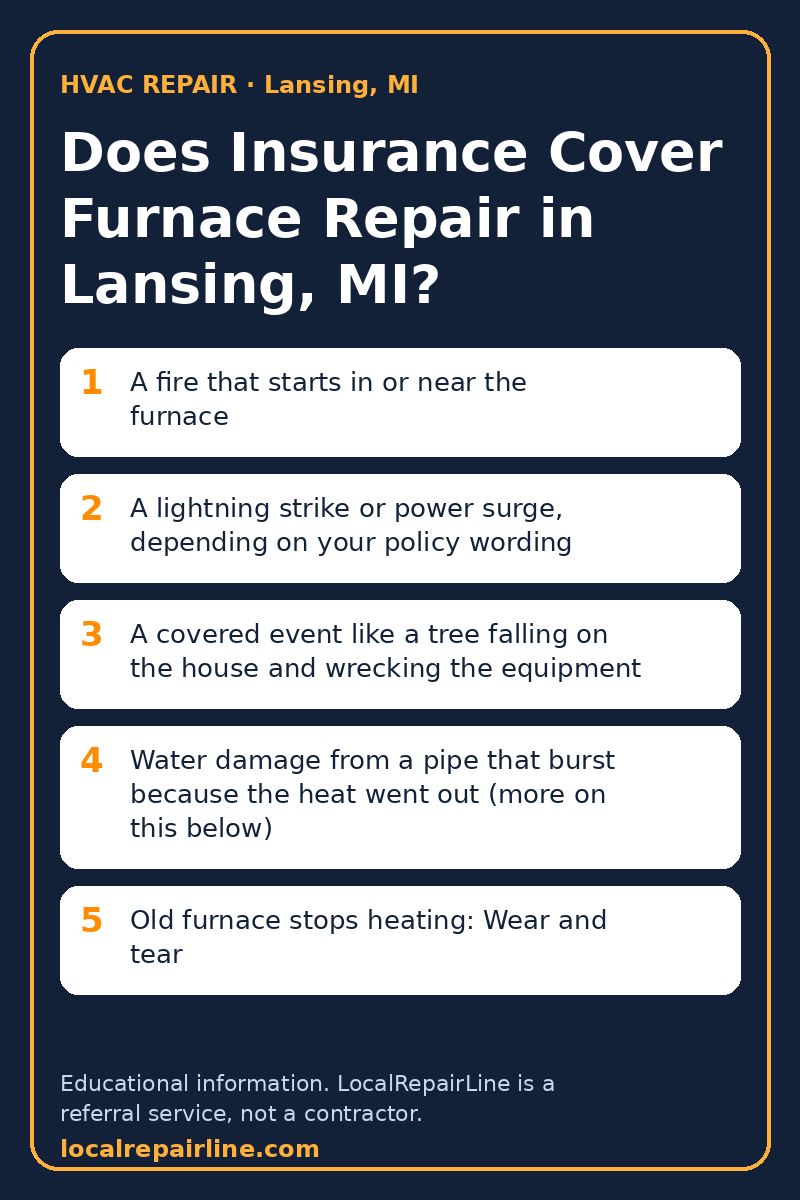
Wear and Tear vs. Sudden Damage: Why Furnace Repairs May Be Denied
Most policies separate sudden damage from slow decline. A blower motor that gives out after years of use, a worn igniter, a failed control board, or a furnace that's simply old may all be treated as wear and tear. That may be excluded under your policy, so check the wording.
Lansing winters are long and cold, so a furnace can run for much of the fall, winter, and spring. The blower may also run in summer to move air from the AC. That's a lot of hours, and parts wear out over time.
Here's how a few real scenarios usually play out:
- Old furnace stops heating: Wear and tear. Usually denied.
- Cracked heat exchanger found during a tune-up: Usually treated as a mechanical failure from age or stress, so often denied. It's also a safety issue, so don't run the furnace until a pro checks it.
- Power surge fries the control board: Sometimes covered if your policy includes the surge. An adjuster may want proof of the cause.
- Fire in the furnace area: Fire may be a covered cause under your policy, though how it started can affect the claim.
Maintenance matters too. Some policies exclude damage that results from neglect, so read that part of your wording.
Frozen Pipes After a Furnace Failure: The Claim That May Be Covered
This is the part most people miss. A Lansing cold snap or a storm that knocks out power can push a heating system past its limits. If the furnace fails and the house gets cold enough, pipes can freeze and burst.
The furnace repair may still be denied. But the water damage from a burst pipe may be a covered loss, depending on your policy. That can include the cleanup, flooring, drywall, and belongings.
Many policies expect you to take reasonable steps to prevent more damage. So the first hours matter.
What to do right away
- If you smell gas or suspect carbon monoxide, get everyone out and call emergency services or your gas utility.
- If a pipe has burst, shut off the main water valve.
- Keep the house as warm as you safely can. Use space heaters carefully, following their instructions, and keep them away from anything that burns.
- Open cabinet doors under sinks on exterior walls so warmer air reaches the pipes.
- Let a faucet drip if pipes are cold but not yet burst, and photograph anything that does burst.
- Call a local HVAC pro for a diagnosis, and a plumber if a pipe has burst.
Keep receipts for emergency steps. Check your policy for language about maintaining heat. Some policies have conditions tied to winter freeze damage, so read the wording or ask your insurer.
Home Warranty vs. Homeowners Insurance for Furnace Repair
A home warranty is a different product. It's a service contract, not insurance. Many plans are built to cover breakdowns from normal wear, which is exactly what homeowners insurance skips.
That sounds like a clear win, but read the fine print. Common tradeoffs include:
- A service fee each time a technician comes out
- Limits on how much the plan pays per item or per year
- Exclusions for pre-existing problems or poor maintenance
- Rules about which technicians you can use
- Disputes over repair versus replacement
If you have a warranty, check the claim process before you call anyone. Some plans require you to file first and use their contractor. A repair done on your own may not get reimbursed.
If you don't have a warranty, don't expect to buy one and use it right away. Many plans have a waiting period and won't cover problems that already exist.
How to Document a Furnace Breakdown Before You File a Claim
Good records help with an insurance claim, a warranty request, or both. They also protect you if the insurer questions the cause.
Here's a short checklist:
- Photograph the furnace, the thermostat reading, and any visible damage, leaks, or scorch marks.
- Write down when it stopped, what you heard or smelled, and the indoor temperature.
- Note any storm, outage, or surge around that time.
- Get a written diagnosis and repair plan from an HVAC pro that names the failed part and likely cause.
- Keep maintenance records, like past tune-ups and filter changes.
- Save receipts for emergency steps and temporary heat.
If pipes burst, photograph the damage before you clean up. Keep damaged items until the adjuster has seen them, unless they're unsafe.
Repair Bill vs. Deductible: When Filing Isn't Worth It
Before you open a claim, compare the likely repair bill to your deductible. If the repair costs about the same or less, a claim usually won't pay anything.
Claims can also affect your future premiums or renewal, depending on the insurer. Filing a claim that gets denied or pays very little may leave a mark for little benefit. Ask your agent how claims are handled before you file. Some agents will answer general questions without starting a claim.
A simple way to think about it:
- Repair far below your deductible: Pay it yourself. Skip the claim.
- Furnace failure plus real water damage: The water claim may be worth filing, since those bills can climb fast.
- Fire or major storm damage: Talk to your insurer promptly.
- Old furnace with a worn-out part: Expect a denial. Focus on the repair or replacement decision.
Costs vary by house, so get the scope and parts in writing first.
When to Call a Local Furnace Pro Instead of Waiting on the Insurer
If your policy won't cover a worn-out furnace, waiting on a claim decision just leaves you in a cold house. In a Lansing winter, that's how pipes freeze.
This is the point to talk to a local HVAC pro in Lansing, MI instead of guessing, and a local pro network can be a practical way to find one. A technician can find the actual failure, tell you whether it's a repair or a replacement conversation, and put it in writing. That written breakdown is also the paperwork you need for an insurance claim or warranty request.
Ask the pro to note the cause of failure and the condition of the equipment. Ask what the safe steps are while you wait on parts, such as temporary heat. If the heat exchanger is cracked or you suspect carbon monoxide, don't run the furnace until it's been checked.
FAQ
Does homeowners insurance cover furnace repair or replacement?
Usually not when the furnace fails from age or normal use. Coverage is more likely if a covered event, such as fire or a storm, damaged it. Your policy wording decides, so ask your agent.
Will insurance pay for a furnace that stopped working because it's old?
Typically no. Wear and tear is commonly listed as an exclusion, and age-related failure often falls under it, so check your policy. A written diagnosis from an HVAC pro can confirm the cause, but don't count on a payout.
Does a home warranty cover furnace repair in Michigan?
Many home warranty plans cover furnace breakdowns from normal wear, but terms vary by plan. Look for service fees, coverage caps, exclusions for poor maintenance or pre-existing issues, and rules about which technician you must use. Read the contract before you rely on it.
Does insurance cover burst pipes if my furnace breaks in winter?
The water damage from burst pipes may be covered even when the furnace repair isn't, depending on your policy wording. Many policies expect you to take reasonable steps to limit further damage, like shutting off the water and keeping the home warm. Check your policy for freeze-related conditions, and ask your agent if the wording
Need an HVAC repair pro in Lansing, MI?
Talk to an independent local contractor who serves your area.
📞 Call (833) 669-0233HVAC repair in Lansing, MICall hours: 8am–8pm ET, 7 days