Emergency Furnace Repair Springfield OH: What to Do First
It's late, the house is getting cold, and the furnace is silent or acting strange. If you're searching for emergency furnace repair Springfield OH, the first question isn't who to call. It's whether this is a stop-everything problem or one that can safely wait for morning.
This guide walks you through that call, step by step. Costs vary by house, so you'll get cost factors rather than made-up numbers.
Is Your Furnace Problem a Real Emergency? Quick Triage
Springfield winters are cold and snowy, and a sharp cold snap can turn a dead furnace into a real problem quickly. Still, "no heat" and "danger" are two different things.
Stop and call right away if you notice:
- A gas smell (often described as rotten eggs)
- A carbon monoxide alarm going off
- Burning, scorching, or hot-metal odors
- Smoke, soot, or scorch marks around the furnace
- Flames that look yellow or flickering instead of steady blue
Urgent, but not a safety emergency:
- No heat and the house is dropping toward the 40s
- Pipes in exterior walls, a crawl space, or an unheated garage at risk of ice
- Someone at home who is elderly, very young, or medically fragile
Can usually wait until morning:
- The furnace runs but heats unevenly
- Odd noises, with the house still holding a safe temperature
- The thermostat acts up but the system still comes on
Need an HVAC repair pro in Springfield, OH?
Talk to an independent local contractor who serves your area.
📞 Call (833) 669-0233HVAC repair in Springfield, OHCall hours: 8am–8pm ET, 7 daysYour call may first be answered by a short screening service that asks what the problem is and where you are. Stay on the line and you will be connected to an independent local pro.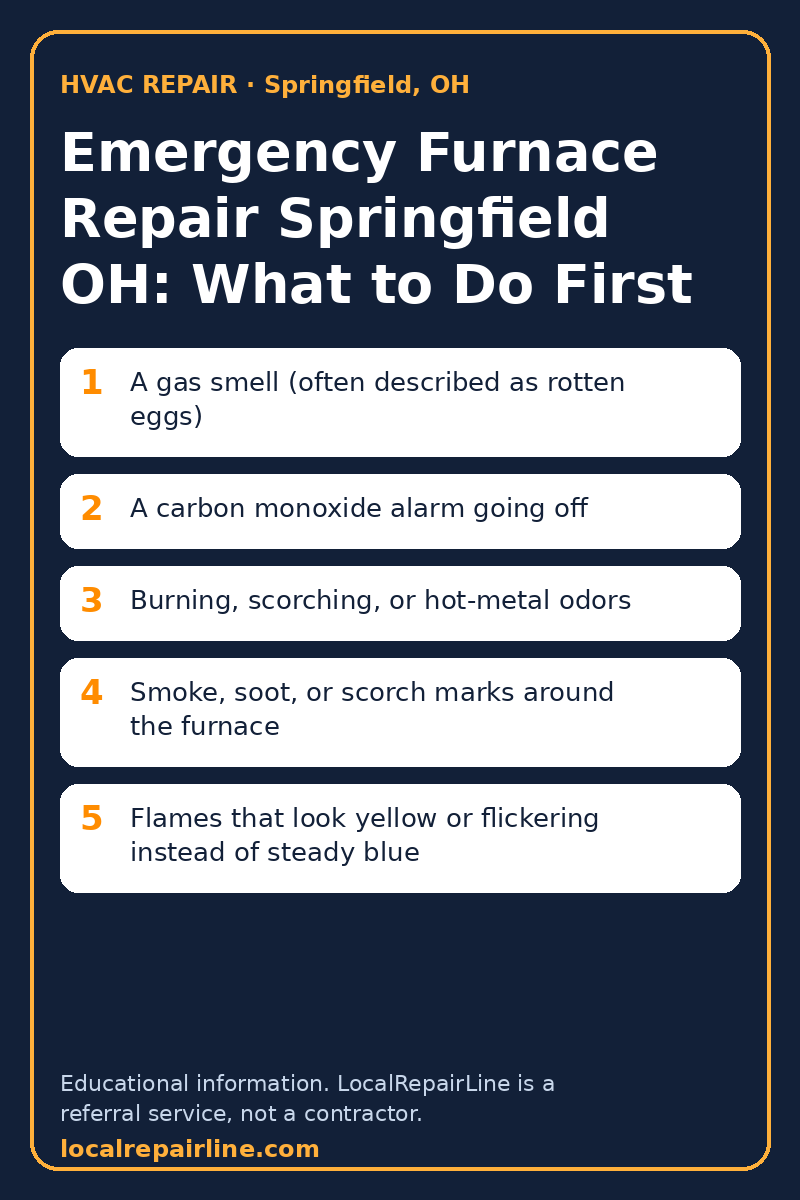
Stop and Call Right Away: Gas Smell, Carbon Monoxide Alarm, Burning Odors
These are the red flags to never ignore, and none of them is a do-it-yourself situation.
If you smell gas, get everyone out of the house. Don't flip light switches, use a lighter, or fuss with the furnace on your way out. Call your gas utility and 911 from outside or from a neighbor's home.
If a carbon monoxide alarm sounds, treat it as real. Get everyone, pets included, into fresh air and call 911. Headache, dizziness, nausea, or confusion alongside an alarm makes it more urgent.
A burning smell needs a closer look. A brief dusty smell the first time you run the furnace in fall is common, since dust burns off after months of sitting idle. A sharp, hot, or chemical smell that lingers is different, so shut the system off at the thermostat and call a pro.
A cracked heat exchanger can let combustion gases into your home. You can't confirm one yourself, but a CO alarm, soot, or odd flame color are reasons to leave the furnace off until someone qualified inspects it.
Safe Checks to Try Before You Call (Thermostat, Filter, Pilot, Breaker)
If there's no gas smell, no alarm, and nothing scorching, a few simple checks can sometimes get you running again. Work through them in order.
- Thermostat: Set it to "Heat" and turn the target temperature a few degrees above the room temperature. Replace the batteries if the screen is blank or dim.
- Furnace power switch: Many furnaces have a switch that looks like a light switch on or near the unit. Someone may have flipped it by accident.
- Breaker: Check the panel for a tripped breaker. Reset it once. If it trips again, stop and call.
- Filter: A badly clogged filter can make the furnace shut down on its own safety limit. Swap in a clean one if yours looks packed with dust.
- Furnace door panel: Many units won't run unless the front panel is seated correctly.
- Vents and intake pipes: On high-efficiency models, check the white PVC pipes outside. Snow, ice, or debris can block them and trigger a shutdown.
A few more notes. Some newer furnaces show a blinking light code through a small window, and the label inside the door usually explains it. Note the pattern for the technician.
Pilot lights apply only to older furnaces. If you have one and there's no gas smell, follow the relighting steps printed on the furnace itself. If it won't stay lit, or you aren't sure, stop there.
This is your call point. If the furnace still won't start after the thermostat, filter, breaker, and power switch all check out, it's time to talk to a local HVAC pro in Springfield, OH such as LocalRepairLine instead of guessing. The same goes if you smelled gas, heard a CO alarm, noticed scorching odors, or the house is sliding toward freezing temperatures. Further poking at gas valves, wiring, or burners is how small problems become expensive or dangerous ones.
How to Keep Your Springfield Home Safe and Warm While You Wait for Repairs
Springfield's cold snaps and ice storms can also knock out power, which adds to the problem. Even a gas furnace needs electricity to run its blower and controls. Your goal is to hold steady heat and protect the plumbing while you arrange repairs.
- Shrink the space you're heating. Pick one interior room, close the door, and gather everyone there. Stuff a towel along the bottom of the door.
- Layer up. Blankets, hats, and socks do more than you'd expect.
- Keep warmth in. Close curtains at night, and open south-facing ones during sunny hours.
- Protect pipes. Open cabinet doors under sinks on exterior walls and let a faucet drip slowly. Moving water is harder to ice up.
- Know your water shutoff. If a pipe does burst, you'll want to find it fast.
If you use a plug-in electric space heater, plug it straight into a wall outlet, never an extension cord or power strip. Keep it clear of bedding, curtains, and anything that burns, and never leave it running while you sleep or leave the house.
Never heat with a gas oven or stove, a charcoal grill, or a camp stove indoors. Generators belong outdoors, well away from windows and doors. These are common sources of carbon monoxide poisoning during winter outages.
If the home gets dangerously cold and you can't fix it, going to a friend's or relative's place is a sensible choice.
Common Reasons Furnaces Fail During an Ohio Cold Snap
When temperatures drop suddenly, furnaces run longer and harder, and weak spots show up. Summers in Springfield are warm and humid, so many furnaces sit idle for months and then fail the first time they're really needed.
Common culprits include:
- A dirty filter or restricted airflow, which can cause overheating and shutdowns
- A failed igniter or flame sensor, so the furnace tries to start and quits
- A worn blower motor or capacitor, especially on older systems
- A clogged condensate drain on high-efficiency models
- A blocked exhaust or intake vent from snow or ice
- A thermostat problem, from dead batteries to wiring issues
- Dust and corrosion from a long, humid off-season
Many of these are modest repairs. That matters for the next decision.
Repair or Replace? How to Avoid Panic Decisions You Will Regret
A cold house at night makes people agree to things they'd question at noon. A new furnace is sometimes the right answer, but it's rarely a decision to make in a hurry.
Ask the technician to explain the failed part, what it does, and whether the rest of the system looks sound. Then think about:
- Age of the furnace. Older units with major failures lean toward replacement.
- Size of the repair. A small part is a very different conversation than a heat exchanger.
- Repair history. Repeated breakdowns point toward replacing.
- Safety findings. A cracked heat exchanger is a real reason to replace, and the technician should be able to show you the evidence.
If someone pushes a full replacement the same night, you can ask for a temporary fix to get through, or ask whether the system is safe to run until you've compared a couple of written breakdowns. Costs vary by house, so a written breakdown for your home matters more than rules of thumb. A technician who explains options calmly is a better sign than one who rushes you.
What to Ask When Calling for Emergency Furnace Repair Springfield OH
A few questions help you avoid surprises before you agree to a visit.
- How soon can someone realistically arrive? Get an honest window, not a promise you can't count on.
- How does the service fee work? Ask what the visit covers and whether it applies toward the repair.
- Is there an extra charge for nights or weekends? Some companies charge more for after-hours visits and others don't, so ask before you agree.
- Will you show me the failed part and explain the fix? A clear answer is a good sign.
- Is the repair backed by a warranty on parts and labor? Ask what it covers and for how long.
Write down the answers as you go. If the first company can't come soon enough, calling a second one is perfectly reasonable.
FAQ
How much does an emergency furnace repair call typically cost?
Costs vary by house and depend on the time of day, the specific parts required, and how long the repair takes. Some companies add a separate charge for after-hours visits, so ask about it before you agree to anything. A clear written plan from the technician before they begin work will help you weigh your options without surprises.
When should I shut off my furnace immediately?
You should turn off the furnace right away if you smell natural gas, hear your carbon monoxide detector sound, or see
Need an HVAC repair pro in Springfield, OH?
Talk to an independent local contractor who serves your area.
📞 Call (833) 669-0233HVAC repair in Springfield, OHCall hours: 8am–8pm ET, 7 days