Emergency Furnace Repair in Toledo, OH: What to Do Right Now
When your furnace quits and you're searching emergency furnace repair Toledo OH on your phone, take a breath first. Some outages are a thirty-second fix. Others need a pro quickly.
This guide helps you tell which is which, keep your house livable while you wait, and avoid decisions you'll regret once the house is warm again.
Is Your Furnace Failure a Real Emergency? Warning Signs to Know
Not every dead furnace is an emergency, but a cold house in a Toledo winter calls for a clear plan. Wind off Lake Erie and across the open plains pulls heat out of a house quickly once the furnace stops.
Treat it as urgent if any of these apply:
- You smell gas, or you hear a carbon monoxide alarm.
- You see scorch marks, soot, or melted plastic around the furnace.
- The furnace clicks or tries to start again and again but never lights.
- You hear loud banging, grinding, or screeching before it shut down.
- The house is cooling fast, and someone at home is a baby, an older adult, or in poor health.
If none of those fit and the house is still reasonably warm, you have time for a few safe checks. If heat doesn't come back, or a "minor glitch" keeps repeating during a deep cold snap, get it looked at rather than waiting it out.
Need an HVAC repair pro in Toledo, OH?
Talk to an independent local contractor who serves your area.
📞 Call (833) 669-0233HVAC repair in Toledo, OHCall hours: 8am–8pm ET, 7 daysYour call may first be answered by a short screening service that asks what the problem is and where you are. Stay on the line and you will be connected to an independent local pro.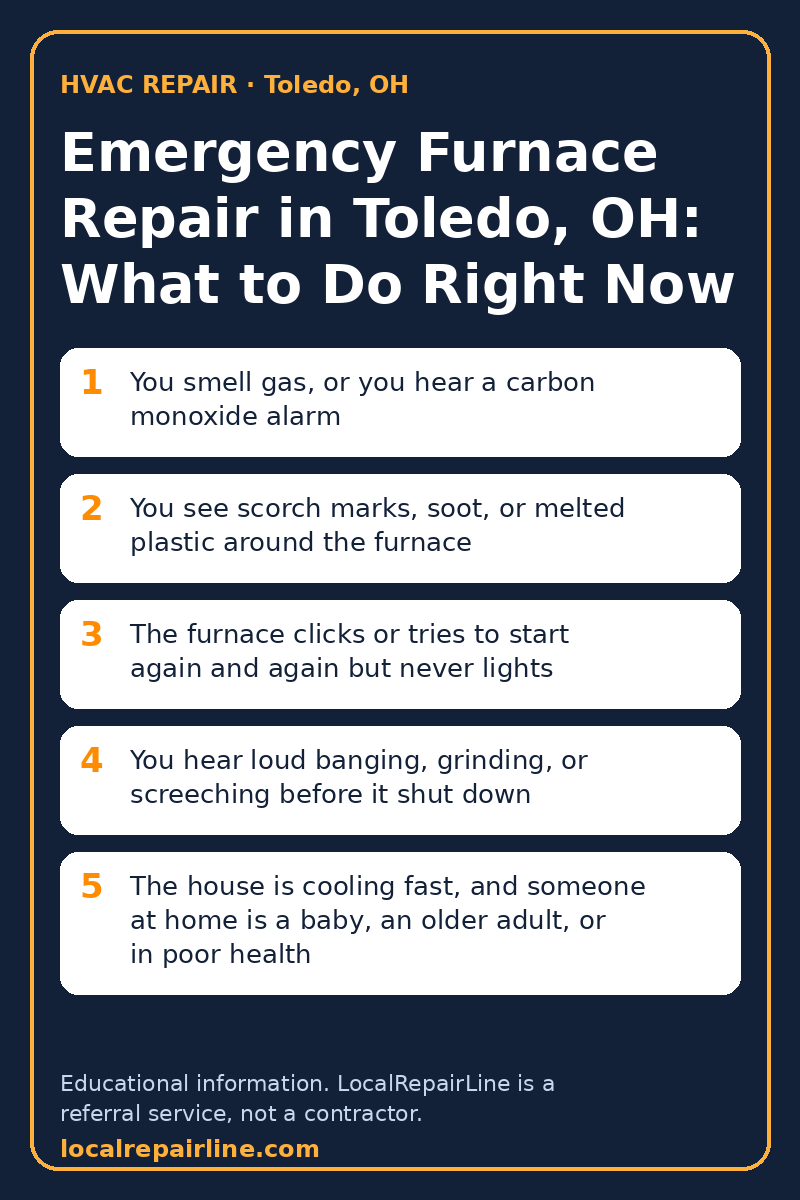
Safety First: Gas Smells, Carbon Monoxide, and When to Leave the House
Safety comes before troubleshooting. If you smell gas (often described as rotten eggs), don't flip switches, use lighters, or hunt for the source.
Get everyone out, including pets. Call your gas utility or emergency services from outside or from a neighbor's home.
The same goes for a carbon monoxide alarm. Carbon monoxide has no smell, so the alarm is your warning. Headache, dizziness, nausea, or confusion in several people at once is another reason to get outside into fresh air and call for help.
Don't go back in until responders say it's okay. And don't silence the alarm and assume it was a false one.
Quick Checks Before You Call: Thermostat, Filter, Power, and Pilot or Ignition
If there's no gas smell and no alarm, a few simple checks are safe for most homeowners. Work through them in order:
- Thermostat: Make sure it's set to "heat," not "auto" or "off," and set a few degrees above room temperature. If it has batteries, replace them.
- Furnace power switch: It often looks like a regular light switch on or near the furnace. Make sure it's on.
- Breaker: Check the panel for a tripped breaker for the furnace. Reset it once. If it trips again, stop.
- Filter: A clogged filter can make a furnace overheat and shut itself off. Swap in a clean one if yours is dirty.
- Ignition or pilot: Newer furnaces light electronically. If yours has a pilot light and you know the relighting steps from your owner's label or manual, follow them exactly. If you're unsure, skip it.
Also check that the gas valve near the furnace is open, and that snow or ice hasn't blocked the outdoor intake or exhaust pipes on a high-efficiency model. Clearing snow from around a vent is fine. Poking inside a vent is not.
When the checks don't work, call a pro
If the thermostat, filter, power switch, and breaker are all fine and heat doesn't come back, stop troubleshooting. This is the point to talk to a local HVAC pro in Toledo, OH, such as LocalRepairLine, instead of guessing.
The same goes if the house is cooling during cold weather. It also goes if you notice a gas smell, a carbon monoxide alarm, scorch marks, or repeated clicking with no flame.
Don't open the furnace cabinet or tinker with gas parts. A wrong guess can turn a repair into a safety problem.
Keeping Your Toledo Home Warm and Pipes Protected While You Wait
Furnaces sit idle all summer and then get asked to run hard when the first deep cold hits. When one fails, your comfort and your pipes are both left exposed to the cold.
How long a house stays safe depends on outdoor temperature, wind, insulation, and how tight your home is. Pipes in exterior walls, crawl spaces, garages, and unheated basements go first. If the house keeps getting colder and you can't warm it back up, plan to protect the pipes or stay somewhere warmer.
To slow the cooling and protect pipes:
- Close doors to rooms you don't need and gather everyone in one room.
- Open cabinet doors under sinks on exterior walls so room air reaches the pipes.
- Let faucets drip a little, especially on lines that run through cold spaces.
- Close blinds and hang blankets over drafty windows at night. Open south-facing curtains by day.
- Put towels at the base of exterior doors to block drafts.
- Know where your main water shutoff is, in case a pipe does crack.
Using temporary heat safely
Space heaters can help, but they cause house fires when used carelessly. Plug an electric heater directly into a wall outlet, not a power strip or extension cord.
Keep it at least three feet from bedding, curtains, and furniture. Put it on a hard, level floor, and turn it off when you leave the room or go to sleep.
Never heat your home with a gas oven, charcoal grill, camp stove, or generator indoors. Those produce carbon monoxide. Don't use fuel-burning heaters that aren't made for indoor use.
If you can't keep the house safe, go stay with family or friends. A night away is much easier to recover from than burst pipes.
Common Causes of a Furnace Breaking Down in Cold Weather
Most winter breakdowns come down to a handful of things:
- Dirty filter or restricted airflow: The furnace overheats and shuts off to protect itself.
- Ignition or flame sensor problems: The burner tries to light, then shuts off. Often you'll hear clicking.
- Thermostat trouble: Dead batteries, wrong settings, or a failing unit.
- Blower motor or fan issues: The furnace heats but little warm air reaches the rooms.
- Blocked vents or drains: Snow, ice, or a clogged condensate line can stop a high-efficiency furnace.
- Worn parts: Long stretches of hard running expose parts that were already tired.
A cracked heat exchanger is the one to take most seriously, because it can let carbon monoxide into your living space. You can't judge it by looking, so if a pro suspects one, follow their advice on whether the furnace should stay off.
FAQ
How do I know if my furnace problem is an emergency?
Treat it as an emergency if you smell gas, hear a carbon monoxide alarm, see soot or scorch marks, or the house is cooling fast with a vulnerable person at home. Loud banging or grinding before a shutdown is also a reason to call quickly. If none of that applies, run the simple checks first.
What can I safely check myself before calling for help?
Check the thermostat settings and batteries, the furnace power switch, the breaker, and the filter. You can also make sure the gas valve is open and that snow isn't blocking outdoor vents. Don't open the furnace cabinet or touch gas parts.
How much does emergency furnace repair cost?
Costs vary by house. The price depends on what failed, how hard the part is to get, how old the furnace is, and when the work happens. Ask for the likely cause, the repair options, and what each would involve before you agree to anything.
How long can my house stay safe without heat?
It depends on outdoor temperature, wind, insulation, and how tight your home is. Pipes in exterior walls, garages, crawl spaces, and unheated basements are at risk first. If the house keeps getting colder and you can't warm it back up, take steps to protect the pipes or go stay somewhere warm.
Is it safe to use a space heater until the furnace is fixed?
An electric space heater can help if you use it carefully. Plug it straight into a wall outlet, keep it at least three feet from anything that burns, and turn it off when you leave the room or sleep. Never use a gas oven, grill, camp stove, or indoor generator for heat, since they produce carbon monoxide.
Should I try to relight the pilot light myself?
Only if your furnace has a pilot light and you know the exact steps from the owner's label or manual. Follow them exactly. If you're unsure, or if you smell gas at any point, leave it alone and get help.
Need an HVAC repair pro in Toledo, OH?
Talk to an independent local contractor who serves your area.
📞 Call (833) 669-0233HVAC repair in Toledo, OHCall hours: 8am–8pm ET, 7 days