Frozen Pipes Burst in Beavercreek, OH? What to Do Right Now
If frozen pipes burst Beavercreek OH is what you just typed into your phone, take a breath and start with the water. Water from a split pipe can soak into drywall, insulation, and flooring, so the first step is stopping the flow. The steps below cover the first ten minutes, the hidden-leak check once things warm up, and what to save for an insurance claim.
First 10 Minutes: Shut Off the Water and Cut Power Risks
Go carefully and watch your footing. Wet floors and electricity are a bad mix.
- Shut off the main water valve. It's usually where the water line enters the house, often in a basement, utility room, or near the water heater. Turn it clockwise until it stops.
- Open a faucet or two. Start on the bottom floor of the house. This drains the lines and relieves pressure on the damaged section.
- Check for water near electrical items. If water is near outlets, power strips, or the electrical panel, stay out of it. Turn off power only if you can reach the breaker box without stepping through water. If you can't, call your electric utility or an electrician.
- Turn off the water heater. Shut off the gas or breaker so the tank doesn't run with the supply cut off.
- Contain what you can. Use buckets, towels, and a wet-dry vacuum for standing water. Move rugs, boxes, and furniture out of the wet area.
If you can't find the main valve or it won't turn, a plumber can help get the water shut off and check the line.
Need a plumbing repair pro in Dayton, OH?
Talk to an independent local contractor who serves your area.
📞 Call (833) 350-0420Plumbing repair in Dayton, OHCall hours: 8am–8pm ET, 7 daysYour call may first be answered by a short screening service that asks what the problem is and where you are. Stay on the line and you will be connected to an independent local pro.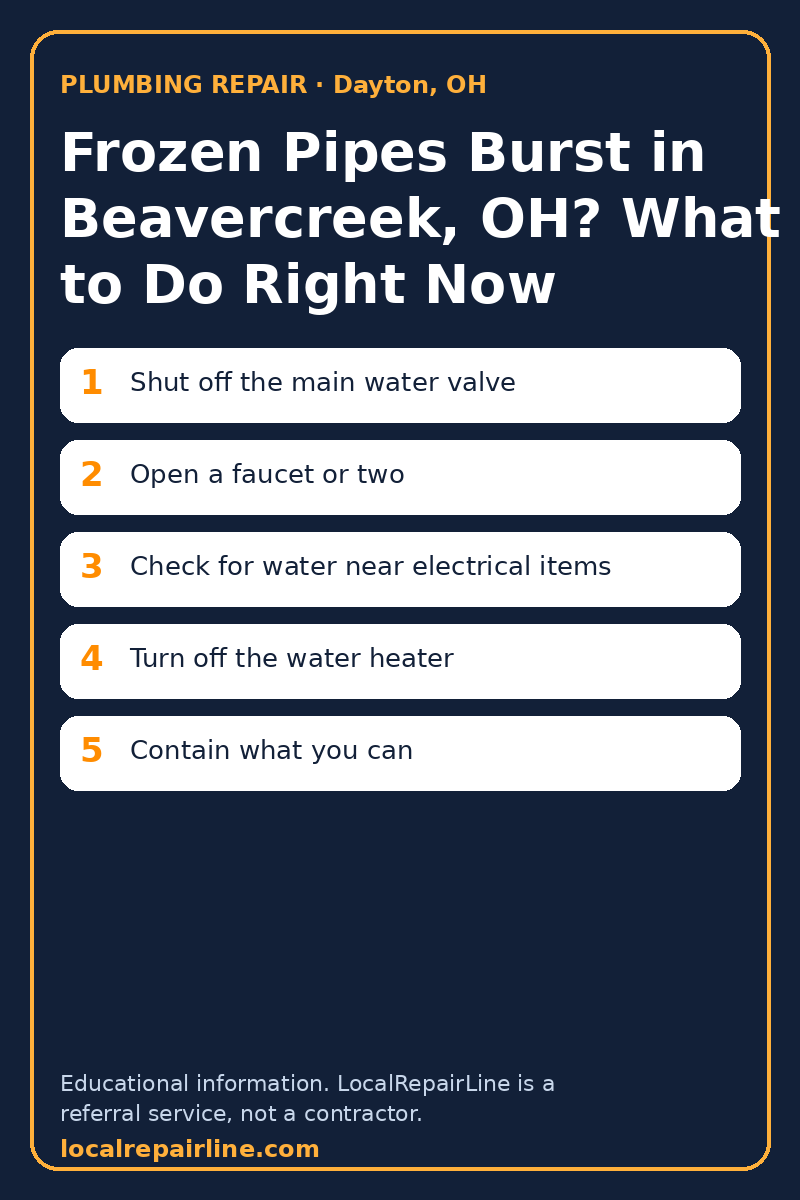
How to Tell If a Pipe Has Burst or Is Only Frozen
A pipe can be solidly iced up without being broken. It can also be split and still blocked by ice, so you may not see water until it thaws.
Signs a pipe is frozen but may not have burst yet:
- A faucet gives only a trickle, or nothing at all
- Frost on an exposed pipe in a garage, basement, or crawl space
- Pipes along exterior walls or in unheated areas feel icy
- A bulge or visible crack in the pipe
Signs it has likely burst:
- Water stains, bubbling paint, or sagging drywall
- The sound of dripping or running water when every fixture is off
- A musty or damp smell in one spot
- Sudden low pressure that wasn't there before the cold snap
- A water meter that keeps moving when everything is off
Southwest Ohio winters often swing between hard cold and milder days. That swing is why a pipe can look fine on a frozen morning and start leaking the afternoon it warms up.
What Not to Do: Mistakes That Make Burst Pipe Damage Worse
A few well-meant moves can turn a small problem into a big one.
- Don't use an open flame. A torch or lighter near a pipe can start a fire inside a wall or scorch framing.
- Don't crank the heat way up in one blast. Fast, uneven thawing can stress pipes that are already cracked. Gentle, steady warmth is safer.
- Don't leave the main on to "see what happens." If you suspect a split, keep the water off until the pipe is checked.
- Don't patch one spot and call it done. A pipe that cracked in one place often cracked in more than one.
- Don't toss damaged materials right away. You may need them for your claim (more on that below).
- Don't ignore a ceiling bulge. Water pooled above drywall can come down all at once. Poke a small hole with a screwdriver over a bucket to relieve it, and keep clear of the area.
Frozen Pipes Burst Beavercreek OH: Hidden Leaks During the Thaw
This is the part many guides skip. Ice can plug a crack like a cork. When temperatures climb and the ice melts, water can start pushing out of a split you never saw.
Once the weather warms and the pipes thaw, check these spots:
Walls
Look at walls that share space with exterior walls, kitchens, and bathrooms. Watch for discoloration, soft or bubbling paint, warped baseboards, and damp spots. Press gently on drywall. It should feel firm, not spongy.
Ceilings
Check below upstairs bathrooms and any room under an attic run. Brown rings, sagging, or drips that come and go are all warning signs.
Crawl spaces and basements
Use a flashlight and look along pipes, joists, and subfloor for wet insulation, drips, or puddles. Pipes near vents, rim joists, and exterior walls are common trouble spots.
Around fixtures and cabinets
Open the cabinets under sinks and look at supply lines and the wall behind them. Check around the water heater and washing machine hookups too.
Summers here run warm and humid. Water left in a closed wall or crawl space can turn into musty odors and mold once the weather changes, so it's worth checking for hidden moisture while you're already looking around.
When to stop checking and call a plumber
Here's the line. You've shut off the main valve, and you still see water stains spreading, hear dripping inside a wall, or find low water pressure once the pipes have thawed. At that point the leak is hidden or the pipe is split, and guessing won't fix it.
This is when to talk to a local plumbing pro in Beavercreek, OH, and you can find one through localrepairline.com. A plumber can find the break, repair it, and check the rest of the line before the damage spreads. Opening walls blindly or patching one spot can leave a second split hidden.
Document the Damage Before You Clean Up: Photos, Notes, and Insurance
Take your time here. Once cleanup starts, evidence disappears.
- Photograph wide, then close. Capture each room's overall condition, then the damaged areas up close.
- Include the source. Photograph the burst section of pipe before it's removed, if you can.
- Shoot video. Walk through slowly and narrate what you see.
- Keep damaged items. Hold onto samples of wet carpet, drywall, or other materials until you've asked your insurance company whether they need them. Photograph anything you do throw out.
- Write notes. Record when you discovered the leak, when you shut off the water, what the weather was like, and who you contacted.
- List damaged belongings. Include brand, approximate age, and where each item was.
- Save receipts. Keep them for the plumber, fans, dehumidifiers, and any temporary housing.
Then call your insurance agent or company. Ask what steps they expect from you and what your policy says about stopping further damage.
Repair or Replace? What Affects the Cost of a Burst Pipe Fix
Costs vary by house, and the extent of the damage plays a big part. These are the factors that move the price:
- Access. A pipe in an open basement ceiling is simpler than one behind finished drywall or under a slab.
- Number of splits. One crack is a short repair. Several splits may mean replacing a whole run.
- Pipe material. Copper, PEX, and older galvanized steel each repair differently, and older pipe may fail again nearby.
- Location. Exterior walls, crawl spaces, and attics can mean more labor.
- Water damage cleanup. Drying, removing wet insulation or drywall, and repairs afterward are often separate from the plumbing work.
Good questions to ask a plumber:
- Did you find just one split, or is the rest of the line at risk?
- Is this a patch or a section replacement, and why?
- Will walls or ceilings need to be opened, and who repairs them afterward?
- What should I do to protect this area from the next cold snap?
Preventing the Next Beavercreek Cold Snap From Cracking Your Pipes
Beavercreek has four distinct seasons, with cold, snowy winters that can bring hard cold snaps. A little prep before the next one goes a long way.
- Insulate pipes in garages, crawl spaces, attics, and along exterior walls.
- Disconnect garden hoses and shut off outdoor spigots from inside, if your home has that valve.
- Seal gaps where cold air gets in around pipes, vents, and rim joists.
- Open cabinet doors under sinks on exterior walls during a hard cold spell.
- Let faucets drip slightly on the coldest nights.
- Keep the heat on, even if you're away.
- Know where your main shutoff is, and make sure everyone in the house does too.
FAQ
What do I do first if a frozen pipe bursts in my house?
Shut off the main water valve right away, then open a faucet on the bottom floor to drain the lines. Stay out of standing water if it's near outlets or the electrical panel. After that, turn off the water heater and start containing the water with towels and buckets.
Need a plumbing repair pro in Dayton, OH?
Talk to an independent local contractor who serves your area.
📞 Call (833) 350-0420Plumbing repair in Dayton, OHCall hours: 8am–8pm ET, 7 days