Plumber Kettering OH: What to Check Before You Hire
Searching for a plumber Kettering OH homeowners can rely on usually happens at a bad moment: water on the floor, a drain that won't clear, or a basement that smells wrong. Before you start dialing, it helps to know how serious the problem is, what the job might involve, and how to spot a pro worth hiring.
This guide walks through all of that, with a focus on what Kettering's weather and older homes do to plumbing.
When a Plumbing Problem in Kettering Can't Wait
Some problems can sit until morning. Others need attention sooner, because water left running can soak into floors, drywall, and anything electrical nearby.
Treat it as urgent if you see any of these:
- Water that won't stop, such as a burst pipe or a supply line spraying or pouring.
- A sewage smell, or wastewater backing up in a tub, shower, or floor drain.
- No hot water during a cold snap, especially if you suspect a frozen line.
- A ceiling stain that's growing, sagging, or dripping.
- A sump pump that has stopped or can't keep up during a storm.
If water is actively flowing, find your main shutoff valve first. It is often near the water meter, where the line enters the house, or in the basement or a utility area. Turn it clockwise until it stops.
Here is the honest part. A shutoff valve and a bucket only buy you time. If one of the problems above matches what you're seeing, a local plumbing pro in the Dayton, OH area, such as Local Repair Line, can look at it with you, rather than you guessing at the fix. A plumber can look at a burst line or sewer backup and explain your repair options.
What can usually wait a day
- A slow drip from a faucet or under a sink (shut off the supply valve under the fixture and place a pan beneath it).
- A toilet that runs now and then.
- A single slow drain with no smell and no other fixtures affected.
- Low water pressure at one fixture only.
"Can wait" does not mean "can be ignored." It means you have time to compare options rather than accept the first available slot.
Need a plumbing repair pro in Dayton, OH?
Talk to an independent local contractor who serves your area.
📞 Call (833) 350-0420Plumbing repair in Dayton, OHCall hours: 8am–8pm ET, 7 daysYour call may first be answered by a short screening service that asks what the problem is and where you are. Stay on the line and you will be connected to an independent local pro.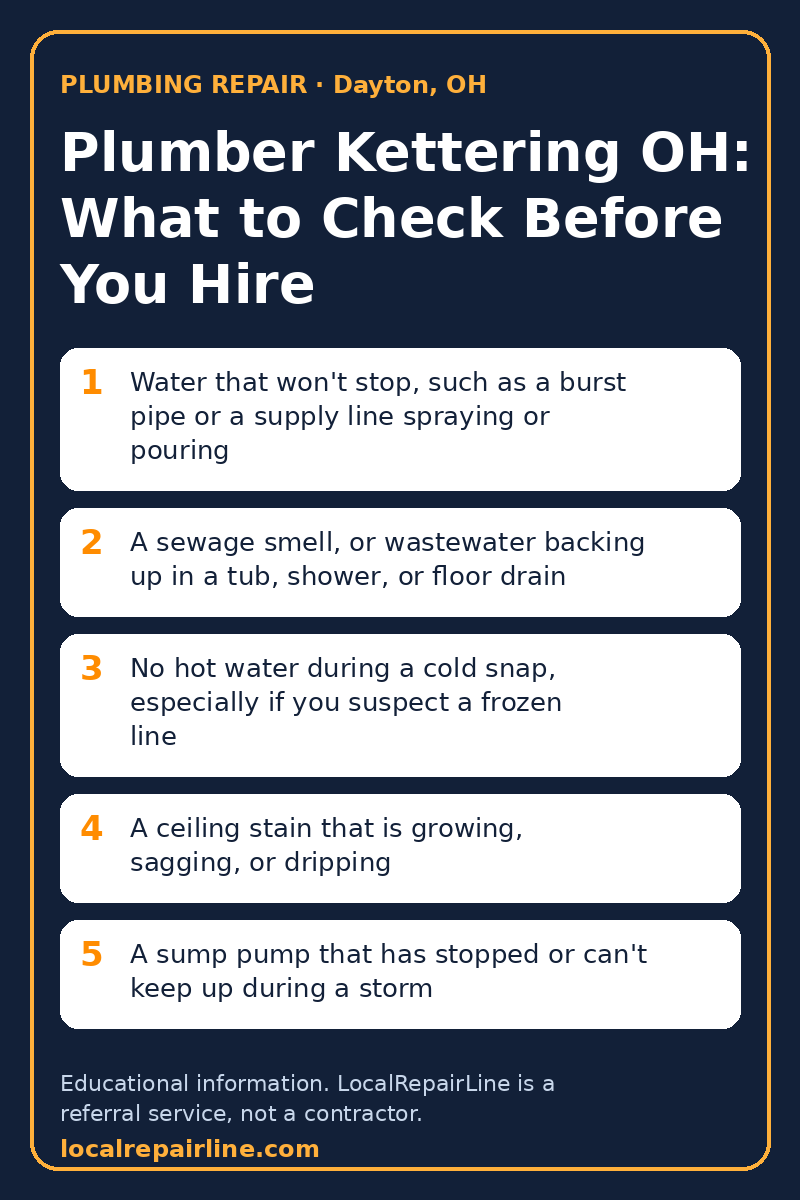
Common Plumbing Issues in Kettering Homes
If your house dates to the mid-1900s, some of its pipes may be original or close to it. Older homes often have a mix of materials from different eras of repairs and remodels.
Here are problems that come up often in aging houses:
- Slow or repeat clogs. Older drain lines can have rough interiors, root intrusion, or buildup that catches debris.
- Corroded supply lines. Older galvanized steel pipe can rust from the inside, which may show up as low pressure or discolored water.
- Leaky fittings and valves. Shutoff valves that haven't been turned in years can drip or fail when you finally use them.
- Aging water heaters. Rust-colored hot water, popping noises, or puddles near the base are common warning signs.
- Sewer line trouble. Gurgling drains and repeated backups in the basement floor drain may point to a problem past the house, not just a clog in a single fixture.
A plumber can often tell which of these you have by looking at the age and material of your pipes. That information shapes both the repair and the price.
How Ohio Winters and Spring Storms Stress Your Plumbing
Kettering winters bring freezing temperatures, and the Dayton area often swings above and below freezing in the same week. That back-and-forth is hard on plumbing.
Freeze and thaw
Pipes in exterior walls, crawl spaces, and unheated garages are the most exposed. Outdoor spigots can also crack if water is left in the line.
A pipe doesn't always burst while it's frozen. Sometimes the ice expands and cracks the pipe, and the leak only shows up once things thaw. If you notice a damp spot or a drop in pressure after a cold stretch, check the exposed areas first.
A few habits help before the next cold snap:
- Disconnect garden hoses and shut off the supply to outdoor spigots if your home has a separate valve.
- Open cabinet doors under sinks on exterior walls during hard freezes.
- Let a faucet drip slightly on the coldest nights if a line has frozen before.
- Seal obvious drafts near pipes in crawl spaces and garages.
Heavy rain and humid summers
Spring and summer thunderstorms can overload sump pumps and push water into basements. Humid weather adds to the problem by keeping damp areas from drying out.
A sump pump that's old, unplugged, or stuck can fail right when you need it most. Pour a bucket of water into the pit before storm season and watch whether the pump kicks on and clears it.
What Affects Plumbing Repair Costs (and Which Shortcuts Backfire)
Plumbing costs vary by house. Two homes with the "same" leak can have very different bills.
These factors tend to move the price most:
- Access. A pipe behind an open basement ceiling is simpler than one inside a finished wall.
- Pipe material and age. Old or mixed materials can mean extra parts and extra time.
- Scope. A single fixture repair is different from replacing a section of line.
- Timing. How quickly the work has to happen can affect your options and the final bill, so ask how scheduling changes things.
- Cleanup and repairs. Opening a wall means someone has to patch it afterward.
When you compare written breakdowns, ask what's included. Look at parts, labor, and cleanup, and ask what the plumber says about follow-up if the problem comes back. Two written breakdowns only compare fairly if they cover the same work.
Shortcuts people later regret
Some quick fixes save an evening and cost more later.
- Repeated drain cleaner. Harsh chemicals can sit in a stubborn clog and be rough on older pipes. If a drain keeps clogging, something in the line likely needs a closer look.
- Patching instead of replacing. A clamp or wrap can hold for a while on a worn pipe. If the rest of the pipe is also thin, the next leak may show up a few feet away.
- Ignoring slow leaks. A small drip can soak subfloors, rot cabinet bases, and feed mold. The water bill may be the first sign.
None of these is always wrong. A patch can be a reasonable stopgap. Just ask the plumber whether it's a temporary fix or a lasting one.
How to Vet a Plumber Kettering OH Homeowners Can Rely On
You don't need a long process. A few direct questions go a long way.
- Ask about their license. Ask whether they hold a license for the type of work you need. You can confirm requirements with your city or county offices.
- Ask for proof of liability coverage. Ask what coverage they carry and how you can verify it with the provider.
- Ask how they price the job. Find out if it's a flat price or by the hour, and whether there's a charge just for showing up.
- Get the scope in writing. It should describe the work, materials, and warranty terms.
- Read what past customers wrote. Look for comments about communication, punctuality, and cleanup rather than just star counts.
Be cautious if someone pushes you to sign on the spot, won't explain what's wrong, or recommends replacing everything without showing you the problem.
A few calm questions up front usually tell you more than a polished pitch will.
FAQ
How do I know if I need a plumber right away?
It makes sense to contact a plumber when water won't stop, sewage is backing up, a ceiling is sagging or dripping, or you lose hot water during a hard freeze. Shut off the main valve first if water is flowing. A single slow drain or a faucet drip can usually wait until you've compared options.
Is it okay to keep using drain cleaner on a slow drain?
Repeated use isn't a good habit, especially with older pipes. Harsh chemicals can sit in a stubborn clog and wear on the pipe. If a drain keeps slowing down, it's a sign something in the line needs a closer look.
How much does a plumber in Kettering cost?
Costs vary by house. Access to the pipe, the pipe's age and material, the size of the job, and how quickly the work needs to happen all change the bill. Ask for the scope in writing so you can compare plumbers fairly.
How can I protect my pipes before a cold snap?
Disconnect garden hoses and shut off the supply to outdoor spigots if your home has a separate valve. Open cabinet doors under sinks on exterior walls during hard freezes, and seal drafts near pipes in crawl spaces and garages. If a line has frozen before, letting a faucet drip slightly on the coldest nights can help.
Need a plumbing repair pro in Dayton, OH?
Talk to an independent local contractor who serves your area.
📞 Call (833) 350-0420Plumbing repair in Dayton, OHCall hours: 8am–8pm ET, 7 days