Frozen Pipes Burst? What to Do Before a Plumber in Dayton, OH
If you searched for frozen pipes burst plumber Dayton OH, you're probably standing near a wet spot, a dripping ceiling, or a faucet that has gone quiet. Take a breath. A few quick moves can keep a bad morning from turning into a ruined basement.
Here's what to do first, what to leave alone, and when it's time to hand the problem to a local pro.
Frozen vs. Burst: How to Tell What You Are Dealing With
Water expands as it turns to ice. That pressure can crack a pipe, and the crack often isn't where the ice is. It's usually in the stretch between the ice and a closed faucet.
A pipe that's frozen but not yet burst usually looks like this:
- Little or no water comes out of one faucet, or the flow slows to a trickle.
- The pipe feels very cold, and you may see frost on it.
- You hear nothing unusual, and nothing is wet.
A pipe that has already split usually looks like this:
- Water stains, bulging drywall, or drips on a ceiling or wall.
- A hissing, spraying, or running-water sound when everything is off.
- Wet carpet or a damp basement ceiling below a bathroom or kitchen.
- A sudden drop in water pressure all over the house.
Not sure which one you have? Treat it as a possible burst. That's the safer assumption, even if it turns out to be only ice.
Need a plumbing repair pro in Dayton, OH?
Talk to an independent local contractor who serves your area.
📞 Call (833) 350-0420Plumbing repair in Dayton, OHCall hours: 8am–8pm ET, 7 daysYour call may first be answered by a short screening service that asks what the problem is and where you are. Stay on the line and you will be connected to an independent local pro.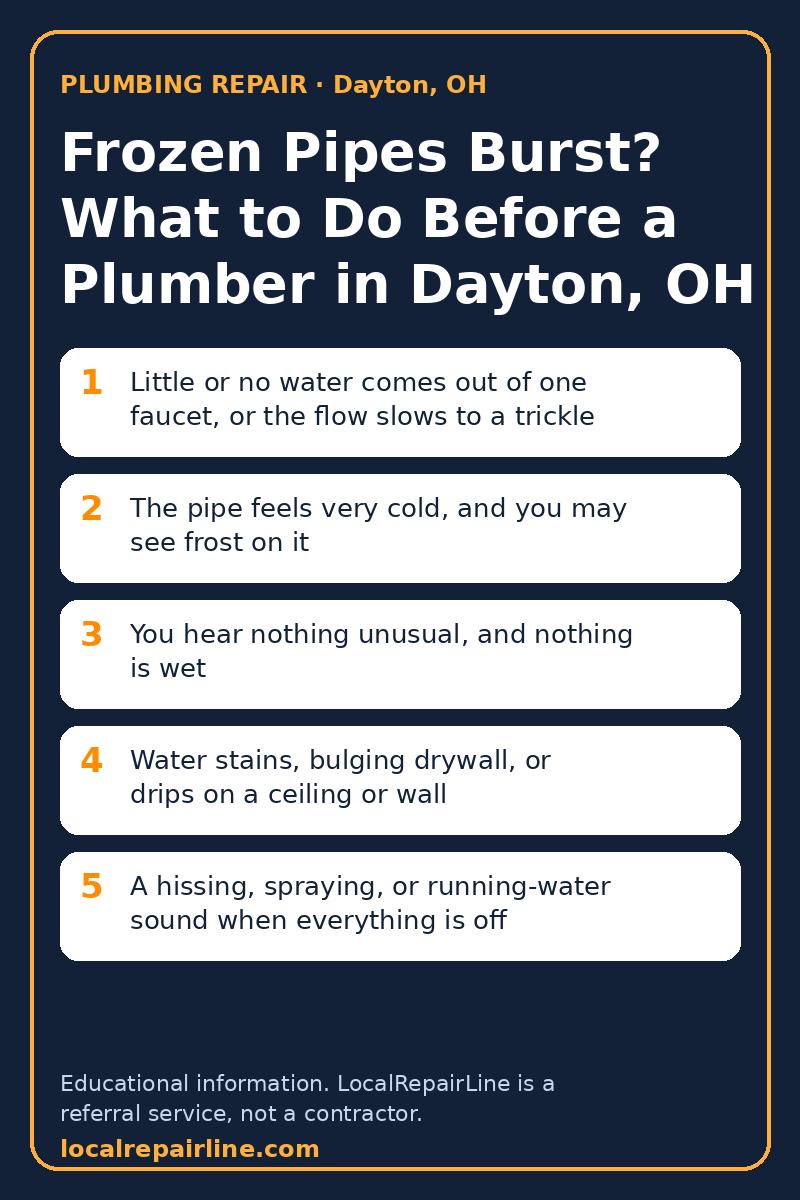
First 10 Minutes: Shut Off the Water and Protect Your Home
Move quickly, but don't rush into a flooded space without thinking about electricity. Work through this list in order:
- Shut off the main water valve. It's usually where the water line enters the house, often in a basement, utility room, or near the water heater. Turn it fully closed.
- Open a faucet or two. Start with the downstairs and upstairs taps in the house. This lets leftover water drain out and relieves pressure.
- Check for water near outlets, appliances, or the electrical panel. If it's safe and dry where you'd stand, switch off power to the affected area at the breaker. If you'd have to wade through water to reach the panel, stay out and call an electrician or your utility.
- Move belongings out of the wet zone. Lift rugs, boxes, electronics, and furniture away from dripping areas.
- Catch and divert drips. Buckets, towels, and a wet-dry vacuum all help. Poke a small hole in a bulging ceiling only if you can safely drain it into a bucket, and know that it's a judgment call.
If you're losing a lot of water, also turn off your water heater so it doesn't run with an empty or low tank.
Frozen Pipes Burst Plumber Dayton OH: When to Stop Troubleshooting and Call
This is the point to stop guessing and talk to a local plumbing pro in Dayton, OH, such as the LocalRepairLine team. Reach out to a plumber if any of these are true:
- Water is still flowing after the main valve is closed.
- You can tell a pipe is split inside a wall or ceiling.
- The main valve won't turn, or it turns and nothing changes.
- The frozen section is behind a wall, under a slab, or somewhere you can't reach.
A warmer forecast doesn't make the pipe safe. A split pipe that's still plugged with ice may not be leaking much, and that can change as the ice melts. Having a plumber look at the pipe while the ice is still in place makes it easier to find the damage before the thaw.
When you call, say what you've already done: the main is off, taps are open, and where you think the problem is. Demand during a cold snap can be high, so expect that it may take time to get someone out. Keep the water off and your damage contained while you wait.
Why Dayton's Thaw Is When the Real Flooding Starts
Dayton has true winters, and cold snaps can push overnight temperatures well below the point where water in pipes turns to ice. Ohio weather also loves a swing. A hard freeze can give way to a warmer spell in a day or two.
That warm-up is the risky part. Ice sitting in a cracked pipe can act like a plug. When it melts, water can pour through the split into walls, ceilings, and basements, sometimes while no one is looking.
So even if you caught a frozen pipe with no visible leak, don't assume you're clear. Before and during the thaw:
- Keep the main valve closed if you suspect a split pipe and can't confirm it's sound.
- Check walls, ceilings, and floors under bathrooms and kitchens for stains, soft spots, or dripping.
- Look in the basement or crawl space, especially along exterior walls where pipes run.
- Listen for running water when everything is off.
- Open the main slowly afterward, and check again for leaks within the first hour or so.
Winter storms with snow and ice can also knock out power in the Dayton area. Without heat, pipes can chill quickly. If your home has gone cold during an outage, check for frozen taps before the power returns and things warm up.
What Not to Do With a Frozen Pipe (Torches, Heaters, and Waiting)
When a pipe is frozen but not yet burst, it's tempting to fix it fast. Some of the quick fixes cause costly regrets.
Don't use open flame
A propane torch or lighter near a pipe can ignite insulation, wood framing, or dust inside a wall. It can also overheat the pipe or its joints. Skip it entirely.
Don't mix electricity and water
Hair dryers and space heaters have no business near standing water or wet floors. If there's any water on the ground where you're working, don't plug anything in.
Don't just wait and hope
A frozen pipe that hasn't burst yet is still a warning. If you can't thaw it safely, or you can't tell whether it has cracked, it's better to close the main and get help than to leave the water on.
If the pipe is easy to reach and there's no sign of a leak, gentle heat is the safer route. Open the faucet, then warm the pipe slowly with warm towels or a hair dryer on low, working from the faucet end back toward the frozen part. Stop and shut off the main if you see any water leaking.
Document the Damage Before You Clean Up
Once the water is off and the area is safe, pause before you start hauling things out. A claim goes more smoothly when you have a record of what happened.
- Take wide photos and close-ups of the broken pipe, wet walls, ceilings, floors, and belongings.
- Shoot video walking through each affected room.
- Keep damaged items if you can, or photograph them before throwing them away.
- Save receipts for emergency repairs, fans, dehumidifiers, and temporary lodging if you need it.
- Write down the date, time, and what you noticed and did.
Call your insurance company or agent soon, and ask what they need from you before cleanup and repairs. Coverage depends on your policy, so ask directly instead of assuming.
What a Plumber Does and What Affects the Repair Cost
A plumber will typically find where the pipe split, stop any active leaks, and cut out and replace the damaged section. They may also check nearby pipes for hidden cracks and look at how the line was protected.
Costs vary by house. These are the things that tend to move the price:
- Where the break is. An exposed basement pipe is usually easier than one inside a finished wall or ceiling.
- Pipe material. Copper, PEX, and older metal lines each repair differently.
- How many splits there are. One crack and several cracks are very different jobs.
- Access. If walls or ceilings must be opened, that adds work.
- Timing. When the work happens and how busy plumbers are can affect how the job is priced.
- Water damage cleanup. Drying, drywall, insulation, and flooring are often separate from the plumbing repair.
Ask for an explanation of what's being repaired and what's still to do, including any drywall or drying work that falls outside a plumber's scope.
How to Keep Pipes From Icing Up Again Next Cold Snap
A little prep before winter makes the next cold snap far less stressful. Before the next cold spell:
- Insulate pipes in unheated areas like basements, crawl spaces, garages, and exterior walls.
- Seal drafts near pipes, such as gaps around where lines enter the house.
- Let a faucet drip during a hard cold snap, especially on exterior walls.
- Open cabinet doors under sinks along outside walls so warm indoor air circulates.
- Keep your thermostat set to a steady temperature both day and night during deep freezes.
- Disconnect garden hoses and shut off interior valves to outdoor spigots before winter hits.
FAQ
How can you tell if a frozen pipe has burst before it thaws?
Look for damp patches, bulging drywall, or water stains along walls and ceilings where plumbing lines run. You might also hear a faint spraying or rushing sound behind the wall while the main water supply remains on. If your water meter dial moves while no taps are active, water is likely escaping through a hidden split.
Is it safe to thaw frozen pipes with a hair dryer?
Using a hair dryer is generally safe if the work area is dry and there's no standing water anywhere nearby. Keep the tap open and slowly direct gentle heat along the pipe, starting near the faucet and working back toward the blockage. Never use electrical equipment while standing on wet ground or leave a running heater unattended.
Why do pipes burst during winter warm-ups in Ohio?
Expanding ice splits the pipe during severe cold, but the solid ice block often seals the crack while freezing temperatures hold. When a warm front arrives, that ice plug melts and allows pressurized water to rush out through the fracture. This makes a sudden thaw a frequent cause of unexpected indoor flooding.
What should you tell the dispatcher when calling about burst pipes?
Tell them whether your main water valve is turned off and where water is collecting inside your home. Mention if water is near electrical panels, wiring, or finished living spaces so they understand the hazard level. Giving clear details helps the dispatch team route an available plumber to you as efficiently as possible.
Does homeowners insurance cover repairs for a burst froz
Need a plumbing repair pro in Dayton, OH?
Talk to an independent local contractor who serves your area.
📞 Call (833) 350-0420Plumbing repair in Dayton, OHCall hours: 8am–8pm ET, 7 days