Furnace Not Working on South Bend's First Cold Night?
That sudden drop in temperature always catches everyone off guard. South Bend experiences dramatic temperature drops when cold fronts sweep across Lake Michigan. One day you're raking leaves in a light sweater, and the next night you're staring at a thermostat that refuses to cooperate. When your furnace heater not working in South Bend IN first cold night hits you, the panic sets in fast.
Autumn weather shifts rapidly from mild days to freezing overnight lows. Because your heating system sat idle all summer, that first heavy call for heat stresses neglected parts. Dust burns off, switches stick, and old problems finally surface. Before you reach for extra blankets or panic about the coming winter, run through a few basic checks. You can often solve the issue yourself in just a few minutes.
Why South Bend's First Freeze Catches Furnaces Off Guard
Winters bring heavy lake-effect snowfall and prolonged sub-freezing stretches. Your furnace works hard for months at a time once the cold sets in. When the temperature plunges overnight, metal parts contract quickly and safety switches trip if anything is out of place.
Older heat exchangers face thermal shock during this rapid transition. That sudden rush of cold air meeting a dormant system can trigger safety sensors designed to shut the unit down. Taking a calm, methodical approach helps you figure out if the problem is a simple fix or something requiring professional attention.
Need an HVAC repair pro in South Bend, IN?
Talk to an independent local contractor who serves your area.
📞 Call (833) 669-0233HVAC repair in South Bend, INCall hours: 8am–8pm ET, 7 daysYour call may first be answered by a short screening service that asks what the problem is and where you are. Stay on the line and you will be connected to an independent local pro.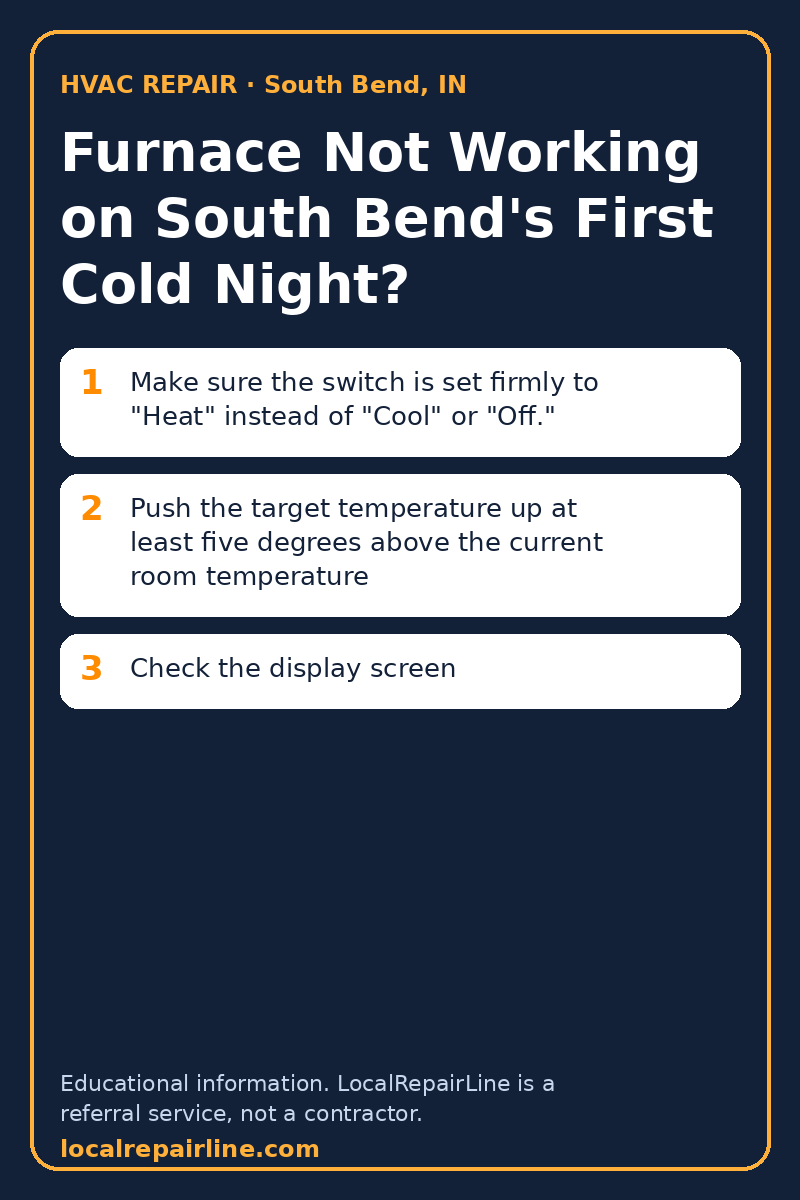
Step 1: Check Your Thermostat Settings and Batteries
Start at the wall. It sounds simple, but a blank screen or a forgotten setting causes many false alarms after a long summer.
- Make sure the switch is set firmly to "Heat" instead of "Cool" or "Off."
- Push the target temperature up at least five degrees above the current room temperature.
- Check the display screen. If it is blank or fading, swap out the old batteries for fresh ones.
Digital thermostats sometimes lose their programming when power flickers during early autumn storms. Resetting the schedule or replacing batteries often kicks the furnace right back into action.
Step 2: Inspect the Air Filter and Blower Door
A choked air filter stops a furnace in its tracks. If the filter is packed with summer dust, pet hair, and debris, the system overheats immediately.
When internal heat builds up too fast, a high-limit switch trips to prevent a fire. This safety feature shuts down the burners while the fan keeps running or stops completely. Pull out the filter and hold it up to a light. If you can't see light through it, replace it right away.
Next, check the metal door covering the blower compartment. Most furnaces have a safety button or plunger switch that gets pushed down when this door snaps shut. If the door is loose or ajar, the furnace assumes it is unsafe to run and refuses to ignite. Push the door firmly into place and listen for a click.
Step 3: Look at the Pilot Light or Electronic Ignitor
Older units rely on a small, burning pilot flame. Modern systems use electronic hot surface ignitors that glow brightly before lighting the gas.
If you have an older standing pilot system and the flame went out, follow the instructions printed on the furnace casing to relight it safely. Modern electronic systems don't use a standing flame. Watch the unit through the view window while someone turns the thermostat up.
You should see the ignitor glow orange, followed by a soft click of the gas valve opening. If the ignitor glows but nothing happens, or if it doesn't glow at all, you might be dealing with a faulty sensor or a cracked ignitor.
Understanding Carbon Monoxide Risks
The first ignition cycle of the season brings hidden dangers. When a heat exchanger develops a crack over the summer, toxic combustion gases can leak into your living space.
Always make sure your carbon monoxide detectors have fresh batteries before firing up the heating system. If you smell unusual gas odors, or if your detectors start chirping, shut the system off immediately and get fresh air.
Step 4: Check Circuit Breakers and Emergency Switches
Furnaces pull electrical power even though they run on natural gas or propane. Head to your main electrical panel and look for the breaker labeled for the furnace or air handler.
Sometimes a power surge trips that breaker during a seasonal storm. Flip the switch firmly to the "Off" position, then back to "On" to reset it.
Look near the furnace itself for a wall switch that looks like a standard light switch, often colored red. People or pets occasionally bump these switches by accident, cutting power directly to the unit.
When DIY Troubleshooting Ends and a Local Tech is Needed
When you've verified power, a clean filter, and a correct thermostat setting, but the furnace still blows cold air or refuses to ignite, stop troubleshooting. Gas valves, control boards, and cracked heat exchangers require specialized tools and technical training to handle safely.
You can consult https://localrepairline.com instead of guessing. Trying to bypass safety controls or tinker with gas lines creates serious hazards for your household. A qualified local technician can diagnose electrical faults, test gas pressure, and get your heat running safely before the next lake-effect blast arrives. Repair costs vary by house depending on the specific part failure and the age of the equipment.
FAQ
Why does my furnace smell like burning dust when I first turn it on?
Dust settles inside the heat exchangers and ductwork all summer long. When the furnace fires up for the first time, that dust burns off quickly, creating a distinct, dusty odor. This smell usually fades away within an hour if you open a window to let the air clear out.
Should I switch my thermostat from cool to heat if the house is still warm?
Yes, it is smart to test the system before the indoor temperature drops too low. Turning the heat on during a mild afternoon lets you verify that the unit works properly while you still have daylight and time to fix issues.
How long can my house stay warm without a furnace during a freeze?
A well-insulated home retains heat for several hours, but indoor temperatures will eventually match the outdoors during a hard freeze. Pay attention to vulnerable water pipes near exterior walls and keep interior doors open to help share what little warmth remains in the center of the house.
Why is my furnace blowing lukewarm air instead of heat?
This usually happens when the burners ignite, but the safety controls shut the gas off prematurely due to poor airflow or a dirty flame sensor. The blower fan keeps running to push the remaining heat out of the cabinet, turning the warm air lukewarm as the system cools down.
Need an HVAC repair pro in South Bend, IN?
Talk to an independent local contractor who serves your area.
📞 Call (833) 669-0233HVAC repair in South Bend, INCall hours: 8am–8pm ET, 7 days