Water Heater Leaking From Bottom in Akron, OH: What to Do First
Finding a puddle under your tank is stressful, and typing water heater leaking from bottom Akron OH into your phone is a very normal reaction. The good news is that not every wet spot means a dead tank.
This guide helps you sort out what you're looking at, shut things off safely, and decide what to do next. Take it one step at a time.
Is Your Water Heater Really Leaking? Condensation vs. a True Leak
Before you panic, rule out condensation. Akron swings from cold, snowy winters to warm, humid summers, and a cold tank in damp air can sweat.
Cold incoming water can do the same thing in winter, especially if the tank is in a cool basement corner. Moisture beads on the tank or pipes and drips to the floor.
Here is a quick way to tell the difference:
- Condensation: Light beading over the outside of the tank or on cold pipes. The water usually stops or slows when the heater isn't running, and the floor dries between heating cycles.
- A true leak: Water keeps appearing, even in small amounts, and the puddle grows. You may see a steady drip from one spot, rust streaks, or a wet insulation jacket.
- Gas unit note: Some gas heaters make a little moisture while firing up with cold water. It should be brief, not constant.
Dry the area with a towel and set a piece of dry cardboard underneath. Check again in an hour or two. If the cardboard is wet in one spot, treat it as a real leak.
Need a plumbing repair pro in Akron, OH?
Talk to an independent local contractor who serves your area.
📞 Call (833) 350-0420Plumbing repair in Akron, OHCall hours: 8am–8pm ET, 7 daysYour call may first be answered by a short screening service that asks what the problem is and where you are. Stay on the line and you will be connected to an independent local pro.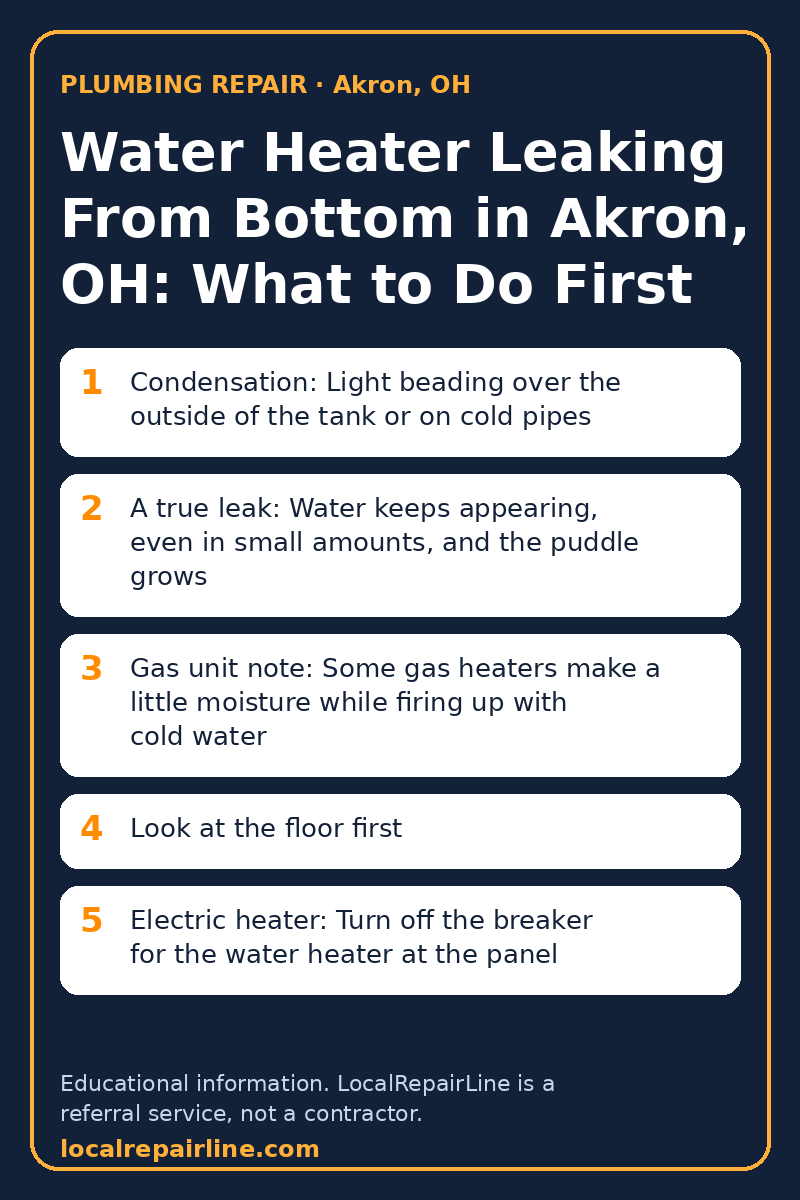
Shut It Off Safely: Power, Gas, Water and Cleanup Steps
If water is still showing up, shut the unit down. The order matters, and so does staying out of standing water around anything electrical.
- Look at the floor first. If water is pooled around the heater and you'd have to wade through it to reach a switch or panel, stay out. Shut off power from the main breaker panel only if you can reach it while standing on dry ground. Otherwise, call a pro or your utility for help.
- Electric heater: Turn off the breaker for the water heater at the panel.
- Gas heater: Turn the gas control knob on the unit to "off" or "pilot," or close the gas valve on the supply line. If you smell gas, leave the house and call your gas utility from outside.
- Close the cold water supply. Find the shutoff valve on the cold pipe going into the top of the tank. Turn the handle clockwise until it stops.
- Open a hot faucet upstairs. This relieves pressure and helps slow the leak.
Don't touch a hot tank or hot pipes with bare hands. Water coming from the tank can be hot enough to scald.
Cleanup and damage control
- Move stored items out of the wet area, especially cardboard boxes.
- Use towels, a mop, or a wet/dry vacuum (plugged in only where the floor is dry).
- Take photos and a short video of the leak, the puddle, and any damage. They also give your plumber a clear record of what happened.
- Run a fan or dehumidifier. Wet drywall and carpet can start growing mold if they stay damp.
If the tank is still leaking after shutoff, you can drain it partway with a garden hose to a floor drain or outside. That can reduce the flow while you wait for help.
Common Causes of a Leak at the Bottom of the Tank
Water that ends up on the floor doesn't always come from the bottom of the tank. It can run down the side from a fitting above. Check these spots with a dry paper towel:
- Drain valve. This small spigot near the base can drip if it's loose or worn. It's one of the more fixable causes.
- Temperature and pressure relief valve. Look for a pipe running down the side of the tank. If water is coming out of that pipe, the valve is doing its job or has failed, and that points to a pressure or temperature issue.
- Supply and outlet connections. Loose fittings on top can let water trickle down the tank and make it look like a bottom leak.
- Heating element gasket (electric units). A worn gasket or loose element can leak near the lower part of the tank.
- The tank itself. Water from the seam, the underside, or through the insulation jacket usually means the inner tank has corroded through.
Fixable Leaks vs. a Failed Tank: How to Tell the Difference
A simple visual check goes a long way. Dry everything, then watch where the first new drop appears.
| What you see | What it likely means |
|---|---|
| Drip from the drain valve spout | Loose or worn valve, often fixable |
| Water at the top fittings, running down | Loose or failing connection, often fixable |
| Water from the relief valve pipe | Pressure or valve issue, needs attention |
| Wet around a lower element cover | Gasket or element problem on electric models |
| Water from the seam, base, or under the tank with all fittings dry | Likely a failed tank |
A failed tank can't be patched. Once the steel liner corrodes through, the leak will keep coming back and usually gets worse.
Water Heater Leaking From Bottom Akron OH: Why Winters Make It More Likely
Winters here are long, and lake-effect snow from Lake Erie keeps temperatures low for months. Incoming water is very cold, so your heater works harder and cycles more often.
All that heating and cooling stresses an older tank. If the unit has sediment built up at the bottom, it can trap heat and speed up wear on the steel. A leak that shows up in the cold months often points to age and sediment, not just a loose part.
Cold also stresses connections. If your heater sits in a garage, crawl space, or unheated basement corner, freezing temperatures can affect nearby pipes and fittings. A fitting that looks like a bottom leak may have been shaken loose by a cold snap.
Check the label on the tank for the manufacture date or serial number. An older unit with a bottom leak in the middle of winter usually leans toward replacement.
Repair or Replace? Cost Factors Homeowners Often Regret Overlooking
Costs vary by house, and a plumber has to see your setup to give you a real number. These factors tend to matter most:
- Age of the tank. Putting money into an older tank can mean paying for a repair and then a replacement soon after.
- The actual cause. If it's just a drain valve or a condensation issue, replacing the whole unit is an expensive overreaction.
- Fuel type and venting. Gas units may need vent work, and electric units may need electrical changes if you switch types.
- Access. Tight basements, stairs, and finished spaces add labor.
- Local requirements. Ask your plumber whether anything about the installation needs extra steps in your area.
- Water damage risk. What surrounds the tank matters, since flooring, drywall, and stored items in a finished space can add to the overall job.
A reasonable rule: if the leak comes from a fitting or valve and the tank is in decent shape, repair is worth a look. If water is coming from the tank body and the unit is old, replacement is usually the sensible route.
When to Call a Local Plumber and What to Tell Them
Here's the line. If you've shut off the power or gas and the water supply, and water is still coming from the base, seam, or underside of the tank, stop guessing. The same goes if you can't find any pipe fitting or relief valve to blame.
That usually means the tank itself has failed. This is the point to talk to a local plumbing pro in Akron, OH, such as LocalRepairLine, who can confirm it and talk through replacement options.
When you call, have this ready:
- Fuel type (gas or electric) and the tank size on the label
- Age of the unit, if you can find it
- Where the water appears, and whether fittings were dry
- What you've shut off and when the leak started
- Whether the heater is in a finished basement, garage, or crawl space
Leave the supply valve closed until help arrives. Keep your photos so you can show the plumber what you found.
FAQ
Is it dangerous if my water heater is leaking from the bottom?
It can be. Water near electrical parts or a powered unit is a shock risk, and a gas unit adds its own hazards. Shut off power or gas and the water supply as soon as it's safe to reach them, and keep clear of standing water near anything electrical.
Can I fix a water heater that's leaking from the bottom myself?
Some causes, like a loose drain valve or a dripping connection, may be within reach for a handy homeowner. If the water is coming from the tank body, there's no DIY fix and the unit needs replacing. When in doubt, have a plumber take a look, especially on gas units.
Why is my water heater leaking from the bottom but the connections are dry?
Dry connections point toward the tank. The inner steel may have corroded through, especially if the unit is older or has sediment buildup. Condensation, a leaking element gasket, or a drain valve can also be the cause, so dry everything and watch for the first drop.
How much does it cost to replace a leaking water heater?
Costs vary by house. Tank size, fuel type, venting, access, and any extra work your plumber finds all change the total. A plumber who sees your setup can explain the options and what a repair might cost compared with replacement.
Need a plumbing repair pro in Akron, OH?
Talk to an independent local contractor who serves your area.
📞 Call (833) 350-0420Plumbing repair in Akron, OHCall hours: 8am–8pm ET, 7 days