Pipe Burst in Basement in Toledo, OH? What to Do Right Now
You're probably searching pipe burst in basement Toledo OH what to do because water is already on the floor. Take a breath. The order you do things in matters more than how fast you move.
Stop the water, stay away from electrical hazards, take photos, and get the right help lined up. Here's how to handle each step.
Pipe Burst in Basement Toledo OH What to Do in the First 5 Minutes
Your first job is to stop more water from coming in. Everything else can wait a few minutes.
- Find your main shutoff valve. It's usually where the water line enters the house, often on a basement wall near the front, close to the water meter.
- Turn it fully off. A lever handle needs a quarter turn so it sits crosswise to the pipe. A round wheel handle turns clockwise until it stops.
- Open a faucet on the highest floor. This lets air in and helps the remaining water drain out of the lines.
- Open a faucet on the bottom level too, such as a laundry sink or basement spigot, to drain what's left.
- Check that the water has actually slowed or stopped. A drip for a few minutes is normal as the pipes empty.
If the pipe burst during a hard cold snap, ice may be holding the break closed. When it thaws, the water can start up again. Keep checking even after things look calm.
The call-a-pro point
This is the moment to stop guessing and call a local plumbing pro in Toledo, OH through LocalRepairLine if any of these are true:
- The water won't stop after you close the main valve.
- The main valve is stuck, leaking, or out of reach.
- Water is near the electrical panel or outlets.
- The break is hidden inside a wall or ceiling.
Say plainly on the phone that you have an active leak. That helps the dispatcher set priorities.
Need a plumbing repair pro in Toledo, OH?
Talk to an independent local contractor who serves your area.
📞 Call (833) 350-0420Plumbing repair in Toledo, OHCall hours: 8am–8pm ET, 7 daysYour call may first be answered by a short screening service that asks what the problem is and where you are. Stay on the line and you will be connected to an independent local pro.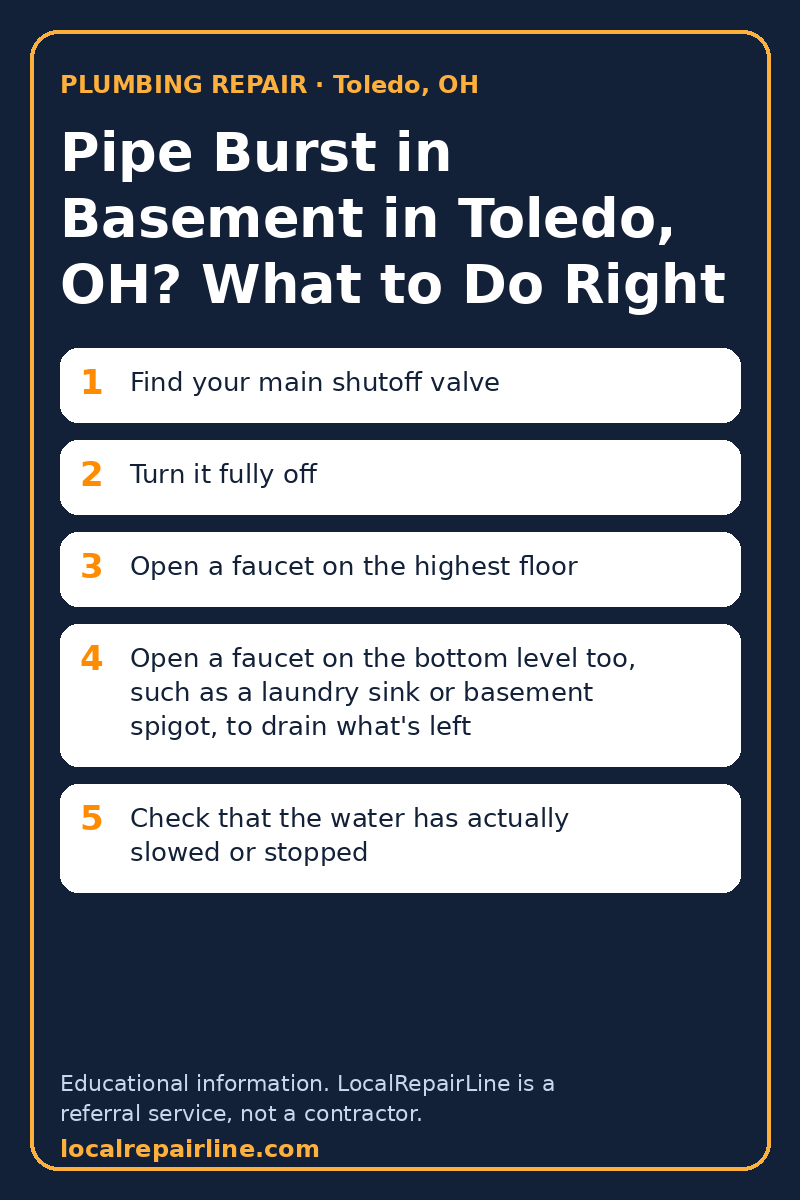
Electrical Safety: When to Stay Out of a Wet Basement
Water and electricity are the real danger here, bigger than the damage to your stuff. Don't walk into standing water if you can't be sure everything is off.
Stay out of the basement if any of these are true:
- Water is deep enough to reach outlets, the furnace, or the electrical panel.
- You can hear buzzing or see sparks.
- You smell something burning.
- The lights are flickering or the breakers are tripping.
If the panel is in a dry spot and you can reach it without stepping in water, you can switch off the breakers for the basement. If you'd have to wade to reach it, don't. Call your electric utility or an electrician and let them tell you how to proceed.
Don't plug in or run a sump pump, wet vacuum, or extension cord in a flooded area. This is a common and costly mistake.
Can't Find or Turn the Main Shutoff? What to Do Instead
In an older Toledo house, the main valve may be tucked behind storage, paneling, or a furnace. It may also be stiff if it has never been turned.
Try these steps in order:
- Check the other likely spots. Look near the water heater, behind the meter, and on the wall where the line comes in.
- Use both hands, steady pressure. Don't use a pipe wrench or cheater bar on an old handle. It can snap and make things much worse.
- Look for a second valve. Some homes have a shutoff at the meter that belongs to the water utility. Call the city water department to ask about it. Don't force the meter valve yourself.
- Find a local shutoff for the broken line. Some pipes have their own small valves, such as the ones under a water heater or on a laundry line.
- Redirect and contain. Move the stream with a bucket or tarp and get valuables off the floor, but only if you can do it without stepping into water near electrical.
If none of that works, call a plumber right away. A stuck or leaking main valve is a job for someone with the tools and parts to replace it. In winter, plumbers get busy fast during a cold snap, so make that call early.
Document the Damage Before You Clean Anything Up
It's tempting to start mopping the second the water stops. Pause for a few minutes first. Photos and notes made before cleanup can matter a lot when you talk to your insurance company.
Stay out of any water that might be near electrical, and shoot from the stairs or a dry spot if you need to. A phone is all you need.
- Take wide shots of the whole basement, then close-ups of the broken pipe and any wet walls or floors.
- Photograph damaged items before you move them, including boxes, furniture, rugs, and appliances.
- Record a short video walking through the space and narrating what you see.
- Write down the time you found the leak and the time you shut the water off.
- Keep damaged items if you can until your insurer says otherwise. If something has to go because it's unsafe, photograph it first.
Don't throw away the burst section of pipe if the plumber removes it. It can help show what failed and why.
Start Drying Out Once It's Safe
Once the water is off and the electrical risk is handled, the goal shifts to getting things dry. Damp basements invite mold, and mold can start growing if materials stay wet. Speed helps, but safety comes first.
Here's what most homeowners can do on their own:
- Scoop or mop up shallow standing water.
- Move wet furniture, boxes, and rugs to a dry area.
- Open windows if the weather allows and run fans from a safe, dry outlet.
- Run a dehumidifier, but only if it's plugged into a dry circuit away from any water.
- Pull up wet carpet and pad if it's easy to do. These hold water and dry slowly.
In a Toledo winter, opening windows may not be practical, and cold air dries more slowly than warm air. Fans and a dehumidifier will do more work than a cracked window on a freezing day. In humid summer weather, the opposite can be true, so lean on the dehumidifier.
When to bring in drying help
Large spills, wet drywall, or soaked insulation are harder to dry yourself. Water can hide inside walls and under flooring. A water-damage restoration company can use moisture meters and industrial fans to find and dry what you can't see. Costs vary by house, depending on how much area got wet, how long the water sat, and what materials were soaked.
Call Your Insurance Company
Call your insurer soon after the water is shut off. Ask whether your policy covers sudden pipe breaks, and ask what they need from you. Coverage differs a lot between policies, and some have exclusions or limits for water damage.
Ask these questions on the call:
- Does my policy cover this type of water damage?
- What is my deductible?
- Do I need an adjuster to see the damage before I start repairs?
- Which emergency steps will you reimburse, such as shutting off the water or drying out?
Keep receipts for anything you pay for, and note who you spoke with and when.
Keeping It From Happening Again
Burst pipes in Ohio basements often come down to cold. Pipes along exterior walls, in crawl spaces, or near basement windows are the usual trouble spots.
Before the next cold snap, insulate exposed pipes and seal drafts near basement windows and rim joists. Know where your main shutoff is, and make sure it moves easily. If you're leaving town in winter, keep the heat on at a steady, moderate setting.
An old, corroded pipe can also fail without any freeze. If a plumber says your pipes are near the end of their life, ask about the options and tradeoffs of repairing a section versus replacing more of the line. Costs vary by house, pipe material, and how easy the pipes are to reach.
FAQ
How do I shut off the water fast if I'm panicking?
Head for the main shutoff, usually on a basement wall near the front of the house or by the water meter. A lever handle gets a quarter turn so it sits crosswise to the pipe. A round wheel turns clockwise until it stops.
Is it safe to go into my basement if there's water on the floor?
Only if you're sure the water isn't reaching outlets, the furnace, or the electrical panel. If you see sparks, hear buzzing, or smell burning, stay out and call the electric utility or an electrician. When in doubt, wait.
Should I call a plumber or my insurance company first?
Stop the water first, then call a plumber if the leak won't stop or the pipe is hidden. Call your insurer soon after, once you've taken photos. Making both calls close together is common, and neither call needs to wait on the other.
Can I clean up the water myself?
Shallow water on a safe, dry-circuit floor is often something you can handle with a mop, fans, and a dehumidifier. Larger spills, soaked drywall, or water in walls are harder to dry fully. A restoration company can find hidden moisture you might miss.
Will homeowners insurance cover a burst pipe?
Many policies cover sudden pipe breaks, but coverage varies by policy and cause. Some exclude damage from long-term leaks or neglect. Your insurer can tell you what your policy covers and what they'll need from you.
How much does it cost to fix a burst pipe in the basement?
Costs vary by house. The main factors are where the break is, how easy it is to reach, the pipe material, and how much water damage needs drying or repair. A plumber can give you a clearer range after seeing the damage.
Need a plumbing repair pro in Toledo, OH?
Talk to an independent local contractor who serves your area.
📞 Call (833) 350-0420Plumbing repair in Toledo, OHCall hours: 8am–8pm ET, 7 days