Pipe Burst in Basement Dayton OH: What to Do First
Water is coming out of a pipe and the floor is getting wet. If you typed pipe burst in basement Dayton OH what to do into your phone, here is the order that matters: stop the water, make the space safe, then limit the damage.
Take it one step at a time. Skipping ahead can make things worse, so work in order.
Stop the Water First: Pipe Burst in Basement Dayton OH What to Do
Your main shutoff is the fastest way to stop the flow. In many homes it sits where the water line enters the house, often on a basement wall that faces the street. Look near the water heater, the meter, or a utility corner.
You'll usually find one of two valve types:
- Lever handle (ball valve): Turn it a quarter turn so the handle sits crosswise to the pipe.
- Round wheel (gate valve): Turn it clockwise until it stops. Older Dayton-area homes often have these, and they can be stiff.
Turn gently. A corroded gate valve can snap or start leaking at the stem if you force it.
Once the water is off, open a faucet on the highest floor and one in the basement. That drains the lines and takes pressure off the break.
If the main valve is stuck or you can't find it
Check the meter first, since there's often a second valve near it. If your home has a shutoff outside, it may be at the meter pit near the street. That valve is usually the water utility's, so call them rather than prying at it.
Look for smaller isolation valves too. Some pipes have a valve right at the water heater, a branch line, or a fixture. Closing one of those can slow the leak while you sort out the main.
When the water is off but the problem isn't over
This is the point to stop guessing and call the LocalRepairLine team, a local plumbing pro in Dayton, OH. Call if any of these is true:
- The pipe is still split, even with the water off.
- The main valve won't close all the way.
- Water is still spreading across the floor.
- Standing water is near the electrical panel or gas appliances.
A DIY patch is a real risk in these cases. A plumber can find the right shutoff, cut out the damaged section, and tell you why it failed.
Need a plumbing repair pro in Dayton, OH?
Talk to an independent local contractor who serves your area.
📞 Call (833) 350-0420Plumbing repair in Dayton, OHCall hours: 8am–8pm ET, 7 daysYour call may first be answered by a short screening service that asks what the problem is and where you are. Stay on the line and you will be connected to an independent local pro.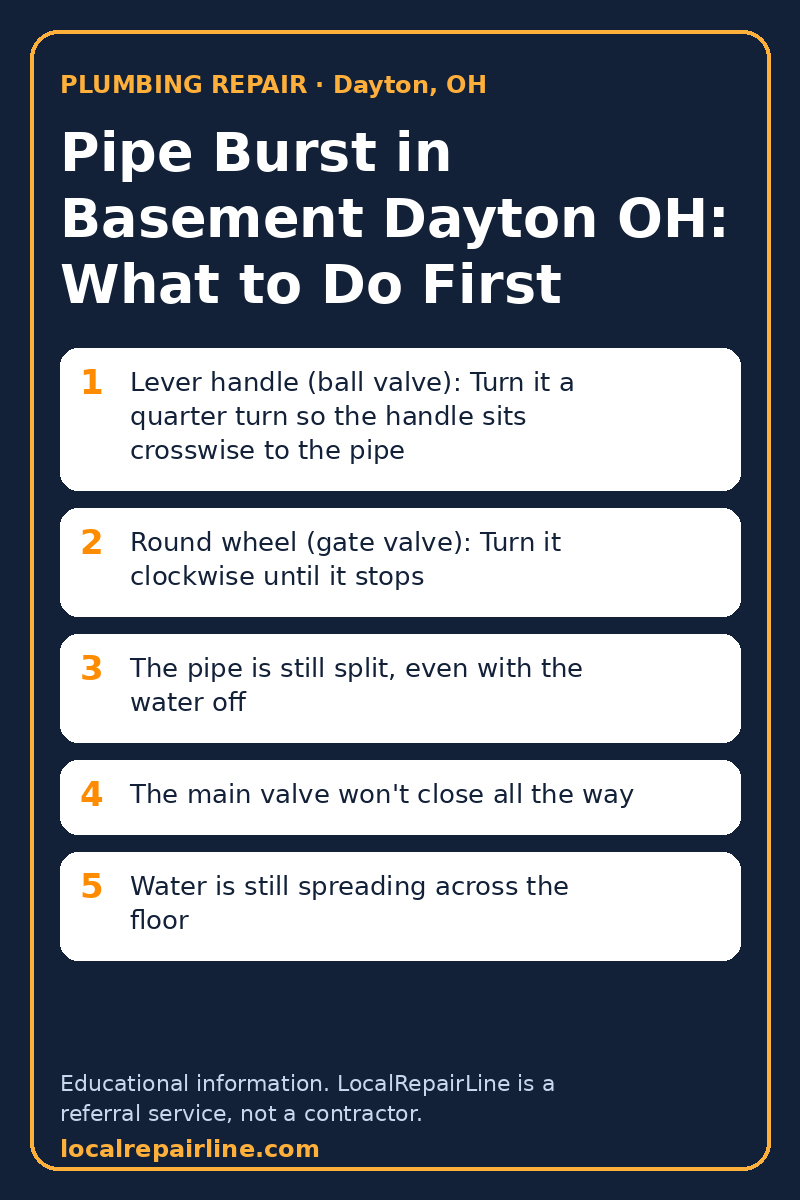
Make the Basement Safe Before You Touch Anything
Water and electricity don't mix. Don't wade through standing water if it could be touching outlets, cords, a furnace, or the panel.
If you can reach the breaker box without stepping in water, shutting off power to the basement is reasonable. If you can't, stay out and call your electric utility or an electrician.
If you smell gas, leave the house and call from outside. Don't flip switches or light anything on the way out.
Keep a few other rules in mind:
- No space heaters near wet areas. Cords, outlets, and standing water are a bad mix, and heaters near damp materials can start fires.
- Don't run extension cords through water. Use them only on dry floor and plug into a protected outlet.
- Watch for slippery stairs. Wet concrete and wood steps are easy to fall on while carrying boxes.
Limit the Damage in the First Hour
Once the area is safe, work through the cleanup in an organized way. The goal is to keep the water from soaking more than it already has.
- Photograph and film everything first. Get the burst pipe, the water level, the walls, and anything damaged before you move it.
- Move valuables up and out. Boxes, electronics, documents, and furniture go to dry ground.
- Remove standing water if it's safe. Use a wet-dry vacuum, mop, or a submersible pump plugged into a safe outlet.
- Lift wet rugs and cardboard. They hold moisture against the floor.
- Start airflow. Open windows if weather allows and run fans from a dry circuit.
Take your photos before you start cleanup. Moving things and drying out the space changes how the damage looks. Clear before-cleanup images give you a record of the damage, which you may want if you talk to your insurer.
Don't count on the sump pump to do everything
Spring in the Miami Valley brings heavy rain and storms. A basement can have a plumbing leak and a groundwater problem at the same time.
If your sump pump is already running hard, don't assume it can also handle a burst pipe. Check that the pit isn't near full and that the discharge line is clear.
To tell the two apart, look at where the water starts. Water spraying or dripping from a pipe is a plumbing issue. Water seeping through the floor-wall joint or rising in the sump pit after rain is a groundwater issue. If you can't tell, a plumber can sort it out.
Why Pipes Burst in Dayton Basements
Dayton has four distinct seasons. Winters can be cold, and Arctic air can arrive fast and push temperatures well below what exposed pipes can handle.
The risk isn't only the cold. Winter in the area often swings between deep cold and milder thaw periods. That back-and-forth stresses pipes in unheated basement areas.
The usual trouble spots are:
- Pipes along the rim joist, where the wall meets the floor above
- Lines running along exterior walls
- Pipes near basement windows or gaps in the foundation
- Older metal pipes that have corroded or weakened
A pipe can split during a cold snap and only start leaking when ice melts and water begins to flow. That's why you may not see the problem until the weather warms up.
FAQ
What should I do first when a pipe bursts in my basement?
Shut off the main water valve, then open a faucet upstairs and one in the basement to drain the lines. After that, make sure the area is safe from electrical and gas hazards before you start cleanup. Take photos before you move anything.
Should I turn off the electricity in a wet basement?
Only if you can reach the breaker box without stepping in water. If the panel is near standing water, stay out and call your electric utility or an electrician. Never touch outlets, cords, or appliances while standing in water.
Who should I call for a burst pipe?
Call a local plumber if the pipe is still split, the main valve won't close, or water keeps spreading. If the problem is the shutoff at the street or meter pit, call the water utility. For standing water near the panel or a gas smell, get out and call the right utility or emergency help from outside.
How can I tell a burst pipe from a groundwater leak?
Look at where the water starts. Water spraying or dripping from a pipe points to plumbing. Water seeping through the floor-wall joint or rising in the sump pit after rain points to groundwater, and a plumber can help sort it out if it's unclear.
How much does burst pipe repair cost?
Costs vary by house. The pipe material, how easy it is to reach, how much of the line is damaged, and how much water cleanup is needed all change the total. A plumber can explain the options after looking at the damage.
Will my insurance cover a burst pipe?
It depends on your policy and the cause of the damage, so check your coverage or ask your insurer. Clear photos and video taken before cleanup give you a record of the damage to share if you file a claim. Consider holding onto damaged items until you've talked with your insurer about next steps.
Need a plumbing repair pro in Dayton, OH?
Talk to an independent local contractor who serves your area.
📞 Call (833) 350-0420Plumbing repair in Dayton, OHCall hours: 8am–8pm ET, 7 days