Pipe Burst in Basement Akron OH: What to Do Right Now
If you're searching for pipe burst in basement Akron OH what to do, you're probably standing at the top of the stairs looking at water. Take a breath. Most of the steps are simple, and you can take them one at a time.
This guide covers stopping the water, staying safe around electricity, documenting damage for insurance, and drying things out. It also covers when to stop doing it yourself and call a plumber.
Pipe Burst in Basement Akron OH What to Do in the First 5 Minutes
Your first job is to stop the water. Everything else can wait a few minutes.
- Find the main shutoff valve. It's usually where the water line enters the house, often near the water meter or on the wall facing the street.
- Turn it off. A lever handle needs a quarter turn so it sits crosswise to the pipe. A round wheel handle turns clockwise, usually several times.
- Open a faucet on the highest floor. This lets the pressure and remaining water drain out of the lines.
- Shut off the water heater if it's gas or electric and you can reach it safely. A tank that loses water while the heat is on can be damaged.
- Move valuables up and out only if the floor is dry where you're walking.
If the valve is stuck, don't force it with a wrench or a pipe over the handle. A broken valve makes things worse. That's a good time to call a plumber.
Need a plumbing repair pro in Akron, OH?
Talk to an independent local contractor who serves your area.
📞 Call (833) 350-0420Plumbing repair in Akron, OHCall hours: 8am–8pm ET, 7 daysYour call may first be answered by a short screening service that asks what the problem is and where you are. Stay on the line and you will be connected to an independent local pro.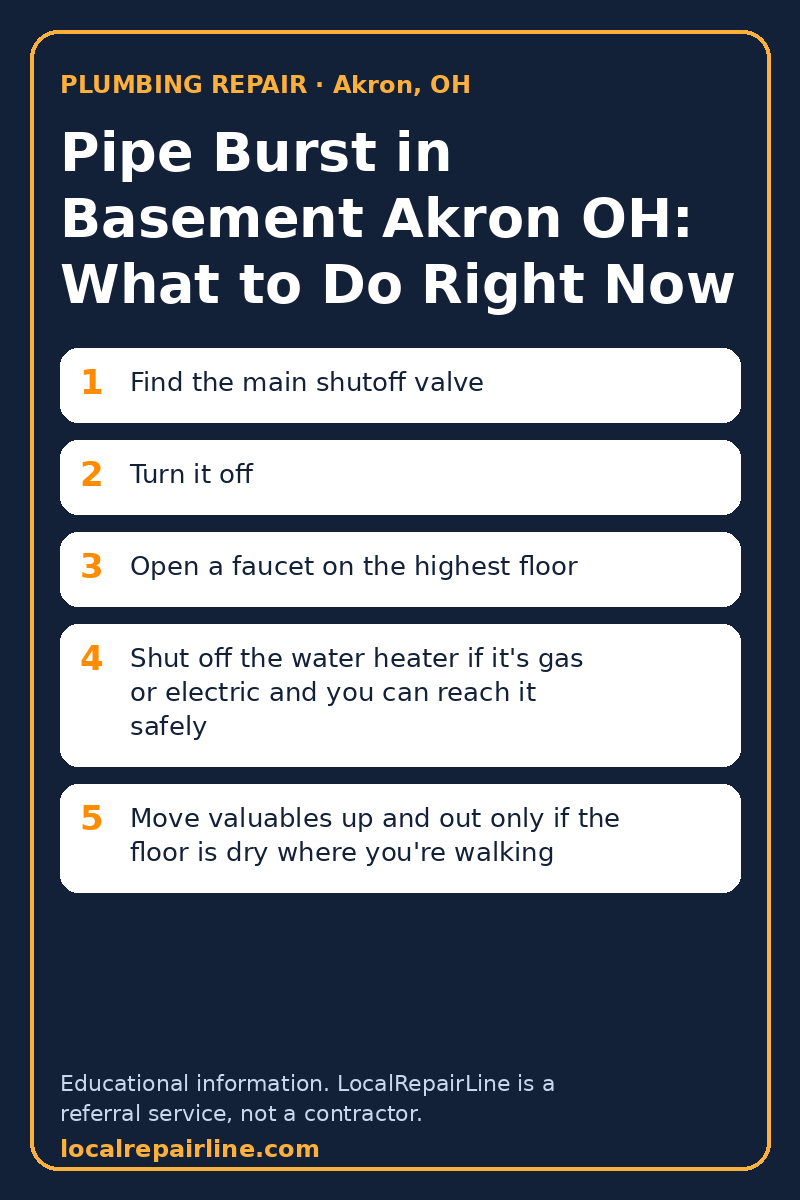
Is It Safe to Walk In? Electrical and Standing-Water Risks
Water and electricity in a basement is the part to take seriously. Before you go down the stairs, look from a safe spot.
Stay out of the basement if any of these are true:
- Water is covering outlets, power strips, or extension cords
- Water is touching or near the electrical panel
- You hear buzzing or crackling, or smell something burning
- Appliances like a furnace, freezer, or washer are sitting in standing water
If the panel is dry and you can reach it without stepping in water, you can switch off the breakers for the basement or the whole house. If you can't reach it dry, don't wade over there. Call your electric utility or an electrician and wait.
Water can carry current from anything plugged in or wired nearby. A few extra minutes of waiting costs far less than an injury.
How to Tell What Kind of Pipe Burst You Have
Knowing what failed helps you describe the problem on the phone and decide how urgent it is. Look for clues once the water is off and it's safe to see.
- A long split along the pipe. This often points to ice expanding inside the line.
- A leak at a joint or fitting. Connections can loosen or crack as pipes move.
- A spray or drip from a supply line at the water heater or washer. These are often a hose or connector problem, not a buried pipe.
- Water coming through a wall or ceiling. The break is probably hidden, and you shouldn't open it up yourself.
- Water rising from the floor. This could be a drain line or something under the slab.
Don't assume it's a supply pipe. A drain or sewer line problem brings different health concerns, and cleanup needs more care.
The Akron cold-snap pattern
In Northeast Ohio, a pipe can split during a long cold stretch, but the flooding doesn't always start then. Ice inside the pipe can act like a plug, so the split stays quiet.
Then temperatures climb, the ice melts, and water pours out of the crack. Winters here can swing from very cold nights to milder days, so pipes get repeated cold and thaw stress.
That means a basement that was dry during the worst of the cold can flood when the weather turns. If you had a hard cold snap and now it's warming up, a burst pipe is a likely suspect.
Document the Damage Before You Start Cleaning Up
It's tempting to grab a mop and start pumping. Pause for a few minutes first. Photos give you a record of what the damage looked like before you changed anything, so check your policy or ask your agent what documentation they want.
Collect these:
- Wide photos of each affected area, then close-ups of the pipe, the water line on walls, and damaged belongings
- A video walk-through, narrating what you see and the date
- A list of damaged items with approximate age and what they were worth
- Receipts for emergency supplies, pump or fan rentals, and any repair work
- Notes on when you found the water and what you did to stop it
Keep damaged items if you can until you've taken photos and checked your policy or talked with your agent. Don't throw out wet carpet or drywall before taking photos.
Drying Out the Basement and Preventing Mold
Once you have your photos, get started on drying. Damp materials can sit unnoticed for a while, so it helps to start before any musty smell shows up.
Mold can grow on materials that stay damp, and the longer they stay wet, the more likely that becomes. Moisture trapped in drywall, insulation, and carpet padding is the biggest risk.
Here's a practical order of work:
- Remove standing water. Use a pump or wet/dry vacuum only after the electrical risks are handled. If water is deep, pump it down gradually rather than all at once, since the soil outside may still be saturated.
- Pull out soaked items. Wet carpet, padding, cardboard boxes, and furniture hold water for a long time.
- Run fans and dehumidifiers. Keep air moving across walls and floors, and keep it going longer than seems necessary.
- Open up wet drywall or insulation if needed. Materials that stay soaked often need to come out, and a plumber or restoration pro can help you judge.
Spring in Akron often brings heavy rain and snowmelt. If your basement is drying out while it's pouring outside, new water from outside can undo your progress. Check for seepage along the walls and floor so you don't blame the pipe for water that came from the ground.
Why Pipes Burst in Akron Basements, and How to Stop a Repeat
Cold exposure is one possible cause of basement pipe failures in places like Akron, though it isn't the only one. Basements are often partly unheated, and pipes along exterior walls, near rim joists, or by drafty windows are the usual trouble spots.
Repeated swings between hard cold and milder weather can stress pipes and fittings over time. A pipe that survived one winter may split the next.
After the repair, check other places that get cold:
- Crawl spaces and unheated utility rooms
- Pipes inside exterior walls
- Pipes near basement windows, vents, or gaps in the rim joist
- Garage walls and outdoor spigot connections
Insulating exposed pipes, sealing air leaks, and keeping some heat in the basement during cold stretches all help. Letting a faucet drip on a very cold night can also reduce the risk.
Be wary of simply patching the split and calling it done. If you don't find out why the pipe failed, the next section of pipe may fail too. Ask whoever repairs it what caused the break.
When to Call a Local Plumber and What to Ask
DIY steps run out quickly with a burst pipe. This is the point to talk to a local plumbing pro in Akron, OH, like the LocalRepairLine team, instead of guessing.
Call right after you've shut off the main valve if any of these apply:
- Water is still coming in after the main is closed
- The pipe is inside a wall or under the slab
- The shutoff valve won't turn or leaks around the handle
- Water is near the electrical panel or outlets
- You can't tell where the water is coming from
A plumber can locate the break, repair or replace the damaged section, and confirm the system is safe to turn back on. If the cause is a slab or drain problem, that also needs professional tools.
Some good questions to ask:
- What caused the pipe to fail, and are other sections at risk?
- Is this a repair of one section or a replacement of a longer run?
- Will walls or flooring need to be opened up, and who handles patching?
- Can you test the system and check for other leaks before the water goes back on?
Costs vary by house. Pipe material, how easy the break is to reach, whether walls must be opened, and the amount of water damage all affect the final bill. Ask for the scope of work in writing before repairs begin.
FAQ
What should I do first if a pipe bursts in my basement?
Shut off the main water valve, then open a faucet on the highest floor to drain the lines. Before you step into the basement, make sure water isn't reaching outlets, cords, or the electrical panel. If the valve won't turn, call a plumber instead of forcing it.
Is it safe to turn off the power if my basement is wet?
Only if the panel is dry and you can reach it without stepping in water. If you'd have to wade to get there, stay out and call your electric utility or an electrician. Water can carry current from anything plugged in or wired nearby.
Can a pipe burst after the weather warms up?
Yes. Ice inside a split pipe can act like a plug, so the water may not escape until the ice melts. A basement that stayed dry during a cold snap can flood when temperatures rise.
How soon should I start drying out the basement?
Start once the electrical risks are handled and you've taken photos. Materials that stay damp can grow mold, so the sooner they dry, the better. Get fans and dehumidifiers running, and pull out soaked carpet, padding, and cardboard.
Should I take photos before I clean up?
Yes. Photos and video of the damage, the pipe, and your belongings give you a record of what happened that you can refer back to if you file a claim. Keep damaged items if you can until you've checked your policy or talked with your agent.
Need a plumbing repair pro in Akron, OH?
Talk to an independent local contractor who serves your area.
📞 Call (833) 350-0420Plumbing repair in Akron, OHCall hours: 8am–8pm ET, 7 days