No Hot Water? Emergency Plumber Help in Springfield, OH
You step into the shower on a cold Ohio morning and the water never warms up. If you're searching for a no hot water emergency plumber Springfield OH has nearby, take two minutes first. Plenty of cases are simple fixes, and a few are real emergencies.
This guide helps you sort out which one you have, what to check safely, and when to stop and make the call.
Is No Hot Water an Emergency? How to Tell in Two Minutes
No hot water is annoying, but it isn't always urgent. What matters is whether anything else is going wrong.
Ask yourself these questions:
- Is there water on the floor around the heater?
- Do you smell gas or something burning?
- Is a breaker tripping again and again?
- Is the tank banging or popping loudly?
- Is the water coming out rusty or brown?
If you answered yes to any of those, skip ahead to the stop-and-call section. If everything looks normal and the heater is simply cold, you likely have time to run through the basic checks.
Winter makes this more likely. Water entering your home in an Ohio January is far colder than in July, so the heater works much harder. The first hard cold snap often exposes a unit that was already tired.
Need a plumbing repair pro in Springfield, OH?
Talk to an independent local contractor who serves your area.
📞 Call (833) 350-0420Plumbing repair in Springfield, OHCall hours: 8am–8pm ET, 7 daysYour call may first be answered by a short screening service that asks what the problem is and where you are. Stay on the line and you will be connected to an independent local pro.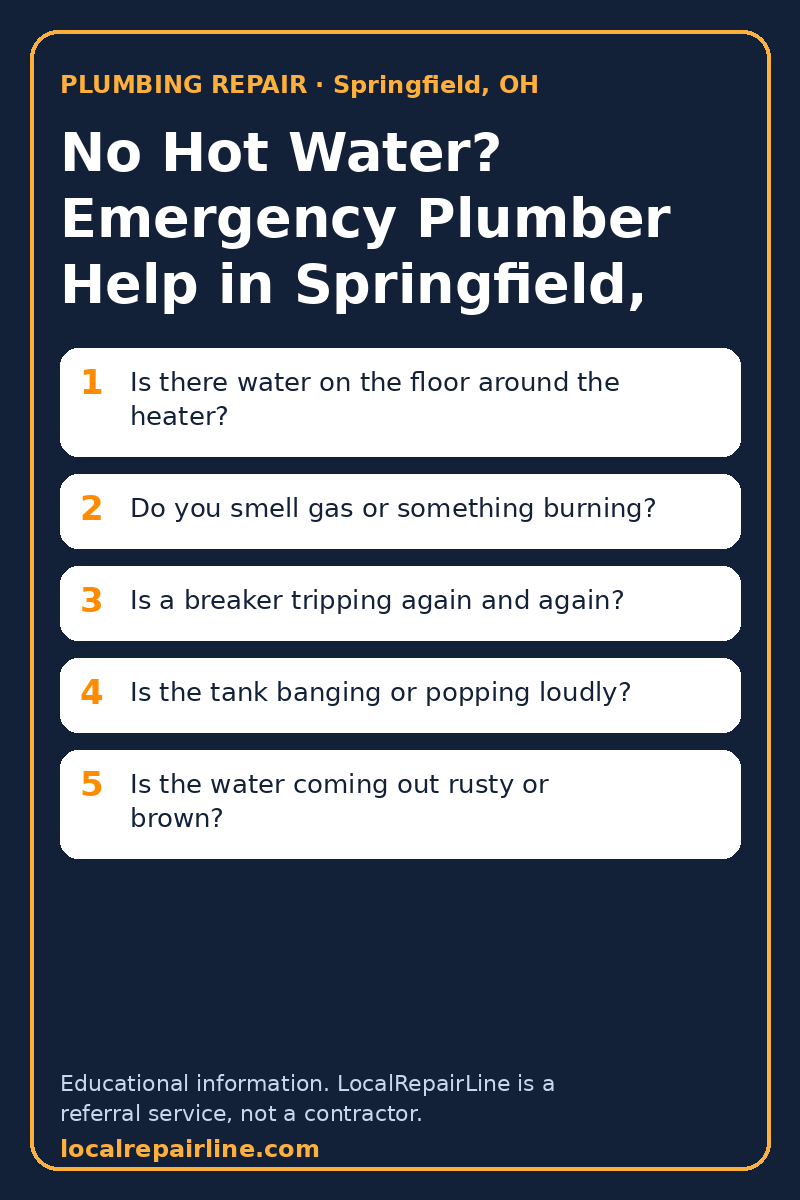
Quick Checks Before You Call: Breaker, Pilot Light, Gas Valve, and Reset Button
These checks are basic, but electric panels and gas lines carry real risk. Stop the moment anything feels uncertain.
- Check the breaker (electric heaters). Look for a tripped switch in the panel. Flip it fully off, then back on once.
- Check the reset button (electric heaters). Many have a small red button behind a metal access panel. Turn the breaker off before you open anything, and press the button once.
- Check the pilot light (older gas heaters). Look through the small window near the bottom. If the flame is out, follow the relight instructions printed on the tank.
- Check the gas valve. Make sure the knob on the gas line is open, with the handle running parallel to the pipe.
- Check the temperature setting. Someone may have turned the dial down, or it may have been bumped.
Give the heater a good while to recover after any fix. A full tank can take a long time to heat, especially with cold winter inlet water.
If the reset button pops again right away, don't keep pressing it. That's the heater telling you something is wrong.
Gas vs. Electric: What Your No-Hot-Water Symptoms Point To
Knowing your heater type narrows things down quickly. Look at the label or the fuel connection to confirm which you have.
Electric heaters
Electric tanks use heating elements and thermostats. A few patterns are common:
- No hot water at all: often a tripped breaker, a tripped reset, or a failed upper element or thermostat.
- Lukewarm water or hot water that runs out fast: often a worn lower element or a heavy buildup of sediment.
- Breaker trips repeatedly: can point to a shorted element or damaged wiring.
Spring and summer thunderstorms matter here too. A power interruption or surge can trip a breaker or knock out a part.
Gas heaters
Gas tanks rely on a burner, a flame sensor, and a steady gas supply. Common culprits:
- Pilot light out: a draft, a dirty pilot, or a worn thermocouple can all be behind it.
- Pilot won't stay lit: that usually means a part needs replacing.
- Newer electronic ignition units: these can fail to light after a power outage, which storms can cause.
If you smell gas at any point, don't keep troubleshooting. That's a stop sign, covered next.
When to Call a Pro: No Hot Water Emergency Plumber Springfield OH Searches Explained
Once the basic checks are done and you still have no hot water, or you see any of the warning signs below, you've reached the point to talk to a local plumbing pro in Springfield, OH, such as the LocalRepairLine team, instead of guessing. Further DIY at this stage risks your safety and your floors.
These signs mean it's time to stop DIY and get help:
- A gas smell. Leave the house first, then call your gas utility or emergency services from outside. Don't flip switches or use a lighter.
- Water pooling around the tank. A leaking tank usually means the inside has failed, and it can get worse fast.
- Rusty or discolored hot water. This can point to corrosion inside an aging tank.
- A tripping breaker. Repeated trips mean something electrical is wrong.
- Scorched, melted, or buzzing wiring. Turn off the breaker and leave it alone.
- Loud popping or banging from the tank. This often means heavy sediment, and it stresses the tank.
If water is actively leaking, shut off the cold water supply to the heater if you can reach the valve safely. Turn off the power or gas supply too, if you can do so without stepping in water.
Repair or Replace? What Homeowners Often Regret Paying For
When the plumber arrives, you may face a choice. A cold house and a line for showers can make the first option sound good. A little preparation helps you decide calmly.
When repair usually makes sense
- The tank is relatively young and not leaking.
- The problem is a single part, like an element, thermostat, or thermocouple.
- This is the first real issue the heater has had.
When replacement deserves a serious look
- The tank is old enough that it's nearing the end of its expected life, or you don't know its age.
- It's leaking from the tank body. That generally can't be patched.
- You've had repeated repairs in a short time.
- Rust shows in the water or around the base.
The age is usually printed in the serial number on the label. A plumber can help you read it.
The regret trap
Two things are easy to regret. One is paying for a repair on a worn-out tank, then replacing it a few months later anyway. The other is rushing into a replacement without asking about size, fuel type, and what's included.
Costs vary by house. Tank size, fuel type, venting, how easy the unit is to reach, and what happens to the old tank all affect the total. Ask for the repair option and the replacement option side by side so you can compare them.
Getting Through a Cold Ohio Day Without Hot Water
While you wait for a fix, a few steps keep the household comfortable.
- Heat water on the stove for dishes and washing up. Use a pot with a lid and handle it carefully around kids.
- Take quick sponge baths instead of full showers. Cold water showers in a winter house are miserable and can chill you quickly.
- Skip the dishwasher and washing machine hot cycles until the heater is working.
- Look after babies, older adults, and anyone with health concerns first. Keep them warm and use warmed water for washing.
Protect your pipes too. If the heater is in a cold basement, garage, or utility closet, keep the house heat on. Open cabinet doors on exterior walls so warm air reaches the pipes.
If a heater problem coincides with a deep cold snap, check whether other taps are running normally. A frozen supply line can look like a heater failure.
Know where your main water shutoff is. If something does burst or leak, you'll want to close it quickly.
What to Have Ready When You Call a Local Plumber
A short, clear description speeds up the visit and helps the plumber bring the right parts. Gather this before you call:
- Heater type: gas or electric.
- Approximate age, or the serial number and brand from the label.
- Tank size, which is often printed on the label.
- Symptoms: no hot water, lukewarm water, noises, rusty water, or leaks.
- What you've tried: breaker, reset button, pilot light, and what happened.
- Location: basement, garage, or utility closet, and whether the unit is easy to reach.
FAQ
How long should I wait for the water to heat after a reset?
It depends on the tank size and how cold the incoming water is. A full tank can take a good while to recover, and winter makes it slower. If you still have no hot water after a reasonable wait, move on to the stop-and-call signs.
Can I relight the pilot light myself?
On many older gas heaters, yes. Follow the instructions printed on the tank and stop if you smell gas. If the pilot won't stay lit, a part likely needs replacing, and that's a job for a plumber.
Why does my hot water run out fast in winter?
Water coming into your home is much colder in winter, so the heater needs more time and energy to warm it. A worn lower element or sediment buildup can make the problem worse. If it keeps happening, have the heater checked.
Is it safe to keep using a water heater that's leaking?
Not for long. A leak from the tank body usually means the inside has failed, and it can get worse quickly. Shut off the water, power, or gas if you can do it safely, and call a plumber.
How much does a water heater repair or replacement cost?
Costs vary by house. Tank size, fuel type, venting, how easy the unit is to reach, and what happens to the old tank all affect the total. Ask for repair and replacement options side by side so you can compare them.
Need a plumbing repair pro in Springfield, OH?
Talk to an independent local contractor who serves your area.
📞 Call (833) 350-0420Plumbing repair in Springfield, OHCall hours: 8am–8pm ET, 7 days