Water Heater Not Working? Repair Steps for Cleveland, OH Homes
Cold shower and a search for water heater not working repair Cleveland OH? Start here. Many no-hot-water problems come down to a tripped breaker, a pilot light that blew out, or a thermostat setting that got bumped.
This guide helps you sort out what's going on, what's safe to try yourself, and when it's time to hand the job to a pro.
Signs Your Water Heater Isn't Working (and What Each One Means)
The symptom you notice usually points toward the cause. Here are the common ones:
- No hot water at all: Often a power or fuel problem, like a tripped breaker, a pilot light that's out, or a failed heating part.
- Lukewarm water: Could be a low thermostat setting, a worn heating element, or a tank full of sediment.
- Hot water runs out fast: Sediment buildup, a failing element, or a tank that's too small for how your household uses water.
- Rumbling or popping sounds: Usually sediment baked onto the bottom of the tank.
- Rusty or cloudy hot water: The tank or fittings may be corroding.
- Water around the base: Possibly a leak from the tank or a nearby fitting, so check where the water is coming from.
One more thing worth knowing: if only the hot side is acting up, the heater is the likely culprit. If hot and cold both look odd, the problem may be elsewhere in your plumbing.
Need a plumbing repair pro in Cleveland, OH?
Talk to an independent local contractor who serves your area.
📞 Call (833) 350-0420Plumbing repair in Cleveland, OHCall hours: 8am–8pm ET, 7 daysYour call may first be answered by a short screening service that asks what the problem is and where you are. Stay on the line and you will be connected to an independent local pro.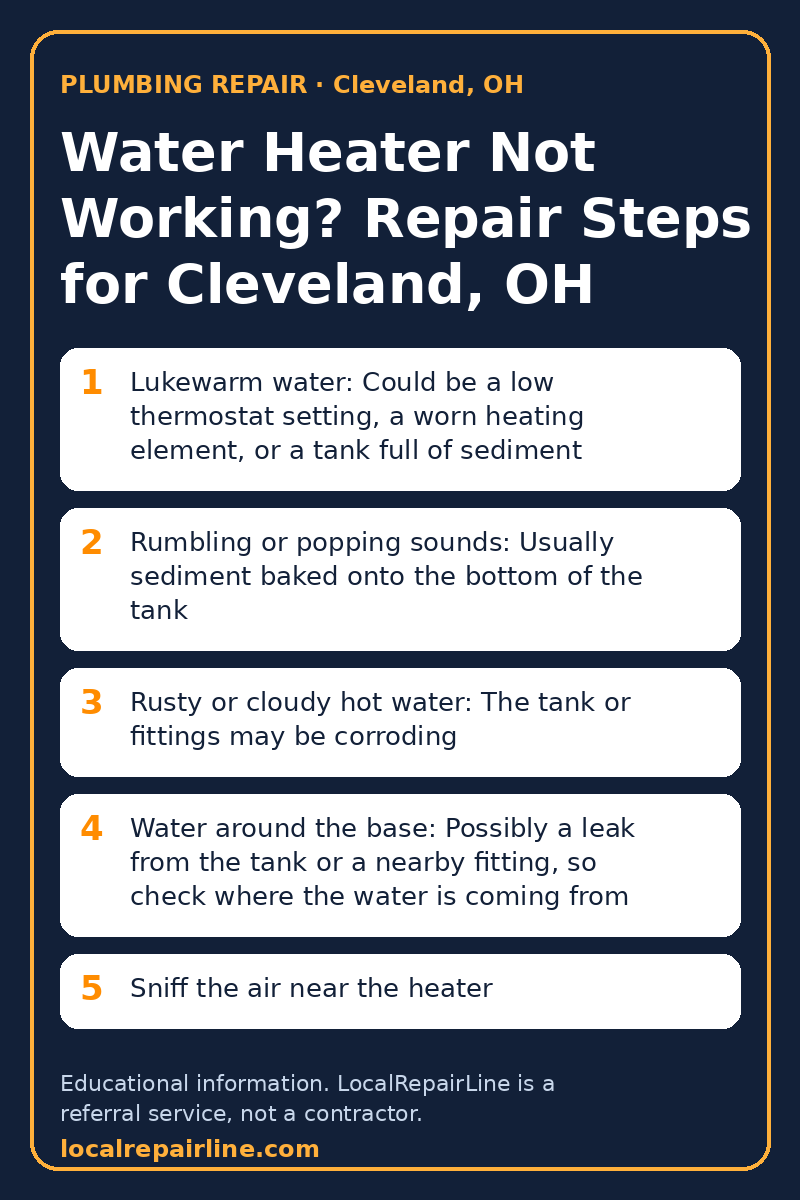
Quick Safety Checks Before You Touch Anything
Water heaters mix electricity or gas with hot water under pressure. A few minutes of caution is worth it.
- Sniff the air near the heater. If you smell gas (a rotten-egg odor), leave the house and call your gas utility or emergency services from outside. Don't flip switches or light anything.
- Look at the floor. Standing water around the tank means stop and read the warning-signs section below.
- Check for scorch marks or melted wiring on an electric unit. Don't touch it if you see any.
- Turn off power at the breaker (electric) before removing any panel.
- Keep the area dry and wear dry shoes before you reach for any electrical part.
If everything looks normal, move on to the simple fixes below.
Gas vs. Electric: Simple Fixes You Can Try Yourself
Gas water heaters
Check the pilot light first. Look through the small window near the bottom of the unit. If the flame is out, the manufacturer's instructions on the tank label walk you through relighting it.
If it won't stay lit, or you smell gas at any point, stop. A worn thermocouple or a gas control problem is a job for a pro.
Also check the temperature dial on the gas control. It may have been knocked to a low setting or to "vacation."
Electric water heaters
Start at the panel. Look for a tripped breaker, switch it fully off, then back on.
Many electric tanks also have a small red reset button behind an access panel. Always shut off the breaker before opening it. If you're comfortable with this step, press the button once and no more. If it trips again, something is failing inside and you shouldn't keep resetting it.
Check the thermostat setting too. Lukewarm water often means the setting is too low or a heating element has worn out. Testing elements takes a meter and some comfort around wiring, so this is where many homeowners stop.
Why Cleveland Winters Make Water Heater Problems Worse
Cleveland winters are cold and snowy, and lake-effect snow off Lake Erie keeps the chill going for weeks. The water coming into your house is very cold, so your heater has to work much harder to bring it up to temperature.
That has a few effects:
- Hot water runs out sooner. The tank spends more energy heating each gallon, so the supply feels shorter than it does in summer.
- Weak parts show up. A tired element or a sediment-coated tank may get by in July and give out in January.
- Longer run times. More heating means more wear.
Late fall and early spring bring repeated cold snaps followed by thaws. That swing can stress pipes and fittings near the heater, especially in basements, garages, or utility closets that don't stay warm.
Summer has its own issue. Warm, humid air can cause condensation and speed up rust on tanks and fittings in damp utility areas. A quick look at the base of your tank and the nearby connections each season can catch trouble early.
Repair or Replace? How to Weigh the Cost and Age of Your Tank
This decision is worth a little thought before you spend money. There are two common mistakes:
- Patching a worn-out tank again and again, then having it fail in the middle of a Cleveland winter.
- Overlooking early warning signs like rusty water or small drips, which makes it harder to plan a replacement.
Here's a practical way to weigh it:
- Age. The older a tank gets, the closer it likely is to the end of its life. Check the date on the data label. If yours is well past what the manufacturer expects, lean toward replacement.
- Repair size. A thermostat, element, or pilot part is a modest repair on a younger tank. If the repair is a big fraction of what a new unit costs, replacement often makes more sense.
- Repair history. If this is the second or third fix in a short time, the tank is telling you something.
- Leaks from the tank itself. Tank leaks generally can't be repaired. The tank has to be replaced.
- Timing. Replacing in early fall on your schedule is usually less stressful than doing it during a January cold snap.
Costs vary by house. Fuel type, tank size, venting, and how easy the heater is to reach all affect the total. Ask for a written breakdown for both repair and replacement so you can compare.
Water Heater Not Working Repair Cleveland OH: Warning Signs to Stop and Call a Plumber
Here's the line between DIY and professional help. If you've checked the breaker or pilot light and the thermostat setting and still have no hot water, it's time to talk to a local plumbing pro in Cleveland, OH, such as LocalRepairLine, instead of guessing.
The same goes if you notice any of these:
- A gas smell
- Water pooling around the tank
- Rumbling or popping that keeps getting louder
- A breaker that keeps tripping
- Water discharging from the temperature and pressure relief valve
- Scorched wiring or a burning smell
These are safety or damage problems. Trial and error with gas, wiring, or a leaking tank can turn a repair into a bigger one. Shut off the power or gas supply if you can do so safely, shut the cold water inlet if there's a leak, and make the call.
What to Expect When a Local Plumber Diagnoses Your Water Heater
A diagnostic visit is mostly detective work. A plumber will typically:
- Ask about symptoms and when they started
- Check the age and condition of the tank
- Test power or gas supply, thermostats, and heating parts
- Inspect the relief valve, fittings, and venting
- Look for leaks, rust, and sediment
- Explain whether repair or replacement makes more sense
Have the tank's age, fuel type, and what you've already tried ready. Ask for the repair option and the replacement option in writing, and ask what each one covers.
FAQ
Why is my water heater not heating water but has power?
Power reaching the unit doesn't mean the parts that heat the water are working. On an electric tank, a worn heating element or a failed thermostat is common. On a gas tank, a bad thermocouple or gas control can do it. A plumber can test each part and tell you which one failed.
How much does it cost to repair a water heater in Cleveland, OH?
Costs vary by house. The price depends on which part failed, whether the heater is gas or electric, how easy it is to reach, and how old the tank is. Get written breakdowns for both the repair and a replacement so you can compare the two.
Is it worth repairing a water heater that's 10 years old?
Sometimes, but it's a judgment call. If the repair is small and the tank looks clean and dry, a fix may buy you more time. If the repair is costly, the tank leaks, or you've already patched it before, it's worth getting replacement laid out in writing to compare against the repair.
Need a plumbing repair pro in Cleveland, OH?
Talk to an independent local contractor who serves your area.
📞 Call (833) 350-0420Plumbing repair in Cleveland, OHCall hours: 8am–8pm ET, 7 days