Burst Pipe Plumber in Grand Rapids, MI: What to Do First
If you're searching for a burst pipe plumber Grand Rapids MI homeowners can call, you're probably standing near a wet spot and wondering how bad it is. Take a breath. Most of what you need to do first is simple, and you can take it one step at a time.
This guide covers how to stop the water, protect your home, and prepare for insurance. It also covers when to hand things off to a local pro and what the repair might involve.
Signs You Have a Burst Pipe (Including Ones Hidden in Walls)
Some bursts are obvious, like water spraying in a basement. Others hide for days.
Watch for these signs:
- Water stains, bubbling paint, or a sagging spot on a ceiling or wall
- A sudden drop in water pressure, or no water at a faucet
- Rusty, cloudy, or oddly tasting water
- The sound of running water when everything is turned off
- A musty smell near an exterior wall, crawl space, or basement corner
- A water meter that keeps moving when no fixtures are in use
That last one is a handy test. Turn everything off, then check your meter. If it's still moving, water is going somewhere it shouldn't.
Hidden leaks in walls and ceilings often show up as a small stain first. Take a photo of it and check back to see whether it changes.
Need a plumbing repair pro in Grand Rapids, MI?
Talk to an independent local contractor who serves your area.
📞 Call (833) 350-0420Plumbing repair in Grand Rapids, MICall hours: 8am–8pm ET, 7 daysYour call may first be answered by a short screening service that asks what the problem is and where you are. Stay on the line and you will be connected to an independent local pro.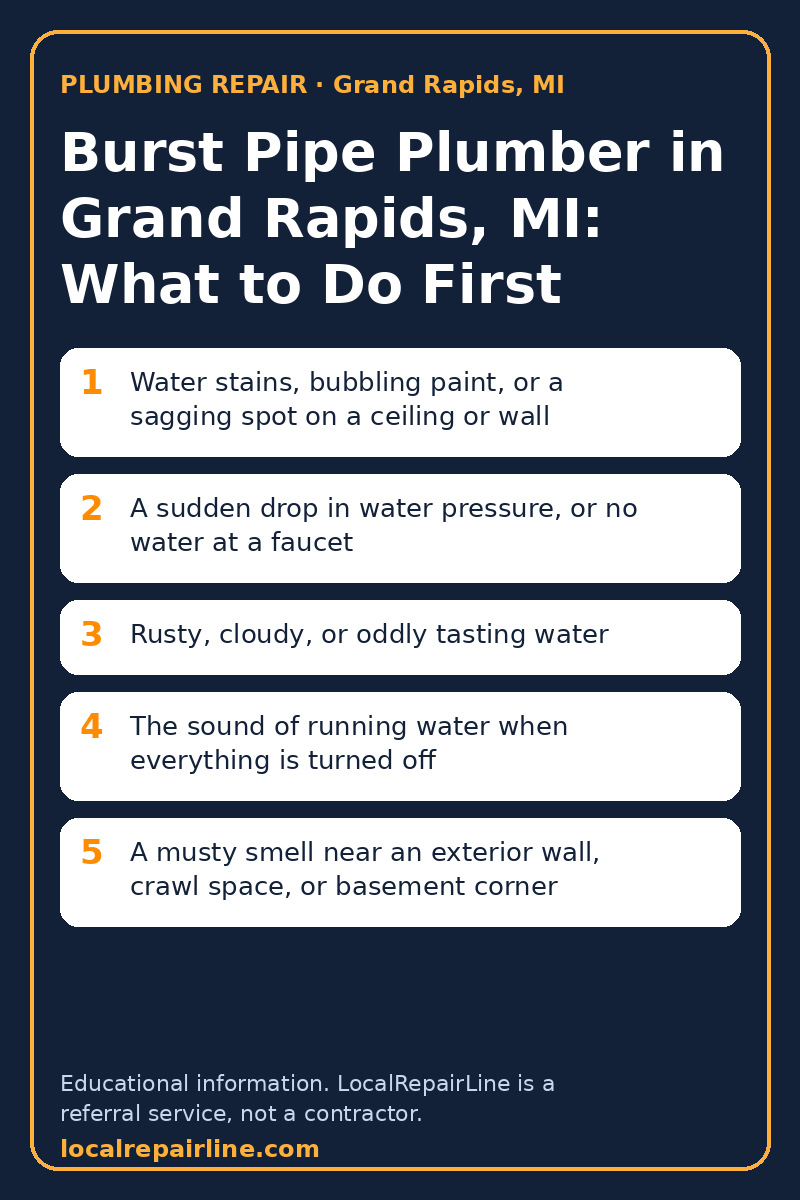
First 10 Minutes: Shut Off the Water and Protect Your Home
Speed helps, but staying organized helps more. Work through this list:
- Shut off the main water valve. It's usually near where the water line enters the house, often in a basement or utility area. Turn it fully closed.
- Open a faucet or two on the ground or basement level, plus one upstairs. This lets leftover water drain and eases pressure in the lines.
- Stay clear of electricity. If water is near outlets, appliances, or the panel, don't step into it. Shut off power only if you can reach the breaker box while staying dry. If you can't, call your electric utility or an electrician.
- Move belongings out of the way. Lift rugs, electronics, and boxes onto higher, dry surfaces.
- Start removing water. Use towels, a mop, or a wet-dry vacuum if it's safe to plug in somewhere dry.
- Take photos and video before you move too much (more on that below).
When the water is off but problems remain
Once the water is off, the emergency is contained, but the cause isn't fixed. This is the point to call a local plumbing pro in Grand Rapids, MI, like the LocalRepairLine team, rather than guess.
Call if you see any of these:
- A wet ceiling or a soaked wall
- No water pressure after you've shut things off and checked
- A pipe you can't reach or can't identify
- A split you can see but can't safely repair
A plumber can locate the break, explain your repair options, and walk you through turning the water back on. Guessing often means opening the wrong wall or turning the water back on too soon.
Why Pipes Burst in Grand Rapids Winters and Thaws
Grand Rapids winters are cold and snowy, and lake-effect snow off Lake Michigan often comes with sharp cold. When water inside a pipe turns to ice, it expands. The pressure often builds between the ice plug and a closed faucet, and that's where the pipe splits.
Pipes in unheated spaces are the most exposed. Think crawl spaces, garages, exterior walls, and basements, especially during the coldest stretches.
Then there's the thaw. Temperatures here can swing from deep cold to mild within days. That swing stresses pipes, and it creates a nasty surprise.
Why pipes sometimes fail after the cold ends
A pipe can crack while it's iced up and still not leak. The ice itself acts like a plug. When things warm up and the ice melts, water pressure returns and the leak starts.
That's why you might find a stain or a drip a day or two after the cold snap ends. If your pipes were cold enough to worry you, treat the thaw as a time to watch closely, not a time to relax.
What to Do Before the Plumber Arrives (Photos, Electrical Safety, Drying)
While you wait to hear from a plumber, there are a few things you can do. Use the time well.
Document everything
Photos and notes can help show what happened if you file a claim. Take wide shots of each affected room, then close-ups of the damage. Record a short video walking through the house.
Photograph the pipe, the water line on walls, and any damaged belongings. Keep damaged items if you can, and check your policy for what it asks you to do.
Keep it safe
Stay out of rooms where water has reached outlets or the electrical panel. Don't use ceiling fixtures under a wet ceiling. If a ceiling is bulging with water, keep clear of it. A small hole to let water out can reduce collapse risk, but only do that if you can stand safely out of the way.
Start drying
Pull up soaked rugs and remove wet items from floors. Run fans and a dehumidifier if the electrical setup is safe. Open interior doors for airflow.
Damp materials can grow mold if they stay wet, so drying early is worth the effort.
What to Expect From a Burst Pipe Plumber Grand Rapids MI Homeowners Hire
A good plumber starts by confirming the water is off and finding the actual break. That may involve checking the visible pipe, tracing stains, and using tools to locate a leak behind a wall.
Then they decide on the fix. This is where homeowners sometimes regret the wrong choice. A quick patch might hold for a short split in an easy-to-reach pipe. But if the pipe is damaged along a stretch, or it's old and brittle, the better repair is replacing a section.
Patching a pipe that needs replacing often means a second leak down the road. Ask the plumber why they chose a patch or a replacement. Ask them to show you the damaged section too.
After the repair, the plumber should restore water slowly and check for leaks. Pipes under pressure can reveal other weak spots.
Turning water back on too early
Don't open the main valve just because the pipe looks fine. Wait until the repair is done. Then turn the water on slowly, and watch the repaired spot and the walls and ceilings nearby for drips.
If anything looks wet, shut the valve again and let the plumber know. A slow, careful restart is far easier than cleaning up a second flood.
Cutting the Odds of a Repeat
Once the mess is handled, a few habits can help before the next cold stretch:
- Insulate pipes in crawl spaces, garages, and exterior walls
- Keep your heat on, even if you're away
- Open cabinet doors under sinks on exterior walls during hard cold
- Let a faucet drip slightly during the coldest nights
- Disconnect outdoor hoses before winter
None of these is a sure fix, but they lower the risk.
FAQ
How do I know if a pipe burst inside a wall?
Look for stains, bubbling paint, a musty smell, or the sound of running water when nothing is on. A water meter that keeps moving with all fixtures off is another strong clue. A plumber can use tools to help locate the spot behind the wall.
Should I call my insurance company or the plumber first?
Shut off the water, then take photos and video, and call a plumber to stop further damage. Contact your insurer soon after, and check your policy for what it asks you to do about limiting damage and reporting the loss. Details differ from policy to policy, so read yours for what it covers.
How much does burst pipe repair cost?
Costs vary by house. The pipe material, how easy the break is to reach, how much wall or ceiling must be opened, and how much water damage there's all play a part. A short, visible split and a hidden break that needs a section replaced can be very different jobs, so ask the plumber to explain what's driving the cost before work starts.
Can I fix a burst pipe myself?
A small, easy-to-reach split might hold with a temporary clamp or wrap, but treat that as a short-term measure only. Hidden breaks, old brittle pipes, and anything near electrical service are better left to a plumber. A bad DIY repair can fail once pressure returns.
Why did my pipe leak after the weather warmed up?
Ice can plug a cracked pipe and hide the leak. When the ice melts and pressure returns, water flows out of the crack. Check your pipes and walls for a day or two after a hard freeze ends.
Need a plumbing repair pro in Grand Rapids, MI?
Talk to an independent local contractor who serves your area.
📞 Call (833) 350-0420Plumbing repair in Grand Rapids, MICall hours: 8am–8pm ET, 7 days