Does Insurance Cover Furnace Repair in Grand Rapids, MI?
It's a cold, cloudy West Michigan evening, the house is cooling off, and you're typing "does insurance cover furnace repair Grand Rapids MI" into your phone. The honest answer is sometimes, but usually not for the reason you'd hope.
Here's how coverage works, what gets denied, and how to protect yourself before you file anything.
Does Insurance Cover Furnace Repair Grand Rapids MI? The Short Answer
Many homeowners policies cover sudden, accidental damage from a covered cause, but wording differs, so check your own policy. Think fire, lightning, a vehicle crashing into the house, or certain kinds of water damage. If one of those events wrecks your furnace, the repair or replacement may be covered, minus your deductible.
A furnace that simply quits is a different story. Homeowners insurance is built for unexpected events, not for equipment that wears out.
So the question to ask isn't "is my furnace covered?" It's "what caused it to fail?" The cause decides almost everything.
Need an HVAC repair pro in Grand Rapids, MI?
Talk to an independent local contractor who serves your area.
📞 Call (833) 669-0233HVAC repair in Grand Rapids, MICall hours: 8am–8pm ET, 7 daysYour call may first be answered by a short screening service that asks what the problem is and where you are. Stay on the line and you will be connected to an independent local pro.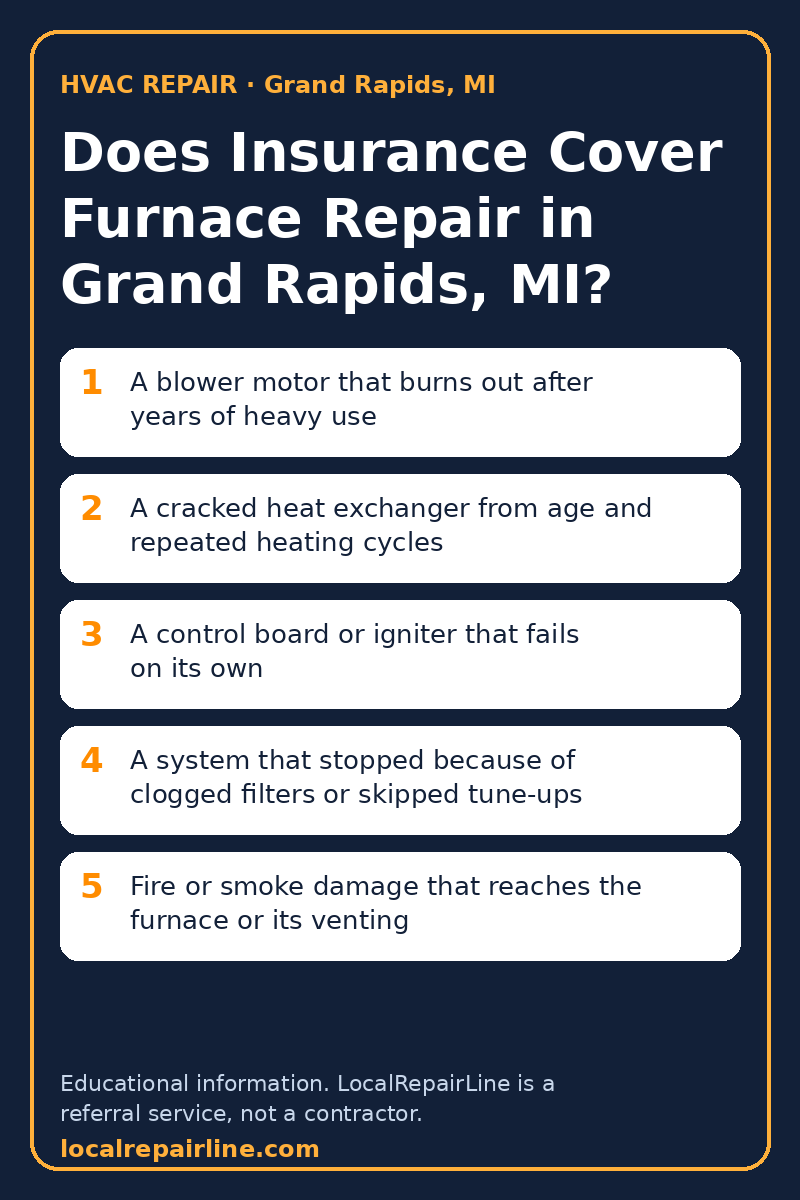
What Insurance Usually Won't Pay For (Wear, Age, and Maintenance)
Many policies exclude damage from normal wear, age, rust, corrosion, and lack of maintenance. Check the exclusions section of your policy, since those terms can describe a lot of furnace failures.
Typical examples that get denied:
- A blower motor that burns out after years of heavy use
- A cracked heat exchanger from age and repeated heating cycles
- A control board or igniter that fails on its own
- A system that stopped because of clogged filters or skipped tune-ups
Grand Rapids furnaces work hard. They run from late fall through early spring, and lake-effect snow and long gray stretches keep them cycling. That heavy use also means many breakdowns come down to wear, which is a common policy exclusion.
Spring and fall swings expose weak equipment too. A furnace that struggles to start or short-cycles on a 30-degree morning and a 60-degree afternoon is often showing its age. That's a maintenance conversation, not usually a claim.
When to stop and call a pro
If your furnace is out in deep cold, don't wait on the insurance question. request local help here from a local HVAC pro in Grand Rapids, MI rather than guessing at the cause. Response times vary, so ask about availability when you call.
The same goes if you smell gas or see soot or scorch marks around the furnace. If you smell gas, get everyone out of the house first and contact your gas utility or emergency services from outside.
A heating technician you hire can look into the cause and tell you whether the furnace is safe to keep running. They can also write up dated notes on what failed and why. That paperwork gives you something concrete to share with your insurer when they evaluate the claim.
Covered Perils That Can Damage a Furnace: Fire, Lightning, Burst Pipes, and More
Some events are far more likely to lead to an approved claim than a simple breakdown. Common covered causes include:
- Fire or smoke damage that reaches the furnace or its venting
- Lightning or power surge damage, depending on your policy wording
- Impact damage, such as a tree limb or vehicle hitting the house
- Sudden water damage, such as a pipe bursting above or near the furnace
Here's the Michigan winter twist. A furnace that fails during a cold snap can lead to frozen pipes, and burst pipes can flood a basement or utility area fast.
The furnace repair itself may still be on you, since the failure was probably wear. But the resulting water damage may be covered as a separate loss. Many policies expect you to take reasonable steps, like keeping the house heated or shutting off the water, so read that part of your policy carefully.
If you go this route, take photos of everything before you clean up, and keep receipts for emergency steps.
Home Warranty, Equipment Breakdown, and Manufacturer Coverage: Other Ways to Get Help
If homeowners insurance won't pay for a worn-out furnace, other coverage might.
Home warranty
A home warranty is a service contract, not insurance. Terms vary, but these contracts often focus on breakdowns from normal use, which many homeowners policies exclude.
Check the contract for:
- Service fees per visit
- Dollar caps on covered repairs
- Exclusions for pre-existing problems or poor maintenance
- Whether you must use the warranty company's own technicians
Equipment breakdown coverage
Some insurers offer an add-on, often called an endorsement, that covers mechanical or electrical failure of home systems. It's not automatic. Look at your policy declarations page or ask your agent whether you have it.
Manufacturer coverage
Furnaces often come with a manufacturer's warranty on certain parts. Labor usually isn't included, and you may need to have registered the unit. Find the model and serial number on the furnace label, then check your paperwork.
How to File a Furnace Claim in Michigan Step by Step
If you think a covered cause is involved, a little organization up front helps a lot.
- Make the home safe. Shut off gas or water if needed, and keep everyone away from any burning smell, soot, or standing water.
- Take photos and video. Capture the furnace, the surrounding area, any scorch marks, and any water damage before anything is moved.
- Get a technician's written assessment. Ask for dated notes describing the failure and the likely cause.
- Gather maintenance records. Filter changes, tune-up invoices, and past repair notes show the system was cared for.
- Read your policy. Look at your deductible, exclusions, and any equipment breakdown endorsement.
- Contact your insurer or agent. Describe what happened plainly, and stick to facts you can document.
- Keep every receipt and message. Save emergency repair costs, temporary heating costs, and claim correspondence.
The dated report and maintenance records matter most. A vague "furnace died" report leaves the cause unclear. A documented cause gives your insurer something concrete to evaluate.
Claim or Pay Out of Pocket? Deductibles, Premiums, and Repair vs. Replace Costs
Even when a loss is covered, filing isn't always the smart move.
Start with your deductible. If the repair costs about the same as the deductible, or only a bit more, a claim may pay you very little. A smaller payout combined with a claim on your record can be a bad trade.
Premium impact varies by insurer, policy, and claim history. Claims may affect your premium or your record, and the rules differ by company and policy. Ask your agent general questions about how claims affect your policy before you file.
Repair versus replacement matters too. Costs vary by house, and they depend on the furnace type, its age, the parts needed, and how easy the unit is to reach. A minor repair on a newer unit is a very different bill from replacing an older system with ductwork problems.
A rough way to think about it:
- Small repair, low cost: usually pay out of pocket
- Large water damage from burst pipes: a claim is more likely worth looking into
- Fire or lightning damage: get the repair scope in writing and compare it to your deductible before deciding
- Old furnace that wore out: check your policy's wear-and-tear exclusion and ask your agent before filing
When to Call a Grand Rapids HVAC Pro Before You Call Your Insurer
In most cases, call the HVAC pro first. You need to know what actually went wrong before you can say anything useful to an insurer or warranty company.
A local technician can tell you whether the problem is a simple part failure, a safety issue, or damage from something outside the furnace. They can also tell you whether repair makes sense or the unit is near the end of its life.
Ask them to document the cause in writing, with the date and photos if possible. That record helps whether you're filing with your insurer, using a home warranty, or just paying for the repair yourself.
Don't try to hide a maintenance gap. If the filter was neglected or the system hasn't been serviced in years, say so honestly. Clear, honest facts keep your claim straightforward and protect your credibility.
FAQ
Does homeowners insurance cover furnace repair or replacement?
Only when the damage comes from a covered cause, such as fire, lightning, or another sudden event your policy lists. Ordinary breakdowns from age, wear, or missed maintenance are usually excluded. Check your policy wording and ask your agent about any equipment breakdown add-on.
Does insurance cover a furnace that stopped working because of old age?
Typically no. Many policies treat age-related failure as normal wear, which they exclude. Your own policy wording controls, so read the exclusions section or ask your agent. If the furnace simply wore out, a home warranty or manufacturer parts coverage may be a better place to look.
Need an HVAC repair pro in Grand Rapids, MI?
Talk to an independent local contractor who serves your area.
📞 Call (833) 669-0233HVAC repair in Grand Rapids, MICall hours: 8am–8pm ET, 7 days