Emergency Furnace Repair Newark DE: What to Do Before You Call
When the heat dies on a cold night, it's hard to think straight. Some furnace problems are dangerous and mean you leave the house. Others are annoying but can wait until morning.
This guide covers emergency furnace repair Newark DE homeowners often face. It shows you how to tell the difference, what's safe to check yourself, and how to avoid costly choices made in a panic.
Is Your Furnace Problem a True Emergency? Warning Signs to Know
Not every dead furnace is an emergency, but a few problems are.
Treat these as emergencies and act right away:
- A rotten-egg or sulfur smell near the furnace, or anywhere in the house
- A carbon monoxide (CO) alarm that's sounding
- A scorching, burning plastic, or hot metal smell from the vents or furnace
- Visible smoke or flames anywhere except the burner behind its door
- Loud banging, booming, or repeated popping when the burners light
- Anyone in the home with headache, dizziness, nausea, or confusion that eases when they go outside
These can usually wait until morning, if you can stay warm:
- The furnace won't turn on, with no smells or strange noises
- Warm air that comes and goes
- Blowing cold air with no other symptoms
- The thermostat screen is blank
- Heat that runs but can't keep up
The dividing line is simple. Anything involving gas, fumes, smoke, or burning smells is a safety problem. Anything that's only about comfort is a scheduling problem.
Need an HVAC repair pro in Newark, DE?
Talk to an independent local contractor who serves your area.
📞 Call (833) 669-0233HVAC repair in Newark, DECall hours: 8am–8pm ET, 7 daysYour call may first be answered by a short screening service that asks what the problem is and where you are. Stay on the line and you will be connected to an independent local pro.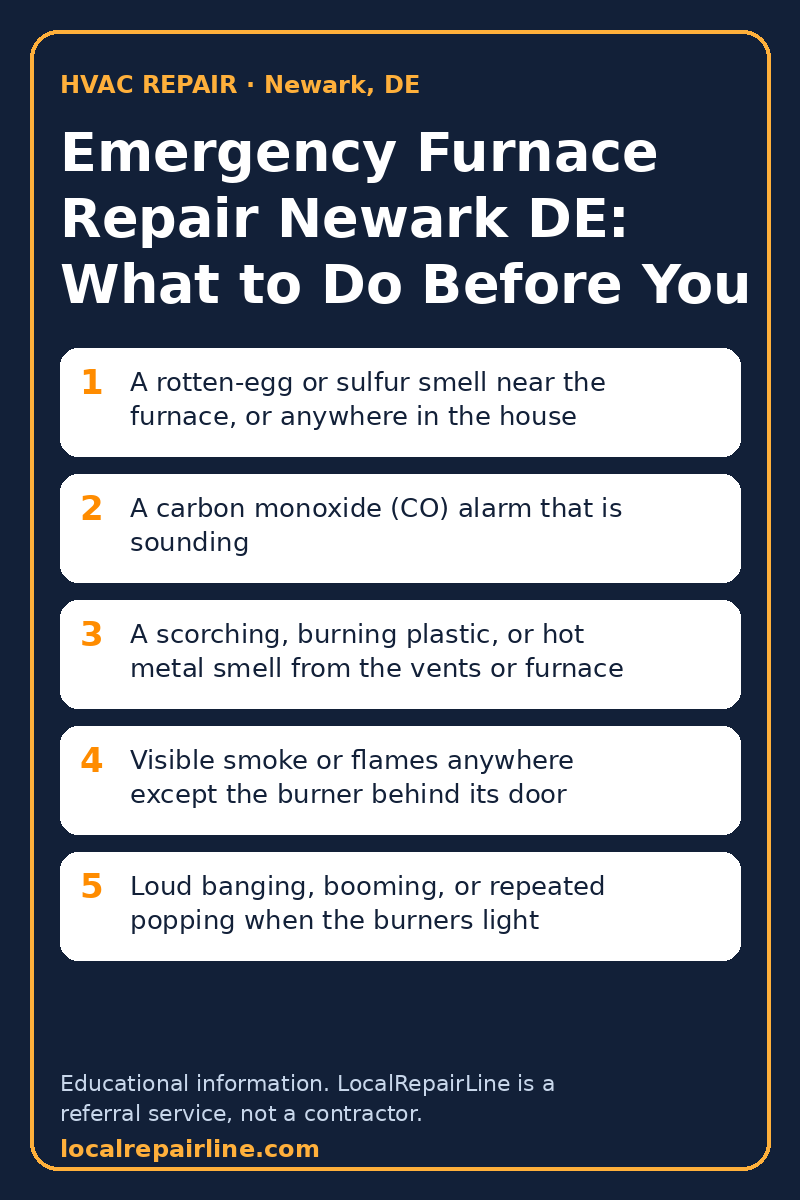
Safety First: What to Do If You Smell Gas or Your CO Alarm Sounds
Don't troubleshoot these. Don't hunt for the source, and don't try to be sure first.
- Get everyone out of the house, including pets, and take your phone.
- Don't flip light switches, use a lighter, or unplug anything on your way out.
- Once you're outside and away from the house, call 911 or your gas utility's emergency line.
- Stay outside until responders say it's safe to go back in.
- Have the furnace inspected and cleared by a professional before you use it again.
A CO alarm that sounds isn't a false alarm until someone proves it. CO has no smell, so the alarm may be your only warning. If you don't have working CO alarms near sleeping areas, that's worth fixing as soon as the heat is back.
Quick Checks to Try Before You Call a Technician
If there's no gas smell, no alarm, and no burning odor, a few simple checks are reasonable. Many "dead furnace" calls come down to something small.
- Check the thermostat. Make sure it's set to heat, not cool or off. Set the temperature a few degrees above the room temperature, and replace the batteries if the screen is blank.
- Check the power. Look at the breaker for the furnace and flip it off and on once if it has tripped. Also check the switch near the unit, which looks like a light switch and is easy to bump by accident.
- Check the air filter. A clogged filter can make a furnace overheat and shut itself off. If it's gray and packed with dust, swap in a new one that matches the size printed on the frame.
- Check the door panel. Many furnaces won't run unless the blower door is seated properly. Make sure it's snapped or latched all the way.
- Check vents and outdoor pipes. After snow or heavy leaves, make sure any exhaust or intake pipes on the outside wall aren't blocked. Clear them gently by hand or with a broom.
- Check the condensate drain. High-efficiency furnaces make water that drains away. If the drain line is clogged or the small trap is full, the furnace may shut down as a safety step.
Try each step once. If the furnace doesn't restart, stop there.
What Not to Do
Don't keep resetting the furnace over and over. Repeated restarts can hide a real problem and may be unsafe.
Don't open up the burner area, bypass a safety switch, or relight a pilot if you aren't sure how. Those are jobs for someone trained to work on gas equipment.
Staying Warm While You Wait for Help
If it's a comfort-only problem, your goal is to get through the night safely. Newark winters can bring hard cold snaps, so it helps to plan.
- Close doors to unused rooms and gather everyone in one or two spaces.
- Dress in layers and use extra blankets, hats, and warm socks.
- Close curtains at night to hold in heat, and open them on sunny days.
- Stuff a towel along drafty door bottoms.
- Keep cabinet doors under sinks open on exterior walls if pipes are at risk on very cold nights.
- Check on babies, older adults, and anyone with health conditions more often.
A Word on Space Heaters and Ovens
Electric space heaters can help, but plug them directly into a wall outlet, keep them clear of bedding and curtains, and never leave them running unattended. Don't use a gas oven, grill, or camp stove to heat your home. Those can create dangerous CO levels indoors.
If the house is getting uncomfortably cold and you can't warm it safely, staying with family or friends for the night is a sensible choice.
What to Expect When You Call for Emergency Furnace Repair Newark DE
Once you've ruled out a safety problem and tried the basic checks, it's time to call a heating company, such as the LocalRepairLine team. Have a few details ready so the call goes faster.
- The make and model of the furnace, usually on a label inside the door
- What happened right before it stopped, such as noises or smells
- Which quick checks you already tried
- Whether the furnace runs on natural gas, oil, or electricity
Ask whether the company handles after-hours calls, and what the typical wait looks like during a cold snap. Wait times can stretch when many homes lose heat at once, so be patient but clear about whether it's a safety issue.
Questions Worth Asking Up Front
Ask how the company charges for urgent visits and whether a diagnostic fee applies toward the repair. Ask whether the technician is qualified to work on your type of furnace. Ask for the repair explained in plain words, with the options laid out, before any work starts.
A good technician won't mind explaining the problem. If something feels rushed or vague, it's fine to ask for the plan in writing first.
What Affects the Cost of an Urgent Repair
Costs vary by house, and any honest number depends on what's actually wrong. A few things tend to move the price up or down:
- The part that failed. What's actually broken drives the bill, and a technician can lay out your options once they've found the cause.
- Furnace age and model. Older units can have parts that are harder to find.
- Timing. When you call can affect how a visit is scheduled and billed, so ask up front how after-hours calls are handled.
- Access. A furnace in a tight attic or crawl space can take longer to work on.
- Repair versus replace. An aging furnace with repeated problems may be better replaced than patched.
If you're told the furnace needs replacing, it's reasonable to take a little time. Unless there's a safety issue, you can often get the house through a night or two while you compare options.
How to Head Off the Next Breakdown
Small warning signs are easy to miss until a cold night. A little attention in fall can help avoid a cold-night surprise.
- Change the filter on a regular schedule, and more often if you have pets.
- Schedule a yearly tune-up before heating season starts.
- Keep vents, returns, and the area around the furnace clear of boxes and clutter.
- Test your CO alarms and replace dead batteries.
- Note any new sounds or smells early, and mention them to your technician.
FAQ
Is a furnace that won't
Need an HVAC repair pro in Newark, DE?
Talk to an independent local contractor who serves your area.
📞 Call (833) 669-0233HVAC repair in Newark, DECall hours: 8am–8pm ET, 7 days