Frozen Pipes Burst in Akron, OH? Steps to Take Before a Plumber
If you typed "frozen pipes burst plumber Akron OH" into your phone, you're probably standing near a wet spot or a faucet that only coughs. Take a breath. Start with a few simple steps and take them one at a time.
This guide covers how to stop the water, limit damage, document it for insurance, and know when it's time to hand the job to a local pro.
Frozen vs. Burst: How to Tell What Your Pipes Are Doing
A frozen pipe is blocked by ice. A burst pipe has a split or crack, and it leaks or sprays once water moves again.
Here are the common signs of each:
- Likely frozen: a faucet that trickles or gives nothing, frost on an exposed pipe, or a pipe that feels very cold along one stretch.
- Likely burst: a wet or stained wall, ceiling, or floor, dripping from a light fixture, the sound of running water when nothing is on, or a sudden drop in water pressure.
- Could be both: a pipe that's frozen in one spot and already split in another.
A pipe can be cracked while still plugged with ice, so it may look dry. The damage often shows up later, which is the next big point.
Need a plumbing repair pro in Akron, OH?
Talk to an independent local contractor who serves your area.
📞 Call (833) 350-0420Plumbing repair in Akron, OHCall hours: 8am–8pm ET, 7 daysYour call may first be answered by a short screening service that asks what the problem is and where you are. Stay on the line and you will be connected to an independent local pro.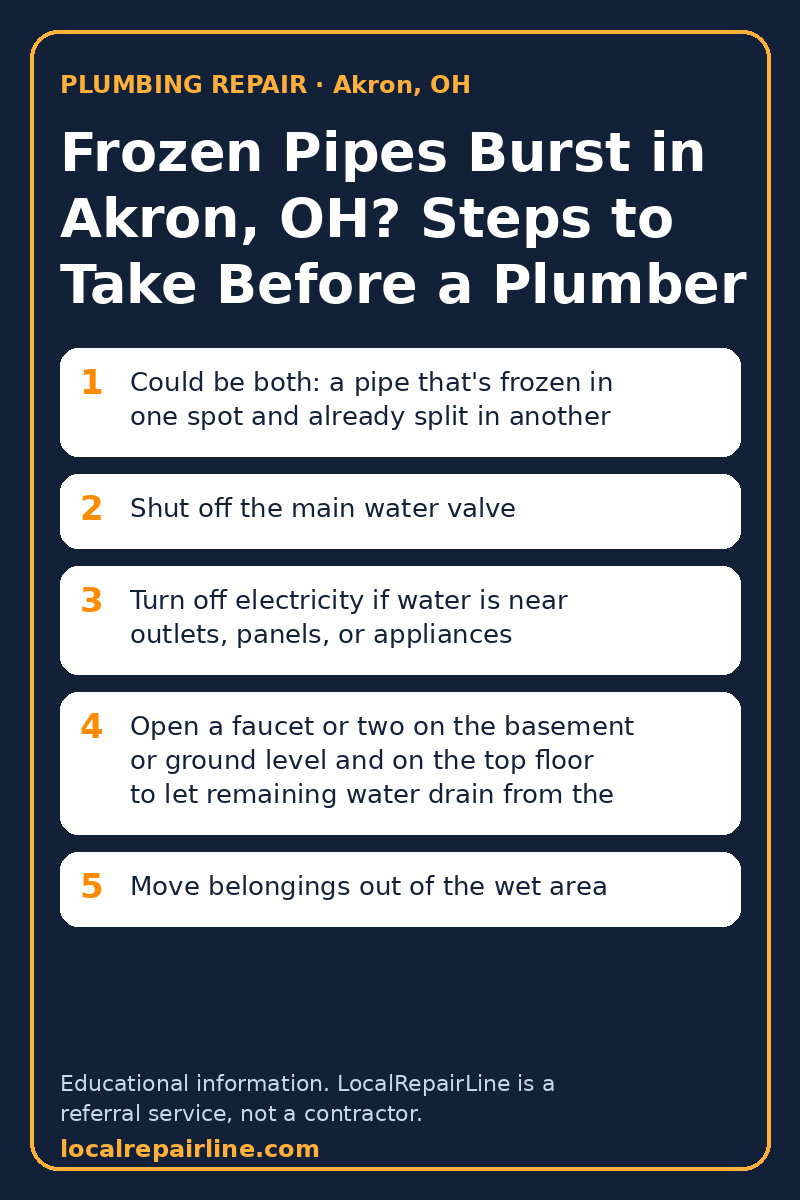
The First 15 Minutes: Shut Off the Water and Protect Your Home
If you see water where it shouldn't be, start with the main valve. Work through this list in order:
- Shut off the main water valve. It's usually near the water meter or where the line enters the house, often in a basement or utility area. Turn it fully closed.
- Turn off electricity if water is near outlets, panels, or appliances. Only do this if you can reach the panel without standing in water. If you can't, stay out and call for help.
- Open a faucet or two on the basement or ground level and on the top floor to let remaining water drain from the lines.
- Move belongings out of the wet area. Rugs, electronics, and cardboard boxes go first.
- Contain the water. Use towels, buckets, or a wet/dry vacuum, but photograph things first (see the documentation section below).
If the pipe is frozen but not leaking, shutting off the main is still a smart move. If it splits while thawing, you'll already have the water stopped.
Why Pipes Often Burst During the Thaw, Not the Cold
This is the part many homeowners don't expect. Ice expanding inside a pipe can crack it, but the crack may be plugged by the ice itself, so nothing leaks.
Then temperatures climb, the ice melts, and water pours out of a split you couldn't see. That's why a house can look fine at dawn and have a soaked ceiling by afternoon.
Akron's weather makes this a real risk. Northeast Ohio winters bring cold snaps, snow, and lake-effect weather off Lake Erie, and temperatures can swing between deep cold and milder days. Those swings stress pipes in exterior walls, crawl spaces, garages, and other unheated areas.
The cold season also runs from late fall into early spring. Basements, garages, and outdoor spigots can stay at risk for months, not just one bad week.
After a cold snap ends, keep the main valve in mind. Check ceilings, walls, and the floor under any pipe that was frozen. A slow drip or damp spot hours later can mean a hidden split.
Safe Ways to Thaw a Frozen Pipe (and Methods to Avoid)
If nothing has leaked and the frozen pipe is easy to reach, you can try a gentle thaw. If water has already appeared, skip this and shut off the main.
Safer approaches
- Open the faucet the pipe feeds so melting water has somewhere to go.
- Warm the area with a hair dryer on low, moving it back and forth along the pipe.
- Use a space heater placed well away from anything flammable, and never leave it unattended.
- Wrap the pipe in warm towels and swap them as they cool.
- Work from the faucet end back toward the frozen section.
Methods to avoid
- Torches or open flames. These can start a fire inside a wall or overheat the pipe and its joints. This is a DIY move people often regret.
- Heat guns held in one spot. Concentrated heat can damage plastic lines and soldered joints.
- Waiting for the thaw to handle itself. If the pipe is already split, thawing is exactly when the water arrives.
- Thawing a pipe you can't see or reach. If it's behind a wall or under a floor, you're guessing at where to apply heat.
If the pipe won't thaw after a reasonable try, or the frozen section is hidden, stop and call a plumber.
Document the Damage Before You Clean Up
Once the water is off and the situation is under control, take a few minutes to record what happened. Clear records are useful if you decide to file an insurance claim.
Before you toss anything or start drying, do this:
- Take wide photos of each affected room, then close-ups of wet walls, ceilings, floors, and belongings.
- Record a slow video walking through the damage while describing what you see.
- Photograph the burst pipe and the area around it if you can see it.
- Ask before you discard damaged materials like soaked drywall pieces or ruined items. Check with your insurance company about what to hold onto.
- Write down the timeline: when you noticed the problem, when you shut off the water, and when temperatures changed.
You can still do reasonable mitigation, like mopping up standing water, to stop more harm. Just record the damage first.
What Goes Into a Burst Pipe Repair in Akron
Costs vary by house, so no honest article can give you one number. What you can do is understand what moves the price up or down.
Common cost drivers include:
- Pipe location. A split in an open basement is simpler than one behind a finished wall or under a floor.
- Pipe material. Copper, PEX, and older steel or galvanized lines each repair differently.
- How much pipe is damaged. One short split is a smaller repair than several along a run.
- Access work. Opening and later patching drywall adds labor and repair work.
- Water damage. Drying, mold prevention, and rebuilding are often separate from the plumbing repair.
- Timing and urgency. How soon the repair is needed can affect how it gets scheduled.
Ask any plumber what's included in the work. A clear explanation of the repair, the access work, and any follow-up checks beats a vague low number.
Frozen Pipes Burst Plumber Akron OH: When to Make the Call and How to Prevent a Repeat
Once the main valve is shut and you see water on a wall, ceiling, or floor, this is the point to talk to a local plumbing pro in Akron, OH, like the LocalRepairLine team, instead of guessing. The same goes if a frozen pipe won't thaw safely, or if it sits behind a wall or under a floor.
A plumber can find hidden splits, repair the line, and check the rest of the system before the water goes back on. That last step matters. Patching one section while other cold-exposed pipes go unchecked is a common regret.
It's a good idea to get a plumber involved if:
- Water is running and you can't stop it.
- You see ceiling bulges, sagging drywall, or water near electrical items.
- The pipe is hidden or won't thaw after a safe attempt.
- You smell something burning after using a heater.
Preventing a repeat
- Insulate pipes in garages, crawl spaces, basements, and exterior walls.
- Seal drafts near pipes where they enter the house.
- Disconnect garden hoses and shut off outdoor spigots before the cold season.
- During a cold snap, open cabinet doors under sinks on exterior walls and let a faucet drip.
- Keep the heat on, even if you're away.
Check these spots every fall. In Akron, the cold season stretches long enough that small gaps get tested many times.
FAQ
How do I know if my pipe is frozen or already burst?
A frozen pipe usually means a faucet with little or no flow and a very cold pipe, with no visible water. A burst pipe shows up as wet spots, dripping, stains, or the sound of running water. Because ice can plug a split, a cracked pipe may look fine until it thaws, so check ceilings and walls afterward.
Should I turn off the water if my pipes are frozen but not leaking?
Yes, it's a smart precaution. Ice can hide a crack, and the water may start flowing the moment the pipe thaws. With the main valve closed, a hidden split has much less water to release while you work on the thaw or wait for help.
Need a plumbing repair pro in Akron, OH?
Talk to an independent local contractor who serves your area.
📞 Call (833) 350-0420Plumbing repair in Akron, OHCall hours: 8am–8pm ET, 7 days