Frozen Pipes Burst in Grand Rapids? What to Do Before a Plumber
If you're typing frozen pipes burst plumber Grand Rapids MI into your phone right now, start with the water. Stop it at the source, then deal with everything else.
This guide walks you through what to do in the first few minutes, what to avoid, and when a local plumber is the right call. It also covers the part many guides skip: pipes often show their damage when things warm up, not while the cold is still holding.
Signs Your Pipe Is Frozen, Cracked, or Already Burst
A frozen pipe and a burst pipe can look a lot alike at first. The difference is whether water is escaping.
Here's what to watch for:
- Frozen, not yet split: A faucet that only trickles or gives you nothing at all. You may also see frost on an exposed pipe, or notice a pipe that feels icy compared with the ones near it.
- Possibly cracked: A bulge in the pipe, a hairline split, or a strange smell from a drain or faucet.
- Likely burst: A hissing or dripping sound inside a wall or ceiling, water stains that spread, bubbling paint, drywall that feels soft or bulges, or water pooling on a floor.
Pipes in unheated spaces are the usual suspects. Think exterior walls, crawl spaces, garages, basements, and the area under a kitchen or bathroom sink on an outside wall.
Need a plumbing repair pro in Grand Rapids, MI?
Talk to an independent local contractor who serves your area.
📞 Call (833) 350-0420Plumbing repair in Grand Rapids, MICall hours: 8am–8pm ET, 7 daysYour call may first be answered by a short screening service that asks what the problem is and where you are. Stay on the line and you will be connected to an independent local pro.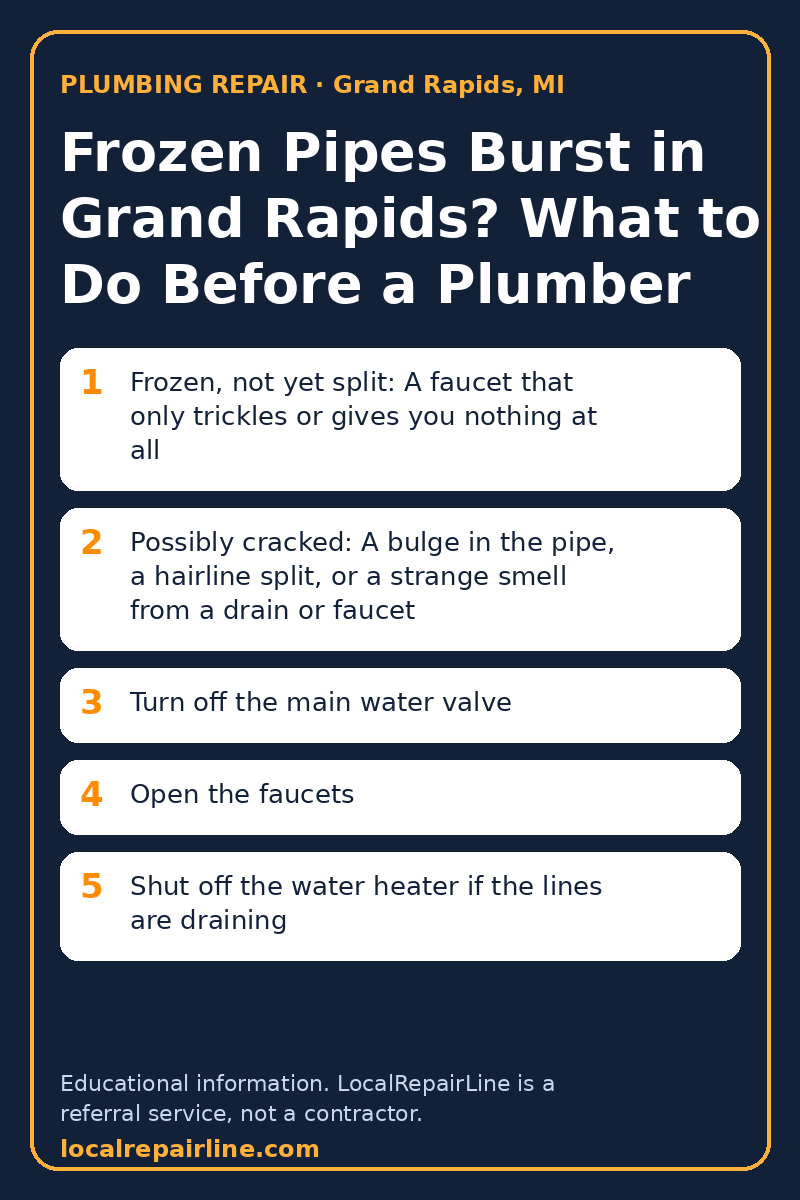
Shut Off the Water First: Quick Steps for Grand Rapids Homeowners
When water is moving, speed matters more than anything else. Work through these steps in order.
- Turn off the main water valve. It's usually where the water line enters the house, often in a basement, utility room, or crawl space. Turn it fully closed.
- Open the faucets. Start with the faucet on the bottom floor and the one on the top floor. This drains water still sitting in the lines and eases pressure.
- Shut off the water heater if the lines are draining. Turn off the gas or power to it so it doesn't run without water.
- Stay out of standing water near outlets or appliances. If water is near electrical panels or outlets and you can't reach the breaker safely, stay back and get help.
- Move belongings out of the wet area. Pull up rugs, lift boxes off the floor, and set out buckets under active drips.
If you can't find or turn the main shutoff
This happens more than you'd think, especially in older homes or after a valve has sat untouched for years. Check near the water meter, along the wall closest to the street, and in the basement.
If the valve is stuck, don't force it with a pipe wrench. A snapped valve makes things much worse. Look for a shutoff at the individual fixture, such as under a sink or behind a toilet, to slow the water.
You can also contact your local water utility, since there's often a shutoff at the street that they operate. This is a good moment to call a plumber, too.
Why Pipes Often Leak When They Thaw, Not When They Freeze
Here's the part that catches people off guard. Water expands as it turns to ice, and that pressure can split a pipe or push a joint apart. But while the ice is still in place, it can act like a plug.
The leak starts once that plug melts. A split pipe behind a wall can sit quiet for hours, then begin dripping or spraying when temperatures climb.
Grand Rapids is set up for exactly this. Winters are cold and snowy, and Arctic air can push temperatures well below zero. Lake Michigan brings lake-effect snow and long, damp, cloudy stretches.
Late winter and early spring often swing from deep cold to a sudden thaw and back again. Each swing is a chance for a hidden split to start leaking.
A simple thaw-time leak check
After a cold snap breaks, or after you've had a pipe that was frozen, take ten minutes to look around.
- Check the water meter. With every faucet and appliance off, see whether the meter is still moving. If it is, water is going somewhere.
- Look at ceilings and walls below bathrooms, kitchens, and exterior walls. Look for stains, sagging, peeling paint, or a damp feel.
- Check the crawl space and basement near the water line, along rim joists, and under bathrooms.
- Listen. Turn off the TV and any fans, then listen for hissing or dripping inside walls.
- Run each faucet and look for weak pressure or discolored water. Check the cabinets under sinks.
- Repeat the check a few hours later, and again the next day. Some leaks take a while to show.
If you find any of these, close the main valve again and make the call.
What Not to Do With a Frozen Pipe (Torches, Hot Water, Waiting It Out)
When a pipe is blocked and you're anxious, it's tempting to grab whatever's handy. A few popular fixes tend to cause bigger problems.
- Don't use a torch or open flame. It can scorch framing and insulation, start a fire inside a wall, or overheat the pipe and joints. Fire risk is the main reason this one tops the list.
- Don't pour boiling water on the pipe or fittings. Sudden heat can crack a pipe that's already stressed.
- Don't leave a split pipe running to "wait it out." A pipe that's cracked will pour water into your walls and floors for as long as it's on.
- Don't ignore a small stain or drip. A tiny leak can be the first sign of a bigger split, and wet insulation and drywall can hold moisture for a long time.
If a pipe is only frozen and not leaking, gentle warmth is the safer route. A hair dryer on a low setting, or warm towels wrapped around the pipe, can work while you keep the faucet open.
When to Call a Plumber
Some situations are fine to handle yourself for a few minutes. Others need a pro quickly, and you can find a local plumber in Grand Rapids, MI at https://localrepairline.com.
Call a local plumber if:
- Water is still coming from a pipe after you've closed the main valve.
- You can see a split, bulge, or spray, or you hear water inside a wall.
- You can't reach the pipe that's frozen, such as one inside a wall or under a slab.
- The main shutoff won't turn or looks damaged.
- The meter keeps moving even with everything off.
When you call, say what you've already done. Tell them whether the main is closed, where the damage seems to be, and whether the pipe thawed on its own.
Costs vary by house. How involved a repair gets depends on where the pipe is, how much wall or ceiling has to be opened, the pipe material, how many spots split, and how soon a plumber can reach you during a cold snap. A single exposed section is usually simpler than a hidden run behind finished drywall.
After the Water Is Off
Once the flow has stopped, start limiting the damage. Mop up standing water, run fans, and open windows briefly if the weather allows. Take photos of damage before you clean up, since you may need them later.
Wet drywall, insulation, and carpet can grow mold if they stay damp. Your policy paperwork is the place to look for what it says about water damage.
FAQ
How do I know if a pipe is frozen or already burst?
A frozen pipe usually means little or no water at a faucet, sometimes with frost on exposed pipe. A burst pipe means water is escaping, which you might see as stains, dripping, soft drywall, or pooling on the floor. Hissing inside a wall is a strong sign of a split.
Should I call a plumber or the water utility first?
If water is flowing and you can't stop it, try the main valve first. If the valve is stuck or you can't find it, call your water utility about a street shutoff and call a plumber too. A plumber can handle the repair, while the utility only controls the supply to your home.
Is it safe to thaw a frozen pipe myself?
It can be, if the pipe isn't leaking and you use gentle heat. A hair dryer on low or warm towels, with the faucet left open, is safer than a torch or boiling water. If you can't reach the pipe or see any damage, stop and call a plumber.
Why did my pipe start leaking after the weather warmed up?
Ice can block a split pipe while it stays frozen. When the ice melts, water flows through the crack and the leak shows up. That's why you should check the meter, walls, ceilings, and crawl space after a cold snap breaks.
How can I help prevent frozen pipes next winter?
Insulate exposed pipes in basements, crawl spaces, and garages, and seal drafts near where lines run through exterior walls. During hard cold, open cabinet doors under sinks on outside walls and let a faucet drip slowly. Costs vary by house, so look at which pipes are most exposed before deciding what to fix first.
Need a plumbing repair pro in Grand Rapids, MI?
Talk to an independent local contractor who serves your area.
📞 Call (833) 350-0420Plumbing repair in Grand Rapids, MICall hours: 8am–8pm ET, 7 days