Frozen Pipes Burst in Denver, CO? What to Do Before the Plumber
If you searched for frozen pipes burst plumber Denver CO, you're probably dealing with a cold house, a wet floor, or a pipe you're worried about. Take a breath. A few clear steps will help you limit the damage.
This guide covers how to stop the water, tell frozen from burst, document damage for insurance, and know when it's time to hand the job to a pro.
First 10 Minutes: Shut Off the Water and Stop the Damage
A steady, simple approach works well here. Work through this list in order:
- Shut off the main water valve. It's usually where the water line enters the house, often in a basement, utility room, or garage. Turn it fully closed.
- Open a faucet or two. Start with the one on the bottom floor of the house. This lets water drain and eases pressure.
- Turn off the water heater if your supply is off, so it doesn't run dry and overheat.
- Cut power only if it's safe. If water is near outlets, light fixtures, or the electrical panel, stay out of the wet area and call a pro rather than reaching for switches.
- Move belongings out of the wet zone: rugs, boxes, furniture, electronics.
- Soak up what you can with towels, a mop, or a wet vac, but take photos first (more on that below).
If water is coming through a ceiling, put a bucket under the drip. A ceiling that's bulging with trapped water can let go all at once, so keep people out from under it.
Need a plumbing repair pro in Denver, CO?
Talk to an independent local contractor who serves your area.
📞 Call (833) 350-0420Plumbing repair in Denver, COCall hours: 8am–8pm ET, 7 daysYour call may first be answered by a short screening service that asks what the problem is and where you are. Stay on the line and you will be connected to an independent local pro.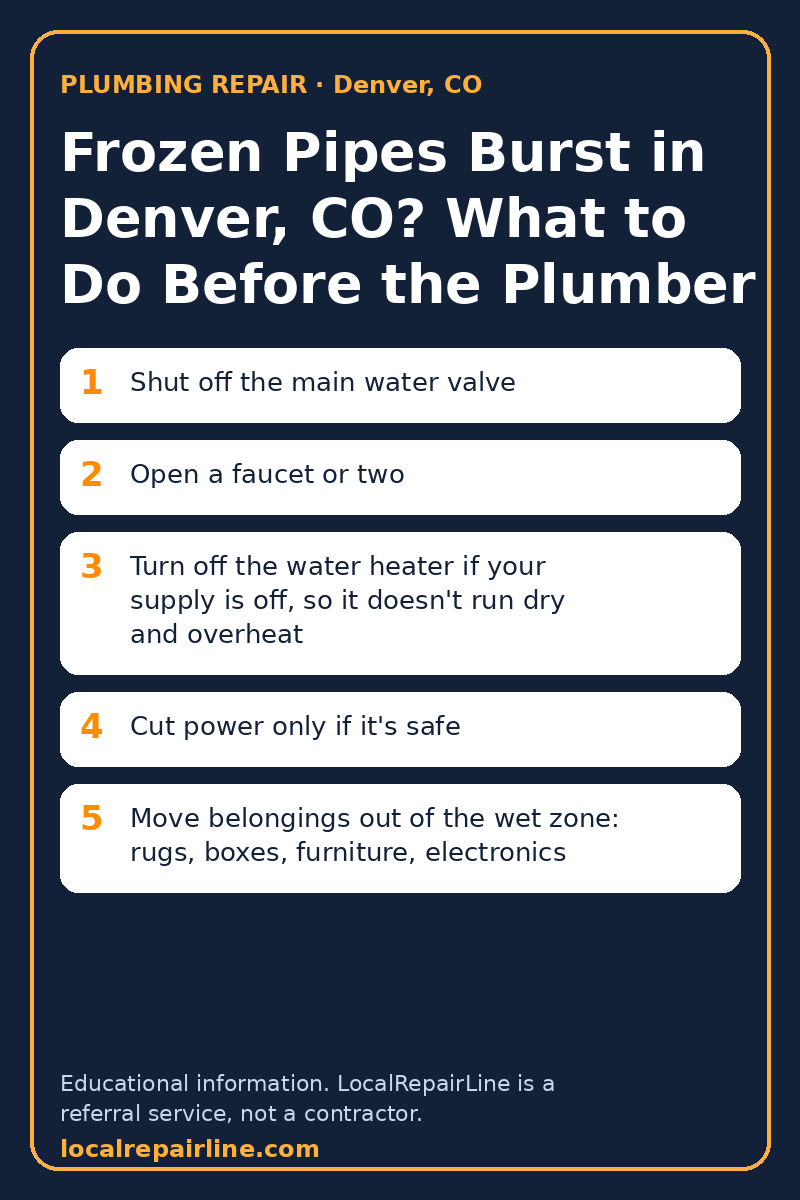
Frozen vs. Burst: How to Tell What You're Dealing With
A frozen pipe is blocked by ice. A burst pipe has a split or crack. You can have both at once, and a pipe can split while still frozen.
Signs of a frozen pipe:
- A faucet gives only a trickle or nothing at all
- Frost on a visible pipe
- A pipe that feels much colder than the ones around it
- Odd smells from a drain or faucet, since a blocked line can't vent properly
Signs of a burst or split pipe:
- Water stains, bubbling paint, or a damp spot on a wall or ceiling
- The sound of running or dripping water when everything is off
- A pipe that looks bulged, cracked, or bowed
- Water pressure that suddenly drops or surges
- A water meter that keeps moving when nothing is in use
If you see a bulge or crack, treat it as a burst, even if no water is coming out yet.
Why Pipes Often Leak Only After They Thaw
This is the part that catches people off guard. When water freezes inside a pipe, it expands. That pressure can split the pipe, but ice often plugs the split like a stopper.
So the pipe can be damaged and dry at the same time. The flood starts when the ice melts.
Denver makes this more likely. The city sits about a mile above sea level, and Arctic air moving along the Front Range can drop overnight temperatures hard. A mild, sunny afternoon can be followed by a brutal night, and the warm-up the next day is exactly when a hidden split starts to run.
Cold snaps also aren't limited to midwinter. Snow and freezing nights can show up in autumn and come back in spring, so a pipe that sat fine all January can still get caught.
Checking for a hidden split
After a hard freeze, even if everything seems fine, take a few minutes to look around:
- Check the ceilings below bathrooms and kitchens for new stains or sagging
- Look along exterior walls for discoloration, damp drywall, or peeling paint
- Feel baseboards and flooring for cool, damp spots
- Listen for hissing or dripping in quiet rooms
- Check the water meter with all fixtures off, and see whether it's still moving
Do this again once temperatures rise. If something looks off, shut the main valve first and sort it out after.
Where Denver Pipes Split Most: Exterior Walls, Crawl Spaces and Garages
Pipes freeze where cold air reaches them and heat doesn't. In most houses, that means a short list of spots:
- Exterior walls, especially a kitchen or bathroom sink on an outside wall
- Crawl spaces and unheated basement corners, where pipes run near vents or thin insulation
- Garages, where supply lines for a utility sink, laundry, or water heater may run
- Attics and soffits, where a line passes through a cold, uninsulated cavity
- Outdoor spigots and the short pipes just behind them
Homes with additions, converted spaces, or older plumbing routes can have odd runs that never get the same warmth as the rest of the house. If a room is always cold in winter, the pipes near it deserve a look.
Document the Damage Before You Clean Up (Insurance Basics)
Once the water is off and people are safe, pause before you start hauling things out. A claim goes more smoothly when you can show what the damage looked like.
Here's what to capture:
- Wide photos of each affected room, then close-ups of the damage
- The pipe itself, including the split, before anyone repairs it
- Video walkthroughs, narrating what you see
- Damaged belongings, photographed where they sit, then listed with rough age and value
- Notes on when you noticed the problem, when you shut off the water, and what you did
Homeowners often overlook a few things. Keep the damaged section of pipe if the plumber removes it. Save receipts for anything you buy to limit damage, like fans, towels, or a wet vac rental. Write down the plumber's findings in plain terms, including where the split was and likely cause.
Coverage depends on your policy, so read yours for how it addresses sudden bursts, gradual leaks, deductibles, and maintenance expectations. Call your insurer or agent, ask what they need from you, and ask whether to wait for an adjuster before starting major cleanup.
Frozen Pipes Burst Plumber Denver CO: What the Repair Involves and When to Call
You can handle a simple frozen pipe at times. A burst pipe is a different story.
When to stop guessing and call
Call a local plumbing pro in Denver, CO, such as LocalRepairLine, instead of experimenting if any of these are true:
- Water is still leaking after you've closed the main shutoff
- A pipe is frozen and bulging or cracked
- You can't find the main valve, or it won't turn
- Water is coming through a ceiling or wall and you can't tell where it starts
- You're not sure the electrical system is safe near the water
At that point, guessing costs more than it saves. A plumber can find the source, make the repair, and tell you what else needs checking.
What a plumber typically does
The work usually goes like this: confirm the water is off and locate the damage, open access if the pipe is behind a wall or ceiling, cut out the split section, and replace it with new pipe and fittings. Then they test the system for leaks once water is back on.
If one split is found, they may check nearby runs for more, since a pipe that froze in one spot often froze in others.
What drives the cost
Costs vary by house. These are the main factors:
- Access. A pipe in an open basement is quicker to reach than one inside a finished wall or ceiling.
- Number of splits. One damaged section is a smaller job than several.
- Pipe material and condition. Older or worn lines may mean more than a simple patch.
- Water damage. Drywall, insulation, flooring, and drying work are often separate from the plumbing repair.
- Scope. If the pipe layout is prone to freezing or in poor shape, repiping or rerouting a section may come up, and that's a bigger decision.
Ask for a clear explanation of what's repair, what's prevention, and what can wait.
How to Protect Your Pipes Before the Next Denver Cold Snap
Prevention is cheaper than cleanup. Because Denver weather can swing fast, don't wait for a forecast that looks scary.
- Insulate exposed pipes in crawl spaces, garages, and basements
- Seal air leaks around where pipes enter the house
- Disconnect garden hoses and shut off exterior spigots before the first hard freeze
- Open cabinet doors under sinks on exterior walls on very cold nights
- Let a faucet drip during a hard freeze, since moving water is harder to freeze
- Keep the heat on if you travel, set at a reasonable temperature
- Know where your main shutoff is and make sure everyone in the house does too
Check things in early autumn and again in spring. Cold can return when you've stopped thinking about it.
FAQ
How do I know if my pipe burst or is just frozen?
A frozen pipe usually means little or no water from a faucet, sometimes with frost on the pipe. A burst pipe often shows up as stains, dripping sounds, bulging pipe, or a meter that keeps running with everything off. If you can see a crack or bulge, assume it's burst and shut off the main.
Should I turn off the water main right away?
Yes, if you see water where it shouldn't be or suspect a split. Closing the main limits how much water can pour out, especially once ice starts to melt. You can always open it again later, but you can't undo a flooded floor.
Need a plumbing repair pro in Denver, CO?
Talk to an independent local contractor who serves your area.
📞 Call (833) 350-0420Plumbing repair in Denver, COCall hours: 8am–8pm ET, 7 days