Furnace Blowing Cold Air in Cleveland, OH? Causes and Fixes
Typing "furnace blowing cold air Cleveland OH" into a search bar usually means the house is already getting chilly. The good news is that the cause is often something simple you can check in a few minutes.
This guide walks through the safe checks first, then the Cleveland-specific problems like snow-blocked vents and frozen drain lines. It also covers when to stop and call someone.
Furnace Blowing Cold Air Cleveland OH: Why It Happens and Why It Matters in Winter
Cleveland winters are long. Your furnace runs hard for months, so a breakdown can be a real hassle, especially during a lake-effect storm or a hard cold snap.
Cold air from the vents usually comes down to one of a few things:
- The thermostat is set to the wrong mode or has weak batteries.
- The air filter is clogged and the furnace is overheating.
- The burners aren't lighting (pilot, igniter, or flame sensor trouble).
- Snow or ice is blocking an outdoor intake or exhaust pipe.
- A condensate drain line is frozen or backed up.
- The furnace is cycling off because of a safety switch.
In spring and fall, Cleveland swings between icy nights and milder days. That makes your furnace start and stop often, which can show up as weak or cool air at odd times. Short cool puffs at startup can be normal. Steady cold air is not.
Need an HVAC repair pro in Cleveland, OH?
Talk to an independent local contractor who serves your area.
📞 Call (833) 669-0233HVAC repair in Cleveland, OHCall hours: 8am–8pm ET, 7 daysYour call may first be answered by a short screening service that asks what the problem is and where you are. Stay on the line and you will be connected to an independent local pro.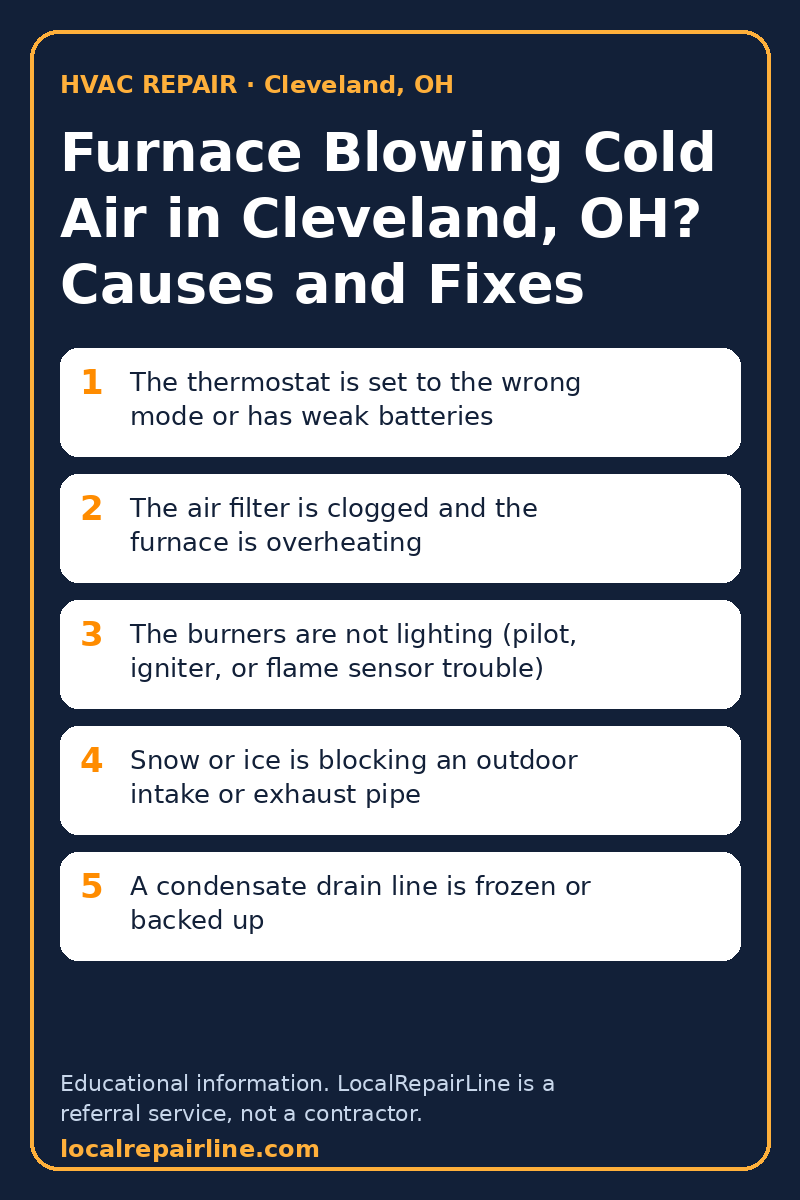
Quick Checks You Can Do Safely in Five Minutes
Start here. None of these need tools or opening up the furnace.
- Check the thermostat. Make sure it says "Heat" and not "Cool" or "Off," and that the fan is set to "Auto." If the fan is on "On," it pushes air all the time, including cool air between heating cycles.
- Raise the set temperature a few degrees above the room temperature. Replace the batteries if the screen is dim or blank.
- Look at the furnace switch and breaker. The furnace usually has a switch that looks like a light switch near it. Check that it's on and the breaker hasn't tripped.
- Check your filter. Slide it out and hold it up to light. If you can barely see through it, replace it.
- Look outside. Find the white plastic pipes coming out of your house near the furnace and make sure snow or ice isn't covering them.
Give the furnace a few minutes after each change. Don't keep flipping the power off and on. Repeated resets can hide the real problem and stress parts that are already struggling.
Snow, Ice, and Frozen Drain Lines: Cleveland-Specific Causes
This is the section most generic checklists skip, and it matters here.
Buried intake and exhaust pipes
Many newer high-efficiency furnaces vent through PVC pipes on the side of the house instead of a chimney. One brings in outside air and the other pushes exhaust out. Lake-effect snow can pile up fast and cover them, and drifting snow can do the same.
When those pipes are blocked, the furnace senses a problem and shuts down the burners as a safety step. The blower may still run, which means you get cool air from the vents.
Gently clear snow and ice away from the pipe openings by hand or with a soft broom. Don't poke objects into the pipes or break ice off them with force. Keep the area clear after each storm.
Frozen condensate lines
High-efficiency furnaces produce water as a byproduct. It drains out through a small line, often to a floor drain or pump. In a cold, unheated basement or a run of pipe near an exterior wall, that water can turn to ice and block the line.
A backed-up drain can trip a safety switch and shut the furnace down. You might see water around the unit or a drain line that looks cloudy or iced.
If you suspect a frozen line, you can wrap it in warm towels. Never use an open flame, and don't force the line or take the furnace apart. If it keeps freezing, a pro can look at pipe slope, insulation, or heat tape options. Costs vary by house.
Pilot Light, Igniter, and Flame Sensor Problems Explained
If the burners aren't lighting, the blower will push unheated air through your ducts. What's behind it depends on your furnace age.
- Older furnaces with a standing pilot: The small flame can blow out. Some models have relighting steps printed on the furnace, but follow them only if you're comfortable and smell no gas.
- Newer furnaces with an electronic igniter: The igniter can crack or wear out. You may hear clicking, then nothing.
- Dirty flame sensor: This small rod tells the furnace the flame is lit. If it's coated with residue, the furnace shuts the gas off after a few seconds.
If you smell gas, stop. Don't touch switches, light anything, or use your phone inside. Leave the house and call your gas utility's emergency line from outside, then emergency services if needed.
Clicking with no flame, a furnace that lights and quickly goes out, or a blinking error code on the control board all point to parts that a technician should handle.
Dirty Filters, Overheating, and Airflow Issues
Yes, a clogged filter can cause cold air. When airflow is restricted, the furnace heats up too much, and a safety switch (the limit switch) shuts the burners off. The fan keeps running to cool things down, and that's the cool air you feel.
A few other airflow problems can add to it:
- Closed or blocked supply vents and returns
- Furniture or rugs covering return grilles
- Very dirty blower or coil areas that you can't safely reach
Replace the filter and open your vents. If the furnace still shuts off on its own, don't keep resetting it. Something inside is overheating, and that needs a trained eye.
Repair or Replace? What Older Cleveland Homes Should Consider
Older homes around Cleveland often have older furnaces. When one fails in the middle of winter, it's tempting to decide fast. Slow down enough to ask a few questions.
Repair usually makes sense when: - The furnace isn't very old and has had few problems. - The issue is a single part, like an igniter, sensor, or switch. - The tech finds a clear cause and the repair cost is small compared to a new unit.
Replacement is worth discussing when: - The furnace is near the end of its typical life. - Repairs keep coming back. - The heat exchanger is cracked, which is a safety issue. - Heating bills have crept up or rooms never get comfortable.
Costs vary by house, and a replacement can run into a big job depending on venting, ductwork, and size. Ask for the repair option and the replacement option in writing so you can compare. Avoid making a big decision while freezing in a panic if you can safely stay warm for a day while you get a second opinion.
One common mistake is repeated DIY resets, which can stress components and hide the real cause of the problem.
Staying warm while you wait
- Close doors to unused rooms and gather in one space.
- Use a space heater only as directed, plugged into the wall, away from curtains and bedding.
- Never use a gas oven, grill, or camp stove for heat. Carbon monoxide can build up quickly.
- Make sure your carbon monoxide detectors have working batteries.
- Let faucets drip if pipes are at risk in a very cold house.
When to Stop Troubleshooting and Call a Local HVAC Pro
If you've checked the thermostat, filter, and outdoor vents and the furnace still blows cold air, this is the point to talk to a local HVAC pro in Cleveland, OH instead of guessing, and this homeowner resource can help you get started.
These signs mean it's time to bring in a pro:
- A gas smell, or a carbon monoxide alarm sounding
- Clicking with no flame, a blinking error code, or burners that light and quickly go out
- Water around the furnace, or a drain line you can't safely thaw
- The furnace shutting itself off again after you replaced the filter
- A very cold house with young children, older adults, or anyone medically fragile inside
When you call, tell them what you already checked. Mention any error codes, sounds, or smells. It saves time and helps them bring the right parts.
FAQ
Why is my furnace blowing cold air but the thermostat says heat?
The blower is running, but the burners probably aren't. Common causes are a clogged filter, a blocked outdoor pipe, a frozen drain line, or an igniter or flame sensor problem. Check the filter and the outside pipes first, then call a pro if the air stays cold.
Can snow really make my furnace blow cold air?
Yes. If you have a high-efficiency furnace with PVC pipes on the side of the house, snow or ice covering them can make the furnace shut off its burners as a safety step. The fan may keep running, so the air feels cool. Clearing the openings gently by hand often helps.
Is it safe to keep resetting the furnace?
One reset after fixing an obvious cause, like a new filter, is usually fine. Repeated resets are a bad idea. They can hide a real problem and wear out parts that are already struggling.
Should I repair or replace a furnace that blows cold air?
It depends on the furnace's age, how often it has needed repairs, and what is actually wrong. A single failed part like an igniter often makes repair reasonable. A cracked heat exchanger or repeated breakdowns make replacement worth discussing, and costs vary by house.
What should I do if I smell gas or my carbon monoxide alarm goes off?
Get everyone out of the house right away. Don't touch light switches or use your phone inside. Call your gas utility's emergency line or emergency services from outside, and don't go back in until you're told it's safe.
Need an HVAC repair pro in Cleveland, OH?
Talk to an independent local contractor who serves your area.
📞 Call (833) 669-0233HVAC repair in Cleveland, OHCall hours: 8am–8pm ET, 7 days