Emergency Furnace Repair South Bend IN: What to Do First
When the furnace quits during a South Bend cold snap, the house cools faster than you expect. Before you search for emergency furnace repair South Bend IN, spend the first half hour on a simple plan: safety first, quick checks second, protecting the house third.
This guide walks through that order. It also covers how to avoid agreeing to an expensive replacement just because you're cold and stressed.
First, Check for Safety Problems: Gas Smells, Carbon Monoxide, and Strange Noises
Don't touch the furnace controls until you've ruled out danger. Some problems can't wait for a technician and aren't yours to fix.
If you smell gas (a rotten-egg odor):
- Don't flip light switches, use a lighter, or unplug anything.
- Get everyone, pets included, out of the house.
- Call the gas utility or 911 from outside or from a neighbor's home.
If a carbon monoxide alarm sounds, or several people feel headachy, dizzy, or nauseated at once:
- Move everyone outside into fresh air right away.
- Call 911 and stay out until responders say it's safe.
- Don't reset the alarm and go back to bed.
Some other signs mean you should shut the furnace off and leave it off:
- A scorched, plastic, or electrical burning smell
- A loud bang or boom when the burners light
- Scraping or screeching from the blower
- Soot or scorch marks around the furnace
- The furnace turning on and off every few minutes (short cycling)
A faint dusty smell for a few minutes on the first run of the season is common, because dust burns off the heat parts. A smell that lingers or smells sharp is different.
Need an HVAC repair pro in South Bend, IN?
Talk to an independent local contractor who serves your area.
📞 Call (833) 669-0233HVAC repair in South Bend, INCall hours: 8am–8pm ET, 7 daysYour call may first be answered by a short screening service that asks what the problem is and where you are. Stay on the line and you will be connected to an independent local pro.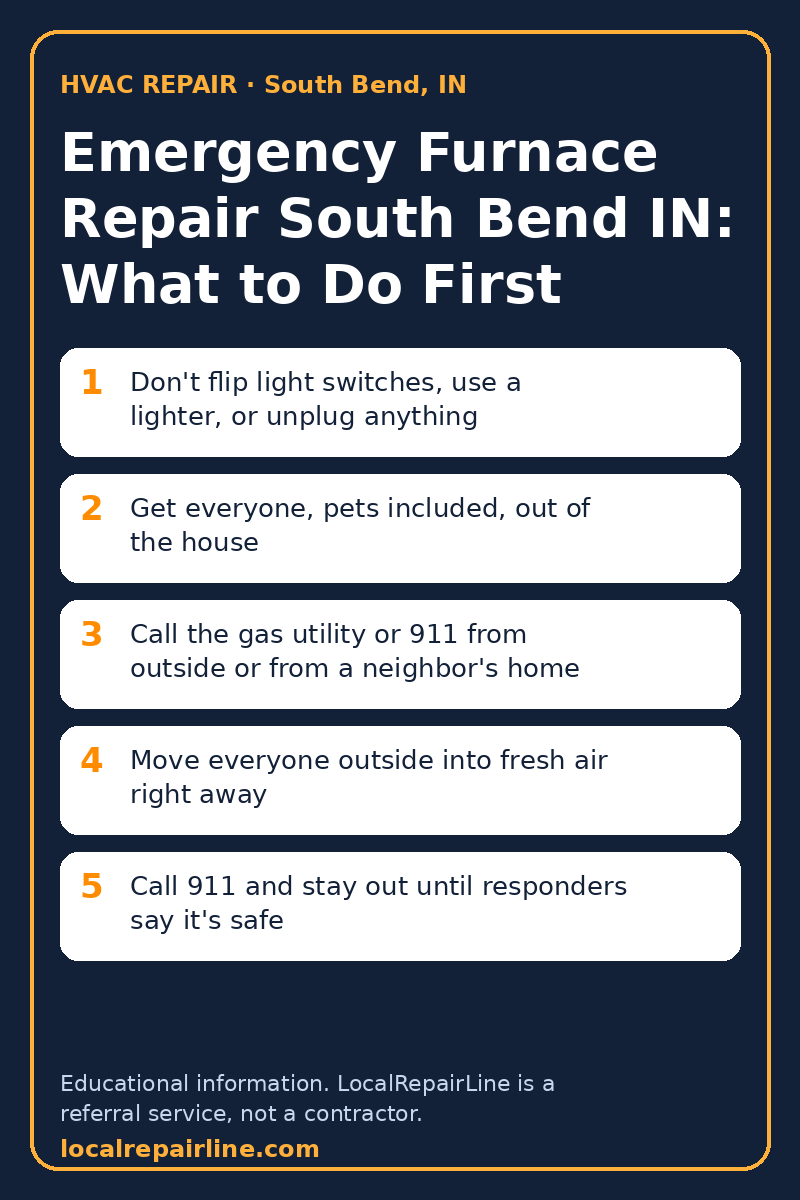
Quick Checks Before You Call: Thermostat, Power, Filter, and Pilot or Igniter
If there's no gas smell and no alarm, a few checks take about ten minutes. Go in this order:
- Thermostat: Set it to "heat" and raise the target several degrees above room temperature. Replace the batteries if the screen is blank or dim.
- Power: Find the switch on or near the furnace (it often looks like a light switch) and make sure it's on. Check the breaker panel for a tripped breaker. Reset a tripped breaker once, not repeatedly.
- Filter: Pull it out and look. If it's packed with dust, swap in a clean one. A clogged filter can cause the furnace to overheat and shut itself off.
- Furnace door: Make sure the front panel is seated tightly. Many furnaces won't run if that safety switch isn't pressed.
- Gas valve and igniter: Confirm the gas valve handle is parallel to the pipe (open). If your furnace has a pilot light, follow the relight steps printed on the unit, and only if you're comfortable doing so. If it's a glowing igniter or a blinking control-board light, note the blink pattern and the label's code chart.
Two more checks matter in this part of the Midwest. After heavy lake-effect snow, look outside at the plastic intake and exhaust pipes on a high-efficiency furnace. Drifts can block them, and the furnace will shut down. Clear them gently by hand.
Also check whether the condensate line or trap is clogged or iced. That can trip a safety switch.
This is the point to stop guessing. If the thermostat is set to heat, the power is on, the filter is clear, the breaker isn't tripped, and the furnace still won't start, call a local pro network for an HVAC pro in South Bend, IN instead of poking around further. The same goes if you notice scorched odors or short cycling. And if there's any gas smell or carbon monoxide alarm, call the gas utility or emergency services first, then the technician.
Common Reasons Furnaces Fail During a South Bend Cold Snap
Northern Indiana winters bring stretches of bitterly cold weather. That keeps a furnace running for long hours, and weak parts tend to give out under that load. Common causes include:
- Dirty filter or restricted airflow. The furnace overheats and shuts down.
- Worn igniter or dirty flame sensor. The burners try to light, then quit.
- Blocked vent pipes. Snow, ice, or drifting can cut off intake or exhaust.
- Failed blower motor or capacitor. The burners run but little warm air reaches the rooms.
- Thermostat or wiring trouble. The furnace is fine, but it never gets the call for heat.
- Age. Older furnaces are more likely to fail when demand is highest.
Seasons swing widely here, too. A furnace that sat idle through a humid summer still has to fire up on the first cold nights of fall. Dust, moisture, and corrosion can show up right then. Some failures that seem sudden have been building for a while.
How to Keep Your Home and Pipes Safe While You Wait for a Technician
Once the furnace is off the table, shift to keeping the house livable.
Hold the heat you have
- Close doors and gather in one or two rooms, ideally on the sunny side of the house.
- Hang blankets over drafty windows and put towels at door bottoms.
- Dress in layers and use extra blankets. Hats and warm socks make a real difference.
Protect the pipes
- Open cabinet doors under sinks on exterior walls so warmer air can reach the pipes.
- Let faucets drip slowly, especially ones fed by pipes on outside walls or in unheated spaces.
- Know where your main water shutoff is, in case a pipe does split.
- Pay extra attention to crawl spaces, garages, and unheated basements.
Use temporary heat carefully
- Plug space heaters directly into a wall outlet, not an extension cord or power strip.
- Keep them well away from bedding, curtains, and furniture.
- Turn them off when you leave the room or go to sleep.
- Never use a gas oven, grill, camp stove, or generator indoors or in an attached garage. They can produce carbon monoxide.
If the house keeps dropping toward uncomfortable temperatures, staying with family or friends until the repair is done is a fair choice. That's especially true with young children, older adults, or anyone with health concerns.
What to Ask When You Call for Emergency Furnace Repair South Bend IN
When you reach a company, be ready to describe what you saw. Mention the thermostat setting, any blink codes, any odd sounds or smells, and what you already checked. That helps the technician bring the right parts.
A few questions are worth asking up front:
- Is there a service call or diagnostic fee, and does it apply toward the repair?
- Are after-hours or weekend visits priced differently?
- Can you put the scope and parts in writing before work starts?
- What is the likely cause, and what are the repair options?
Costs vary by house. The age of the furnace, the part that failed, how hard the unit is to reach, and the time of day all play a role. Ask the technician to explain which part failed, what it does, and what the repair involves, so you can weigh it against the other options.
Repair versus replacement is a real tradeoff. Repairing makes sense when the furnace is fairly young and the failure is a single part. Replacement may be worth discussing when the unit is old, keeps breaking down, or has a cracked heat exchanger, which is a safety issue.
If you're pressured to replace the furnace on the spot, it's fine to ask for the reasoning in writing. You can also ask for a second opinion once the house is warm again. A temporary fix now can buy you time to compare options calmly.
FAQ
What should you do first if the furnace stops working?
Check for gas smells and carbon monoxide alarms before anything else. If either is present, get everyone outside and call the gas utility or 911. If everything seems safe, run through the thermostat, power, filter, and furnace door checks.
Can you relight a pilot light yourself?
If your furnace has a standing pilot, the relight steps are usually printed on the unit. Follow them only if you're comfortable and there's no gas smell. If the pilot won't stay lit or you're unsure, stop and call a technician.
How long should you troubleshoot before calling for help?
About ten minutes of basic checks is plenty. If the thermostat, power, breaker, filter, and vents all look fine and the furnace still won't run, call a local pro. Don't open up the cabinet or work on gas parts yourself.
How much does emergency furnace repair cost?
Costs vary by house and by what failed. The specific part, the labor needed to reach it, and the time of the visit all affect the total. Ask about any diagnostic or after-hours fee and get the plan in writing before anything starts.
Need an HVAC repair pro in South Bend, IN?
Talk to an independent local contractor who serves your area.
📞 Call (833) 669-0233HVAC repair in South Bend, INCall hours: 8am–8pm ET, 7 days