Emergency Furnace Repair Grand Rapids MI: What to Do First
It's a snowy night, the house is getting cooler, and the furnace is silent. If you're searching for emergency furnace repair Grand Rapids MI, start by staying calm and working through a short plan. Some furnace problems are a two-minute fix. Others are real safety risks.
This guide walks you through what counts as a true emergency, what you can safely check yourself, how to protect your home while you wait, and how to avoid panic decisions you'll regret later.
Emergency Furnace Repair Grand Rapids MI: Urgent Signs vs. Problems That Can Wait
Not every furnace problem is urgent. Still, in a Grand Rapids winter, a house with no heat deserves to be taken seriously, especially if it stays that way for long.
Treat it as urgent if any of these apply:
- The furnace won't run and it's cold or snowy outside.
- You smell gas or something burning.
- A carbon monoxide alarm sounds.
- The furnace turns on, then shuts off again and again.
- Someone in the home is very young, elderly, ill, or otherwise sensitive to cold.
- You hear loud banging, grinding, or screeching from the unit.
A furnace that heats unevenly, runs a little noisily, or cycles oddly but still keeps the house warm can usually wait for normal business hours. Turn the thermostat down a bit, keep an eye on it, and schedule a visit.
Need an HVAC repair pro in Grand Rapids, MI?
Talk to an independent local contractor who serves your area.
📞 Call (833) 669-0233HVAC repair in Grand Rapids, MICall hours: 8am–8pm ET, 7 daysYour call may first be answered by a short screening service that asks what the problem is and where you are. Stay on the line and you will be connected to an independent local pro.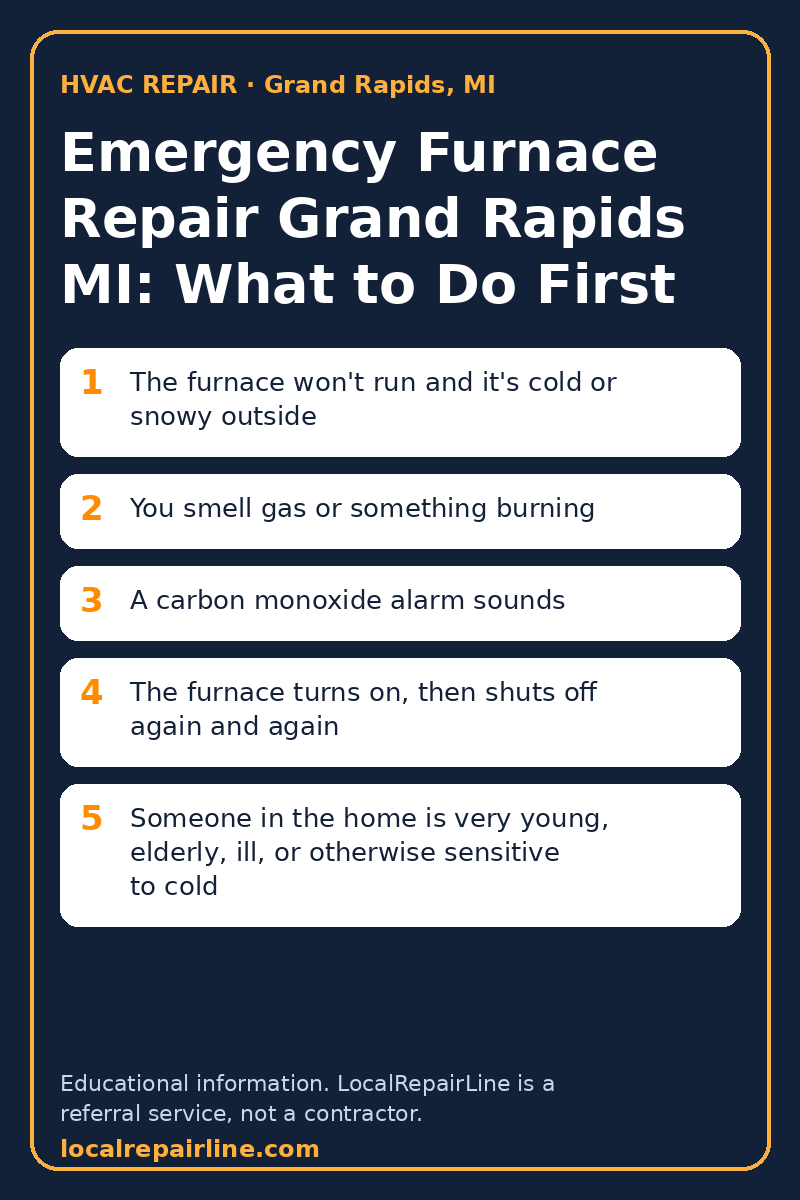
Safe Checks to Try Before You Call a Technician
Lake Michigan weather can swing from calm to a whiteout quickly, and a furnace that sat idle for months has to run hard when the first deep cold hits. Before you assume the worst, run through these checks. Stop right away if you smell gas.
- Thermostat: Make sure it's set to "heat," with the temperature a few degrees above the room. Replace the batteries if it uses them.
- Power: Check the breaker, and look for a switch near the furnace that resembles a light switch. Make sure the furnace's front panel is seated properly, since many units won't start if it isn't.
- Filter: A badly clogged filter can make a furnace overheat and shut itself off. Swap in a clean one if yours is packed with dust.
- Gas supply: Check that the gas valve handle near the furnace is parallel to the pipe. If your stove or water heater also isn't working, call your gas utility.
- Outdoor vents: Many newer furnaces vent through plastic pipes on the side of the house. Lake-effect snow can pile up and block them, so gently clear the snow by hand.
If your furnace has a condensate drain line, it can also ice up or clog in deep cold and shut the system down. Don't dig around inside the furnace to fix that. Just note it for the technician.
When DIY Is Over
If the thermostat, power, filter, gas supply, and vents all check out and the furnace still won't run, stop troubleshooting. The same goes for a gas smell, a carbon monoxide alarm, burning odors, or a furnace that keeps shutting off.
This is the point to call a local HVAC pro in Grand Rapids, MI or request local help here instead of guessing. Furnaces involve gas, electricity, and exhaust, so guessing isn't worth the risk.
Danger Signs: Gas Smells, Carbon Monoxide, and When to Leave the House
Some warning signs mean you leave first and ask questions later.
If you smell gas (a rotten-egg odor): - Don't touch light switches, appliances, or anything that could spark. - Get everyone, pets included, outside right away. - Call your gas utility's emergency line and emergency services from outside or from a neighbor's home. - Don't go back in until you're told it's safe.
If a carbon monoxide alarm goes off: - Move everyone into fresh air immediately. - Call emergency services from outside. - Don't assume it's a false alarm, even if nobody feels sick.
Headache, dizziness, nausea, and confusion can all point to carbon monoxide, and the gas has no smell. A burning smell, scorch marks, or soot around the furnace is also a reason to shut the system off and call a pro.
Don't try to relight or reset a furnace repeatedly if you suspect a gas or exhaust problem.
Keeping Your Home and Pipes Safe During a Grand Rapids Cold Snap
While you wait for a technician, your goals are simple: hold in the heat you have and protect the plumbing.
- Shrink the heated area. Close doors to unused rooms and gather everyone in one space.
- Block drafts. Roll towels against door gaps and close curtains at night, but open them in sunny rooms during the day.
- Layer up. Warm clothes, hats, and blankets do a lot of work.
- Protect pipes. Open cabinet doors under sinks on exterior walls so room air reaches the pipes. Let a faucet drip slightly on the coldest-side walls.
- Know your water shutoff. If a pipe does burst, you'll want to find it fast.
Pipes in unheated basements, crawl spaces, garages, and exterior walls are the most vulnerable.
About Space Heaters
Be careful here, because this is where panic leads to bad choices. Never use a gas oven, charcoal grill, camp stove, or generator indoors or in an attached garage for heat. Fuel-burning heaters not designed for indoor use can create carbon monoxide.
If you use an electric space heater, plug it directly into the wall, keep it well away from bedding and curtains, and never leave it running unattended. Skip extension cords.
Common Causes of Winter Furnace Breakdowns in West Michigan
West Michigan has four distinct seasons, so your furnace may sit idle for months and then work nonstop once deep cold arrives. That swing exposes weak parts.
Common culprits include:
- Dirty filters or restricted airflow, which cause overheating and shutdowns.
- Worn igniters or flame sensors, which stop the furnace from lighting or staying lit.
- Failed blower motors or capacitors, which can leave you with a running burner but no warm air moving.
- Blocked vents or condensate lines, often from snow or ice.
- Thermostat problems, including dead batteries or wiring issues.
- Cracked heat exchangers, which are a serious safety concern.
If your furnace is blowing cold air, it may be a lighting problem, an overheating shutoff, or a thermostat fan setting. A technician can sort out which.
Repair or Replace? Avoiding Costly Decisions Made Under Pressure
A cold house makes it tempting to say yes to whatever's offered. Try to slow that decision down. Your first goal is getting safe heat back, and the bigger question of repair versus replacement can often wait until the house is warm again.
Costs vary by house, and a small part like an igniter or sensor is usually a smaller job than replacing a blower motor or a full system. A cracked heat exchanger is a different story, since it's a safety issue and often pushes people toward replacement.
Things that tend to push the decision one way or the other:
- Age of the furnace: An older unit with repeated breakdowns may not be worth putting more money into.
- Type of repair: A minor part is a different conversation than a major component.
- Safety findings: Anything involving exhaust or the heat exchanger deserves a serious look.
- Your plans: If you're staying in the house for years, a newer, more efficient unit may make more sense.
Questions to Ask Before You Agree to Anything
- What exactly is broken, and can you show me the part or explain it plainly?
- Is this a temporary fix or a lasting repair?
- What does the repair cost in total, including parts and labor, and is it in writing?
- If replacement is suggested, can I get a second opinion once the house is warm?
- What happens if I wait a day or two on a larger decision?
A good technician will explain the problem without rushing you. If you feel pressured, it's fine to approve a safe, temporary fix and revisit the bigger choice later.
FAQ
What counts as a furnace emergency?
A furnace that won't run in cold weather, a gas or burning smell, a carbon monoxide alarm, or a unit that keeps shutting off all count as urgent. So does any outage when someone in the home is very young, elderly, or ill. Minor issues like uneven heating or odd noises, with the house still warm, can usually wait for normal hours.
What should I do first if my furnace stops working?
Check the thermostat settings and
Need an HVAC repair pro in Grand Rapids, MI?
Talk to an independent local contractor who serves your area.
📞 Call (833) 669-0233HVAC repair in Grand Rapids, MICall hours: 8am–8pm ET, 7 days