Furnace Not Working Troubleshooting Philadelphia PA Guide
You wake up on a freezing morning, hear the house completely quiet, and realize the air coming from your vents is ice cold. Philadelphia experiences prolonged winter cold snaps with temperatures dropping well below 32 degrees that place heavy continuous heating loads on residential heating equipment. When your heat stops during a hard freeze, panic sets in quickly. Running through a practical furnace not working troubleshooting Philadelphia PA checklist can help you spot simple, safe fixes before assuming the equipment has failed permanently.
Immediate safety checks before you touch the furnace
Before opening cabinets or poking around inside the unit, take a moment to evaluate your surroundings. If you smell rotten eggs or strong sulfur near the furnace or in your living spaces, you may have a natural gas leak. Leave your house immediately without turning light switches on or off, and call your gas utility from outdoors.
Pay attention to your carbon monoxide detectors as well. If an alarm sounds, evacuate everyone to fresh air and call emergency services.
You should also hold off on touching the unit if you spot visible smoke or smell sharp, burning electrical plastic. In those high-hazard situations, turn off the heating system emergency shutoff switch from a safe distance and seek help. If the air in the house is completely clear and no alarms are sounding, you can move forward with basic troubleshooting.
Need an HVAC repair pro in Philadelphia, PA?
Talk to an independent local contractor who serves your area.
📞 Call (833) 669-0233HVAC repair in Philadelphia, PACall hours: 8am–8pm ET, 7 daysYour call may first be answered by a short screening service that asks what the problem is and where you are. Stay on the line and you will be connected to an independent local pro.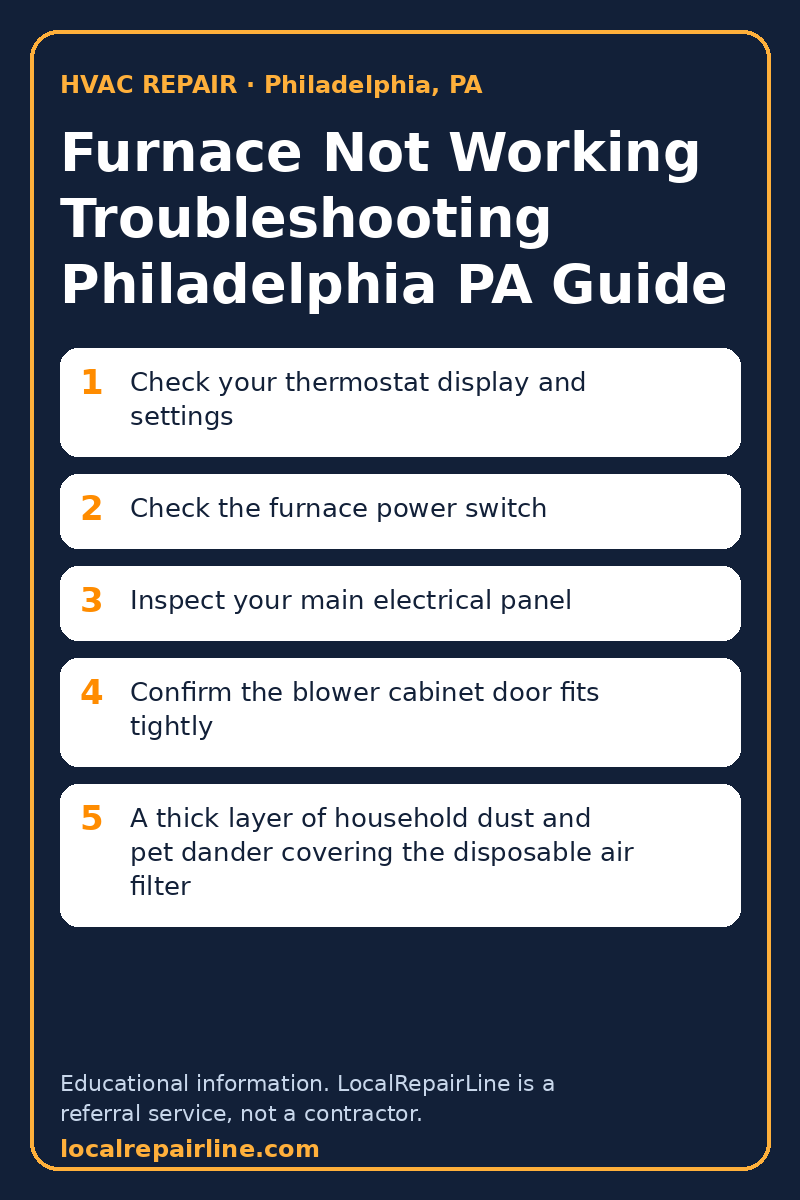
Quick power and thermostat checks for a furnace that won't start
A dead furnace often traces back to an interrupted electrical circuit rather than broken mechanical parts. Walk through this sequence first:
- Check your thermostat display and settings. Confirm it is set to heat, the target temperature sits at least five degrees above room temperature, and the display has fresh batteries if your model uses them.
- Check the furnace power switch. This looks like an ordinary light switch on the side of the cabinet or on a nearby wall or post. Family members carrying boxes or working in the basement frequently bump this switch into the off position.
- Inspect your main electrical panel. Locate the breaker labeled for the furnace and check if it tripped into a middle position. If it did, flip it completely off, then back on once.
- Confirm the blower cabinet door fits tightly. Modern heating systems have a safety interlock push-button behind the lower panel. If the door panel sits loose or crooked, power cuts out instantly.
Inspecting exterior vent pipes and condensate drain lines during cold snaps
Winter storms in the region regularly bring heavy snow, sleet, and ice accumulation that can block outdoor intake and exhaust terminations. High-efficiency furnaces rely on white PVC pipes that vent out the side of the house rather than venting up an old brick chimney.
When wind drives snow into those pipe openings or icicles hang down over the exhaust, the furnace can't pull in fresh air or expel burned gases safely. An internal safety pressure switch detects the restricted airflow and locks the burner out before flame can ignite. Walk outside with a flashlight, clear any snowdrifts away from the pipe exits, and gently clear out any frost or ice caps.
You also need to look at your condensate drain line. High-efficiency systems squeeze extra heat from exhaust gases, creating acidic water that drains out through small plastic tubing into a floor drain or small electric pump.
During bitter Philadelphia cold snaps, uninsulated basements, crawlspaces, or rim joists drop below freezing. Water inside the drain line freezes into a solid ice plug, backing water up into the internal condensate trap. An internal float switch detects the backed-up water and stops the furnace dead in its tracks. Thawing that frozen line with warm towels or clearing a clogged vinyl tube can bring the heat right back on.
How to read furnace control board LED error codes safely
Many homeowners make the mistake of turning off the furnace power switch to reset the system before checking what went wrong. Flipping the power switch off wipes the control board memory and clears the stored diagnostic error code.
Instead of cutting the power, look through the small glass or clear plastic inspection peephole on the lower blower door. Modern units have a small LED light on the circuit board that flashes when an error occurs.
Count the flashes carefully before touching anything. The board communicates using specific flash patterns, such as a steady rapid flash or a set number of pulses followed by a short pause.
Once you count the pattern, check the diagnostic chart printed on the metal access door or inside your user manual. That flash code tells you whether the system shut down due to a stuck pressure switch, an open limit switch, or an ignition lockout. Noting that pattern preserves valuable diagnostic clues even if you eventually need to cut power.
Airflow and filter issues that cause overheating and sudden shutdowns
Sudden seasonal shifts from mild autumn days to severe winter chill often trigger system lockouts when furnaces run under heavy demand for the first time. The burners fire for long stretches, driving up temperatures inside the heat exchanger.
If cool air can't move freely across that metal chamber, heat builds up rapidly. An internal safety switch called a high-limit sensor shuts the gas off to prevent metal distortion and fire hazards. The blower fan often keeps running to cool the unit down, leaving you with cold air blowing out of your supply registers.
Restricted airflow usually stems from a few common oversights:
- A thick layer of household dust and pet dander covering the disposable air filter.
- Return air grilles blocked by heavy area rugs, sofas, or closed bedroom doors.
- Closed supply vents in several unused rooms, which creates high static pressure in the duct system.
- A dirty air conditioning coil mounted directly above the furnace chamber restricting outgoing air.
Pull your furnace filter out and hold it up toward a work light. If light can't pass through the media, put in a fresh replacement filter immediately.
When furnace not working troubleshooting Philadelphia PA points to a professional
When basic thermostat, filter, and exterior vent checks fail to restore heat, or the furnace control board flashes an error indicating an ignition lockout, faulty gas valve, or cracked heat exchanger, DIY troubleshooting has reached its safe limit.
This is the exact point to connect with a local HVAC pro in Philadelphia, PA through localrepairline.com instead of guessing. Dealing directly with fuel gas manifolds, high-voltage control boards, and combustion chambers requires specialized instruments and testing tools.
A technician can measure gas pressure with a manometer, check electrical resistance on safety switches, and use specialized cameras to examine the heat exchanger for hairline cracks. Running a system with a damaged heat exchanger can pull deadly exhaust gases right into your home air supply.
Repair costs vary by house depending on the age of the furnace, the brand, and which part failed. Cleaning a dirty flame sensor or replacing a basic pressure switch is a relatively minor job, while swapping out a failed inducer motor, electronic board, or entire heat exchanger involves significantly more labor and parts expense. Always ask them to put the scope and parts in writing before work starts so you understand the whole project upfront.
FAQ
Why is my furnace clicking but not turning on?
The clicking sound comes from the electronic igniter or gas valve attempting to start the combustion process. If gas doesn't reach the burners, or if the igniter fails to get hot enough to light the fuel, the control board halts the process after several attempts. Common causes include a closed manual gas cock, a faulty spark igniter, or a broken hot surface igniter element.
Why is my furnace running but blowing cold air?
This symptom usually happens when the internal high-limit safety switch trips due to restricted airflow. The control board cuts the gas supply to prevent the heat exchanger from cracking, but it keeps the blower fan spinning to cool down the internal metal. Check your air filter first, and make sure your thermostat fan setting is set to "Auto" rather than "On".
How do I reset my furnace after it shuts off?
Find the service switch on the furnace cabinet or flip the unit breaker off in your main panel for sixty seconds, then turn it back on. Make sure your thermostat is calling for heat before restoring power so the system starts its ignition cycle. Only reset the system once, because cycling power repeatedly can allow unburned gas or water to build up if an underlying mechanical issue remains.
How do I know if my furnace flame sensor is bad?
A furnace with a dirty or failing flame sensor will light its burners normally, run for two to four seconds, and then shut right back down. The system usually attempts this cycle three times before locking you out completely for an hour or more. Most of the time, the metal sensor rod is simply coated with soot or oxidation and just needs light cleaning with an abrasive pad.
Need an HVAC repair pro in Philadelphia, PA?
Talk to an independent local contractor who serves your area.
📞 Call (833) 669-0233HVAC repair in Philadelphia, PACall hours: 8am–8pm ET, 7 days