Heat Pump Not Heating in Wilmington, DE? Causes and Fixes
If you typed "heat pump not heating Wilmington DE" into a search bar, your system is probably running but the air from the vents feels cool or lukewarm. That's frustrating on a damp January night, but it isn't always a breakdown.
This guide helps you sort normal behavior from a real problem. It also covers what you can safely check yourself and when to hand it off.
Is It Really Broken? Normal Defrost Cycles vs. a Heat Pump That Isn't Heating
A heat pump pulls heat from outdoor air, so the outdoor coil gets cold. When moisture in the air frosts that coil, the system periodically switches into defrost mode to melt it off.
During defrost, you may notice:
- A puff of steam or vapor rising from the outdoor unit
- The outdoor fan stopping for a bit
- Cooler air from the vents for a few minutes
- A swoosh or hiss sound as the system changes direction
That's normal. A typical defrost cycle lasts several minutes, and warm air should return soon after.
It's a problem if the cool air lasts much longer than that, or if defrost keeps repeating back to back. The same goes for an outdoor unit that stays buried in ice between cycles, or a house that never catches up to the thermostat setting.
One more thing: heat pump air is naturally gentler than furnace air. It often feels merely warm, not hot, even when everything is working. If the house holds its temperature, you're probably fine.
Need an HVAC repair pro in Wilmington, DE?
Talk to an independent local contractor who serves your area.
📞 Call (833) 669-0233HVAC repair in Wilmington, DECall hours: 8am–8pm ET, 7 daysYour call may first be answered by a short screening service that asks what the problem is and where you are. Stay on the line and you will be connected to an independent local pro.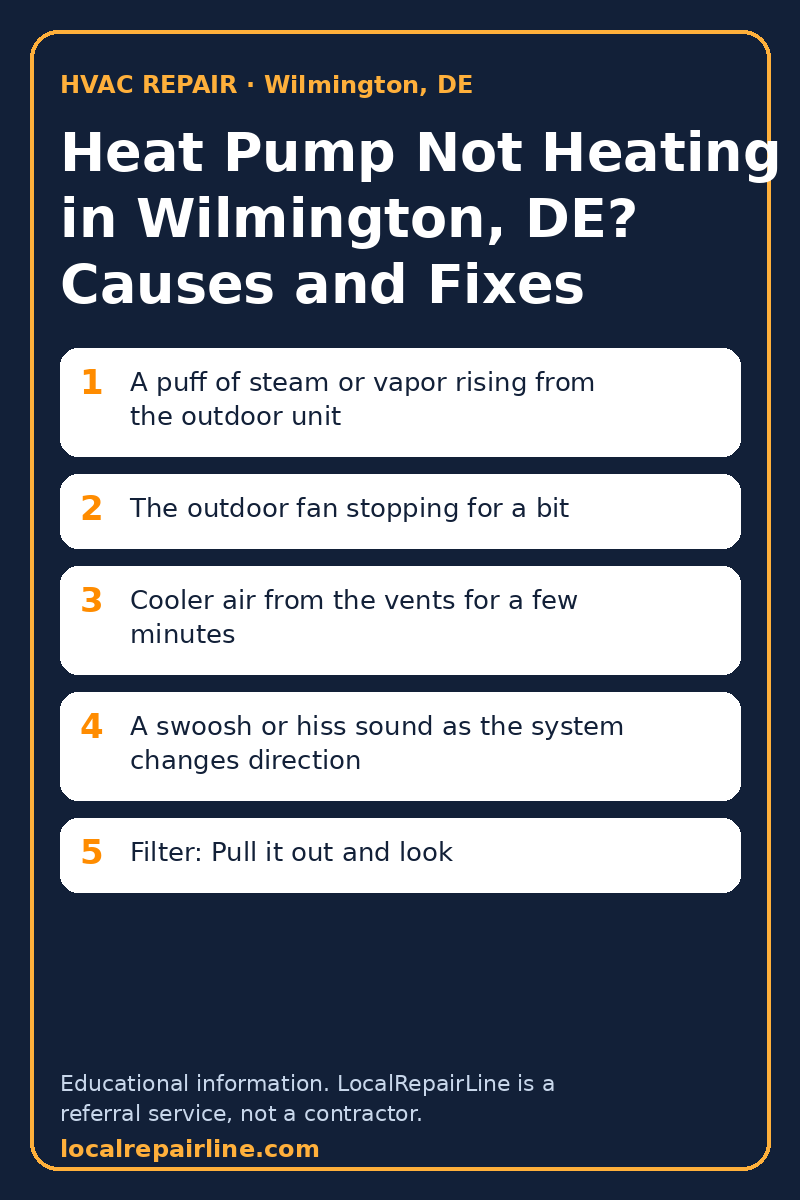
Quick Checks to Run Before You Call (Thermostat, Filter, Breaker, Vents)
Start with the simple stuff. These checks usually take a few minutes and don't require opening any panels. If anything seems off, stop and call a pro.
- Thermostat: Make sure it's set to Heat (not Cool or Fan only), and that the set temperature is above the current room temperature. Replace dead batteries if it uses them.
- Filter: Pull it out and look. If it's gray and clogged, replace it, because restricted airflow makes the system perform poorly and can cause other trouble.
- Breakers: Check both the indoor air handler breaker and the outdoor unit breaker. If one has tripped, reset it once. If it trips again, stop and leave it off.
- Vents and returns: Confirm supply vents are open and that furniture, rugs, or curtains aren't blocking vents or return grilles.
- Outdoor unit: Look at it from a distance. Clear any snow, leaves, or debris from around it, and note whether the coil looks frosty, iced over, or normal.
If everything checks out and the air is still cool, keep reading.
Why Wilmington's Damp, Up-and-Down Winters Cause Ice on the Outdoor Unit
Wilmington winters swing a lot. A cold snap can be followed by a thaw, then a nor'easter, then freezing rain. Temperatures bounce above and below the frost point, and the damp Delaware Valley air adds plenty of moisture.
That combination is tough on outdoor coils. Moisture condenses on the cold metal and turns to frost, so defrost cycles can run more often here than in drier climates. Frost on a working system is expected.
Thick ice is different. A solid block of ice around the coil or fan can point to a defrost problem, low refrigerant, or poor airflow.
Safe ways to deal with snow and ice
- Turn the system off at the thermostat before touching anything near the unit.
- Brush loose snow off the top and sides with a soft broom or your gloved hands.
- Keep a clear gap around the unit so air can move through it.
- Never chip at ice with a hammer, screwdriver, or ice pick. The coil fins and refrigerant lines are thin and easy to puncture.
- Don't pour boiling water on it. Let ice melt on its own, or have a technician handle heavy buildup.
Also check that gutters and downspouts aren't dripping onto the unit and refreezing around it.
Common Causes of Cool Air: Refrigerant Leaks, Reversing Valve, Failed Capacitor, and More
If the basics are fine, a mechanical issue is likely. You can't safely fix most of these yourself, but knowing the names helps you follow what a technician tells you.
- Low refrigerant (a leak): The system can't move enough heat. You might see ice on the outdoor unit or on the refrigerant lines, and the air stays lukewarm. Refrigerant doesn't get "used up," so low levels mean a leak somewhere.
- Reversing valve problems: This valve switches the system between heating and cooling. If it sticks, you can end up with cool air when you want heat.
- Failed capacitor or contactor: These electrical parts help start the compressor and fans. A humming outdoor unit that won't spin up is a classic sign.
- Dirty or blocked coils: Dirt, leaves, and heavy frost cut down heat transfer.
- Defrost control or sensor failure: The unit may not defrost when it should, so ice keeps building.
- Airflow problems indoors: A clogged filter, a failing blower, or leaky or crushed ductwork can make good heat feel weak.
Costs vary by house, by the part involved, and by how easy it is to reach. A small electrical part and a refrigerant leak repair are very different jobs.
Emergency Heat and Backup Heat: What They Cost You While You Wait
Most heat pumps have electric resistance backup heat. Think of it as a set of heating elements, like a giant toaster, inside the air handler.
There are two modes to know:
- Auxiliary heat switches on automatically when the heat pump can't keep up, such as during a deep cold snap or defrost.
- Emergency heat is a setting you choose on the thermostat. It turns off the heat pump and runs only the electric elements.
Electric resistance heat is far more expensive to run than the heat pump doing its normal job. If backup heat runs for hours or days, your electric bill can climb quietly, and you may not notice until the statement shows up.
If your thermostat shows an "Aux" or "Emerg" light that stays on all the time, that's a clue something is wrong with the heat pump itself.
Emergency heat is fine as a short-term bridge if the outdoor unit has failed and you're waiting on a repair. Don't leave it on for days to avoid making a call.
Repair or Replace? What to Weigh for an Older System
If you can, make this decision before the coldest stretch of winter. That gives you time to compare options without feeling rushed.
Here's what to weigh:
- Age: An older system with a major failure, like a compressor or a refrigerant leak in the coil, is a harder case for repair.
- Repair history: If you've been fixing something every season, those bills add up.
- Repair vs. replacement: If a repair costs a large share of what a new system would, replacing starts to make sense.
- Refrigerant type: Ask a technician which refrigerant your system uses, since that can affect what a leak repair involves.
- Comfort and bills: Newer equipment can run more efficiently, and a system that's the wrong size or struggles every cold snap may be worth replacing anyway.
Ask the technician to give you both options in writing, with what each would likely cost and what each gets you. Costs vary by house, so a written breakdown for your home matters more than a general range.
If you wait until total failure, you may end up paying for an emergency repair on a system that was nearing replacement anyway. A mild fall checkup can help you plan instead of scramble.
Heat Pump Not Heating Wilmington DE: When to Call a Local HVAC Pro and What to Say
You've checked the thermostat, replaced a dirty filter, looked at the breakers, and opened the vents. If the air is still cool, this is the point to talk to a local HVAC pro in Wilmington, DE, like the LocalRepairLine team, instead of guessing.
It's time to call a pro if:
- The outdoor unit is encased in ice or won't start
- Backup heat has been running for hours with no improvement
- A breaker trips again after you reset it once
- You hear grinding, banging, or loud buzzing from either unit
- You smell burning or see oily residue near the refrigerant lines
When you call, give the technician clear details. It speeds things up and helps them bring the right parts.
- What the thermostat is set to and what the house temperature is
- Whether the outdoor unit is iced, humming, or silent
- Whether the Aux or Emerg light is on, and for how long
- What you already checked, including the filter and breakers
- The age of the system, if you know it
FAQ
How long should a heat pump defrost cycle last?
A normal defrost cycle usually lasts several minutes, and warm air should come back soon after. If the cool air goes on much longer, or defrost keeps repeating back to back, something may be wrong. Note how often it happens and tell your technician.
Is it normal for my heat pump to blow lukewarm air in winter?
Often, yes. Heat pump air feels gentler than furnace air, so it may feel merely warm even when the system is working well. If the house holds its temperature, you're likely fine, but if it falls behind the thermostat setting, it's worth a closer look.
Should I use emergency heat if my heat pump isn't heating?
Only as a short-term bridge while you wait on a repair. Emergency heat runs electric elements alone, which is far more expensive to operate than the heat pump working normally. Leaving it on for days can quietly raise your electric bill.
Can I remove ice from my outdoor unit myself?
You can brush off loose snow with a soft broom and keep the area around the unit clear. Don't chip at ice or use boiling water, since the coil fins and refrigerant lines are easy to damage. If heavy ice keeps coming back, have a technician find out why.
Should I repair or replace an older heat pump?
It depends on the system's age, its repair history, and what the repair would cost compared with replacement. Costs vary by house, so ask for both options in writing. If you can, make the decision outside the coldest week of winter, when you have more time to compare.
Need an HVAC repair pro in Wilmington, DE?
Talk to an independent local contractor who serves your area.
📞 Call (833) 669-0233HVAC repair in Wilmington, DECall hours: 8am–8pm ET, 7 days