Pipe Burst in Basement in Kalamazoo, MI: What to Do Right Now
Water is coming into your basement and your heart is pounding. Take a breath. If you're searching pipe burst in basement Kalamazoo MI what to do, the steps below put the order of operations in your hands: stop the water, stay safe, protect your stuff, and know when to hand the job to a plumber.
Read the first section now. Come back to the rest once the water is under control.
Pipe Burst in Basement Kalamazoo MI What to Do in the First 5 Minutes
Your first goal is simple: stop more water from coming in. Everything else can wait a few minutes.
- Look before you step. If outlets, the panel, or a power strip are in the water, read the electrical section below first.
- Shut off the main water valve. It's usually where the water line enters the house, often near the water meter or the front wall. Turn a round handle clockwise until it stops. A lever handle goes a quarter turn so it sits crosswise to the pipe.
- Open a faucet or two. Start with one nearest the basement and one on the top floor. This drains the lines and relieves pressure on the broken pipe.
- Turn off the water heater. Switch off the breaker (electric) or set the gas control to pilot or off. A heater with no incoming water can be damaged.
- Move what you can. Lift boxes, rugs, and electronics out of the water, but don't strain your back on heavy wet items.
Water still flowing after the main is closed? That tells you something about the source, which we'll get to below.
Need a plumbing repair pro in Kalamazoo, MI?
Talk to an independent local contractor who serves your area.
📞 Call (833) 350-0420Plumbing repair in Kalamazoo, MICall hours: 8am–8pm ET, 7 daysYour call may first be answered by a short screening service that asks what the problem is and where you are. Stay on the line and you will be connected to an independent local pro.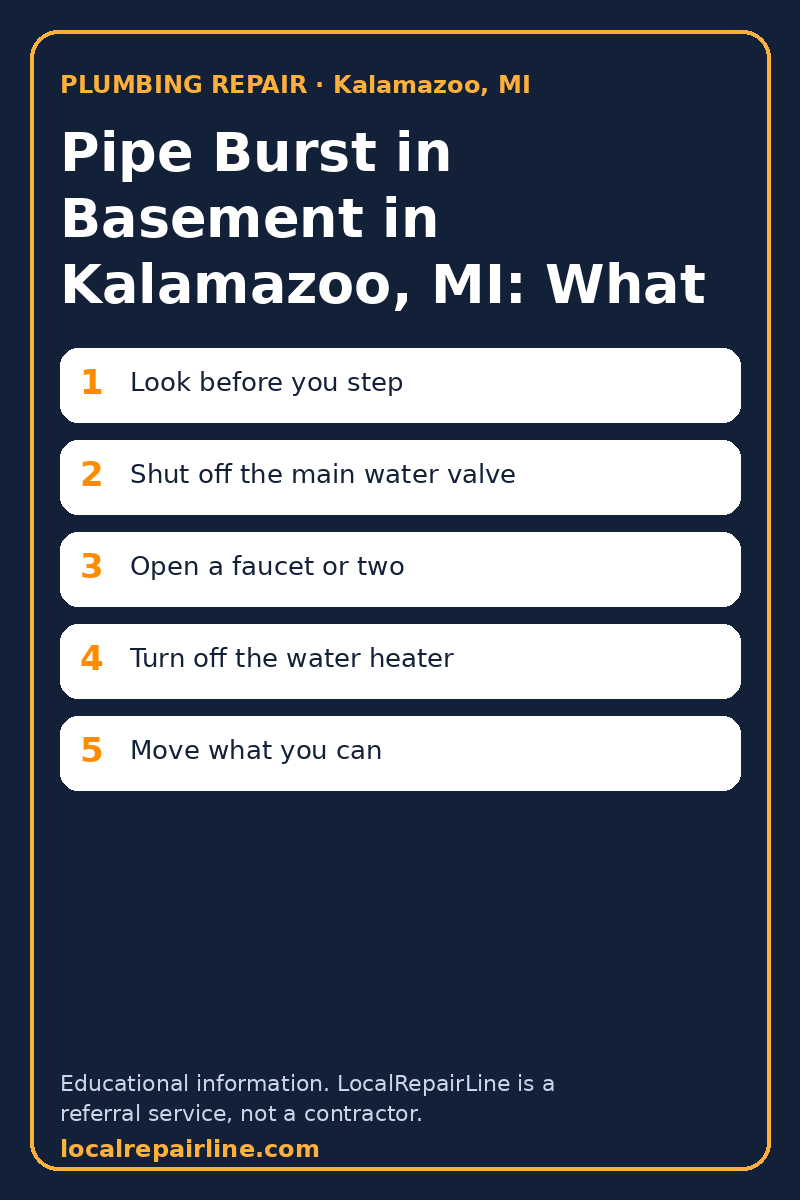
Electricity and Water: When to Stay Out of Your Kalamazoo Basement
Water and electricity are the real danger here, more than the mess. Basements often hold the panel, outlets, a sump pump, an extra refrigerator, and a furnace.
Stay out of the basement if:
- Standing water is touching outlets, the furnace, or the electrical panel.
- You hear buzzing or crackling, or smell something burning.
- The panel is in a wet area and you'd have to wade to reach it.
- Water is dripping from the ceiling near light fixtures or wiring.
If the panel is dry and you can reach it without stepping in any water, switch off the main breaker. Use one hand and stand on something dry.
If you're unsure, or the panel is wet, don't touch it. Call your electric utility or an electrician and tell them water is in the basement. If you smell gas or see sparks, leave the house and call emergency services from outside.
Don't plug in a wet-dry vacuum or a pump until the power situation is sorted out. A pump running off a cord that crosses a wet floor is a bad bet.
Figure Out Where the Water Is Coming From
Not every wet basement is a burst pipe. Knowing the source changes who you call and what you do next.
Signs it's a supply line
- Water stops or slows a lot after you close the main valve.
- You hear hissing or spraying before you shut the water off.
- The water is clear and shows up near a ceiling, a wall, or an exposed pipe.
Signs it's something else
- Water keeps coming after the main is closed. That points to groundwater, a failed sump pump, or a sewer or drain problem.
- Water rises near a floor drain and smells bad. That's likely a sewer backup, which is a different kind of emergency and a health risk.
- Water seeps in along the walls or where the floor meets the wall after heavy rain or a fast spring thaw.
Michigan winters play a part here. During a hard cold snap, pipes in unheated spots like exterior walls, crawl spaces, and basement corners can freeze and split. The break often shows itself only when things thaw and water starts to flow.
If you can see the broken section, don't try to patch it for the long haul. A pipe clamp or a wrap of repair tape can slow a drip until help arrives, but it's a stopgap.
Clean Up and Dry Out Before Mold Settles In
Once the water is off and the power is safe, the clock shifts to drying. Wet materials left sitting can grow mold, and warm, damp air in a closed basement makes that more likely. Drying things out promptly gives you better odds of avoiding it.
Here's a sensible order of work:
- Document first. Take photos and video of the water, the damaged pipe, and anything wet before you move it.
- Get the water out. Use a pump or wet-dry vacuum for deeper water, and mops and towels for the rest. Only do this once the power risk is handled.
- Pull out soaked items. Carpet, pads, cardboard boxes, and wet drywall near the floor usually can't be saved. Set what you can dry on blocks or move it upstairs.
- Move air. Run fans and a dehumidifier, and open windows if the weather allows. In the cold months, keep the heat on so the space actually dries.
- Watch for hidden moisture. Water can wick up drywall and sit inside wall cavities and under flooring long after the surface looks dry.
Wear gloves and boots while you work. If the water might have come from a sewer line or a drain, treat it as contaminated and consider leaving cleanup to professionals.
When to Call a Plumber, and What It Might Cost
Closing the main buys you time, but the broken pipe still has to be fixed. Call a plumber if you can't find the break, can't get the water to stop, or the damaged pipe is behind a wall or under a slab. A local plumbing pro in Kalamazoo, such as Local Repair Line, can track down the break and repair it.
You'll also want help if the pipe material is old and brittle. One split in aging pipe can mean other weak spots nearby.
Costs vary by house. A short, easy-to-reach repair in an open basement ceiling is a smaller job than a break inside a finished wall that needs opening up and patching afterward. A few things drive the price:
- How easy it is to reach the pipe
- The pipe material and its age
- Whether drywall, ceiling, or flooring has to be cut and replaced
- How much of the line needs replacing, not just the split section
- Whether the call is an after-hours emergency or a scheduled visit
Ask for a clear scope of work before anyone starts, and ask what happens if they find more damage once the pipe is exposed. That conversation is easier before the work begins than after.
Call Your Insurance and Protect Your Claim
Policies differ on how they treat sudden pipe bursts versus slow leaks, seepage, and groundwater. Read yours or call your agent to see how it handles each.
A few habits help:
- Call your agent and ask what your policy says about water damage and what it expects you to do.
- Keep your photos, videos, and a list of damaged items with approximate ages.
- Save receipts for emergency repairs, pump rental, and dry-out equipment.
- Ask your agent or adjuster whether they want to see damaged items before you throw them out. Photos help either way, and if something is a health hazard, like sewage-soaked material, photograph it and handle it safely.
Your policy may expect you to take reasonable steps to limit further damage, like shutting off the water. Check the wording on that, and keep notes on what you did and when.
Keep It From Happening Again
Once things are back to normal, a bit of prevention goes a long way, especially with Michigan winters.
Insulate pipes along exterior walls and in unheated corners of the basement. Seal air leaks near rim joists where cold air can reach the lines. During a deep cold snap, let a faucet drip slightly and open cabinet doors on exterior walls so warmer air reaches the pipes.
If you leave town in winter, keep the heat on at a safe temperature. Also learn where your main shutoff is and make sure everyone in the house can find it and turn it. Test it once a year so it doesn't stick when you need it.
FAQ
What's the very first thing I should do when a pipe bursts in my basement?
Shut off the main water valve, usually where the line enters the house near the meter or front wall. Before you step into the basement, check that no outlets, power strips, or the panel are sitting in water. Safety comes first, then stopping the flow.
Is it safe to go into a wet basement?
Not always. If water is touching outlets, the furnace, or the panel, or you hear buzzing or smell burning, stay out and call an electrician or your electric utility. If the panel is dry and you can reach it without stepping in water, you can switch off the main breaker.
How do I know if it's a burst pipe or groundwater?
Close the main water valve and watch. If the water slows or stops, it was likely a supply line. If it keeps coming, especially after rain or a thaw, look at the sump pump, drains, and foundation instead.
How fast do I need to dry out the basement?
As quickly as you can safely manage. Mold can grow in damp, closed spaces when materials stay wet. Get the standing water out, remove soaked materials, and run fans and a dehumidifier.
Will insurance cover a burst pipe?
It depends on your policy. Policies differ on how they treat sudden bursts versus slow leaks, seepage, and groundwater. Call your agent, document everything, and ask what your coverage includes.
Need a plumbing repair pro in Kalamazoo, MI?
Talk to an independent local contractor who serves your area.
📞 Call (833) 350-0420Plumbing repair in Kalamazoo, MICall hours: 8am–8pm ET, 7 days