Water Heater Not Working? Repair Guide for Fort Wayne, IN
You step into the shower and the water never warms up. If you're searching for water heater not working repair Fort Wayne IN, you want to know what's wrong, what you can safely check, and whether to fix it or replace it.
This guide walks through all three. It also covers why a weak heater tends to give out first when a Fort Wayne winter sets in.
Signs Your Water Heater Isn't Working (and What Each One Usually Means)
The symptom you notice often points to the likely cause. These are common patterns, not a diagnosis.
- No hot water at all: On an electric unit, this often means a tripped breaker or a failed heating element. On a gas unit, the pilot may be out or the thermostat may have failed.
- Lukewarm water: A worn lower element, a thermostat set too low, or a crossed connection somewhere in the plumbing can all cause this.
- Hot water runs out fast: Sediment inside the tank takes up space and insulates the water from the heat. A failing element or an undersized tank can do the same.
- Rumbling or popping from the tank: This usually means sediment is baking onto the bottom of the tank.
- Rusty or discolored hot water: The inside of an aging tank may be corroding.
- Water around the base: This points to a leak, which we cover below.
Need a plumbing repair pro in Fort Wayne, IN?
Talk to an independent local contractor who serves your area.
📞 Call (833) 350-0420Plumbing repair in Fort Wayne, INCall hours: 8am–8pm ET, 7 daysYour call may first be answered by a short screening service that asks what the problem is and where you are. Stay on the line and you will be connected to an independent local pro.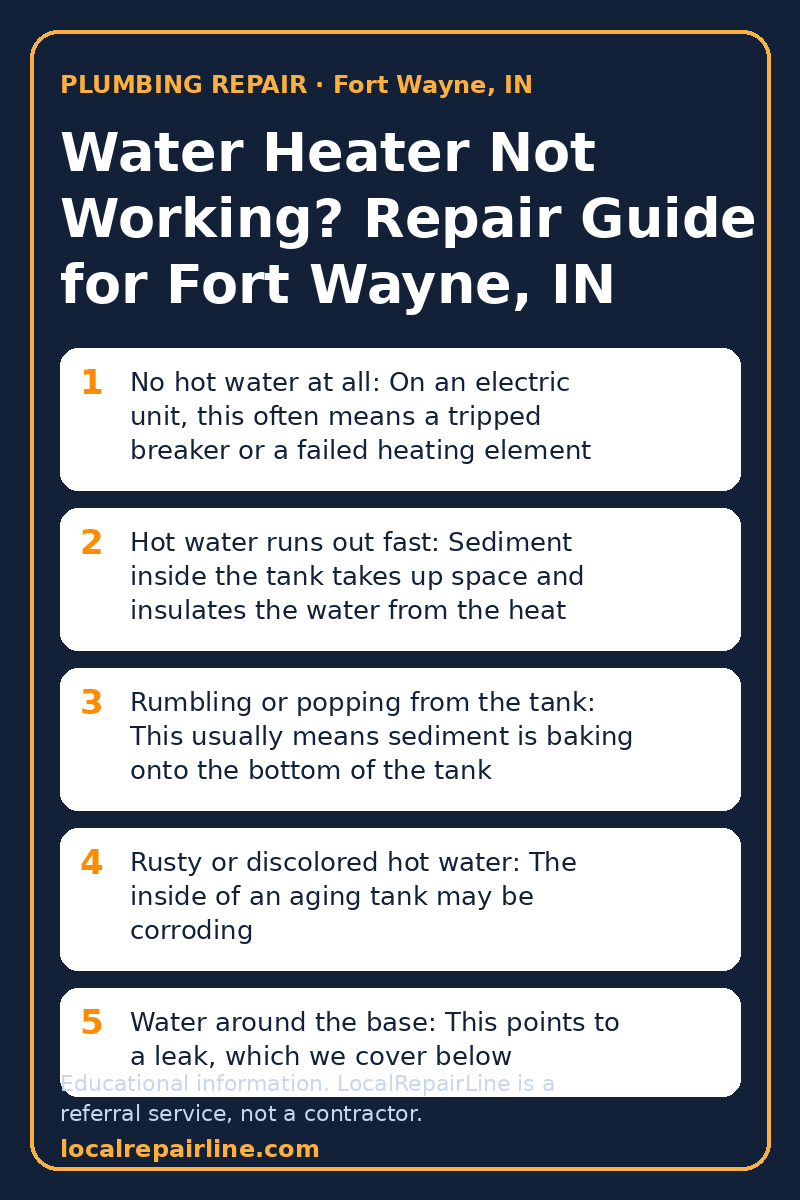
Safe Checks to Try First: Gas, Electric, and Tankless
Start with the simple stuff. These checks take a few minutes and need no tools beyond a flashlight.
Electric tank heaters
- Check the breaker panel. If the water heater breaker is tripped, flip it fully off, then back on.
- Wait an hour or so and test the hot tap.
- Check the thermostat setting if you can reach it safely. Make sure it hasn't been turned down too low or bumped to the highest setting, and use your manufacturer's instructions as a guide.
- If you're comfortable doing it, shut the breaker off before removing any access panel. Look for a red reset button and press it once.
Don't touch wiring. If you see scorched insulation, melted wires, or a burnt smell, stop.
Gas tank heaters
- Make sure the gas shutoff valve to the heater is open.
- Look at the pilot or the display. If the pilot is out, follow the relighting steps printed on the tank's label, exactly as written.
- Check the temperature dial on the gas control and make sure it hasn't been bumped to "pilot" or "off."
If you smell gas at any point, don't try to relight anything. Leave the house and call your gas utility or emergency services from outside.
Tankless heaters
- Look at the display for an error code, then check the manual for what it means.
- Confirm the unit has power, and gas if it's a gas model.
- Make sure the shutoff valves are open.
- Weak or inconsistent heat can mean mineral buildup, which usually needs a professional flush.
When the quick checks don't work
Say you reset the breaker or relit the pilot and still have no hot water. Or a tripped breaker keeps tripping. At that point, stop guessing and talk to a local plumbing pro in Fort Wayne, IN, such as LocalRepairLine.
Further DIY attempts at that stage risk your safety and can turn a small repair into a bigger one. A plumber can test the element, thermostat, or gas valve properly instead of swapping parts and hoping.
Why Winter in Fort Wayne Exposes Water Heater Problems
Winter brings cold weather to Fort Wayne. The water entering your home is very cold, so your heater has to raise it a long way.
A healthy heater keeps up. One with sediment buildup, a worn element, or a tank that was a bit small to begin with often won't. You may have noticed nothing in September, then suddenly run out of hot water halfway through a shower in January.
Colder incoming water also means longer recovery time after each use. A heater that was barely adequate in summer can feel broken in winter.
Fort Wayne's swing from frozen winters to warm, humid summers is also hard on basements and utility rooms. Moisture can speed up rust on the tank, fittings, and venting. Spring and summer thunderstorms can cause outages or surges that trip an electric heater's breaker or upset the controls on a gas unit.
So if your hot water vanished right after a storm, check the breaker or controls first.
Water Heater Not Working Repair Fort Wayne IN: When to Stop and Call a Plumber
Some problems aren't DIY territory. If you notice any of these, shut off power or gas to the heater if it's safe to reach, and call a plumber:
- A gas smell near the heater
- Water pooling or dripping around the tank
- Rumbling, banging, or popping noises
- Water discharging from the relief valve
- Scorched wiring, a burning smell, or soot marks near the unit
- An older tank that's showing any of the above
The temperature and pressure relief valve is a safety device. If it's discharging, something is wrong with pressure or temperature, and it needs professional attention.
A leak from the tank body is rarely fixable. Once water escapes through the tank itself, replacement is the usual answer.
Repair or Replace? How Age, Cost, and Damage Tip the Decision
This is where people either waste money or regret a rushed purchase. Weigh three things: age, type of failure, and cost of the repair compared with a new unit.
Age
Tank heaters wear out over time, and how long yours lasts depends on water quality, upkeep, and how hard it works. The date on the tank's label can tell you roughly how old it is. If yours is on the older side, a repair may only buy a little time. A newer heater with a simple problem is usually worth fixing.
Type of failure
- Usually worth repairing: a tripped breaker, a bad thermostat, a worn element, a failed pilot component, or a faulty gas valve on a younger tank.
- Usually points to replacement: a leaking tank, heavy rust, or severe sediment damage in an old unit.
Cost compared with a new unit
Repair costs vary by house. They depend on the part, access, whether it's gas or electric, and how easy the unit is to reach.
If the repair is a small fraction of a new heater's cost and the tank is fairly young, repair makes sense. If the tank is old and the problem is a major one, ask a plumber whether replacement makes more sense than repair.
Also think about your household. If you've been running out of hot water in winter, replacing with a larger tank or a different type of heater may solve a problem a repair never would.
What to Expect When a Fort Wayne Plumber Diagnoses Your Water Heater
A good diagnosis starts with questions. How old is the unit? When did the problem start? Was there a storm or outage?
Then the plumber will usually check power or gas supply, controls, the thermostat, and the heating elements or burner. They'll look at the relief valve, venting, and the tank for signs of leaks or corrosion.
After that, you should get a clear explanation of what failed and your options. Ask whether the repair is likely to last, and what the plumber would do if it were an older tank.
Be wary of vague answers. You should leave knowing whether you're repairing or replacing, and why.
How to Prevent the Next Cold-Shower Surprise
A little upkeep goes a long way, especially before winter.
- Flush the tank on a regular schedule to reduce sediment, following your manufacturer's instructions.
- Check the area around the heater for dampness, rust, or drips every so often.
- Keep the temperature setting reasonable and consistent.
- Keep the space around the heater clear and dry.
- Have the unit looked at before winter if it's getting up in years.
- After a storm or outage, check that the breaker or controls are still set correctly.
If your heater already struggles in January, it may be showing you its age. If it's an older unit, you can plan a replacement at your own pace.
FAQ
Why is my water heater not heating water?
On electric models, the usual causes are a tripped breaker, a failed heating element, or a bad thermostat. On gas models, look for an extinguished pilot, a faulty thermocouple, or a gas control problem. If basic resets don't help, a plumber should diagnose it.
How do I know if my water heater needs to be repaired or replaced?
Look at age, the type of failure, and the repair cost compared with a new unit. A younger tank with a failed part is usually worth repairing. An older tank that's leaking, rusting heavily, or needing a pricey fix usually points to replacement.
Why does my water heater run out of hot water so fast in winter?
Incoming water in Fort Wayne is very cold in winter, so your heater has to work much harder to heat it. Sediment buildup, a worn element, or a tank that's too small for your household will show up first in cold weather. If it keeps happening, a plumber can check the elements and help you decide whether a larger tank makes sense.
Need a plumbing repair pro in Fort Wayne, IN?
Talk to an independent local contractor who serves your area.
📞 Call (833) 350-0420Plumbing repair in Fort Wayne, INCall hours: 8am–8pm ET, 7 days