Water Heater Not Working? Repair Guide for Pittsburgh, PA
You step into the shower on a freezing January morning and the water never warms up. If you're searching for water heater not working repair Pittsburgh PA, you probably want two answers: what's wrong, and what you can safely check before calling someone.
This guide covers both. It also helps you decide whether a repair makes sense or whether you'd be paying to fix a tank that's about to give out anyway.
Quick Checks Before You Call Anyone
Start with the simple stuff. Plenty of "dead" water heaters turn out to be a tripped breaker or a pilot that blew out.
Here's a short checklist you can run through in a few minutes:
- Check other hot water taps. If only one faucet is cold, the problem may be that fixture, not the heater.
- Look at your electrical panel. For an electric unit, find the breaker for the water heater. If it's tripped, flip it fully off, then on, once.
- Check the gas supply. For a gas unit, make sure the gas valve near the heater is open and that your other gas appliances work.
- Look at the pilot or display. Many gas units have a small window or igniter. Newer models may show a light or error code.
- Check the temperature setting. Someone may have turned the dial down. Most households keep it moderate, so don't crank it to the maximum.
- Read the label on the tank. It usually has relighting steps and a date or serial number that hints at age.
If you relight a pilot, follow the instructions printed on your unit exactly. If it won't stay lit, stop there. Repeating the process doesn't fix a failing part.
If a breaker trips again right after you reset it, leave it off and call a pro. That usually points to a failing element or wiring problem.
Need a plumbing repair pro in Pittsburgh, PA?
Talk to an independent local contractor who serves your area.
📞 Call (833) 350-0420Plumbing repair in Pittsburgh, PACall hours: 8am–8pm ET, 7 daysYour call may first be answered by a short screening service that asks what the problem is and where you are. Stay on the line and you will be connected to an independent local pro.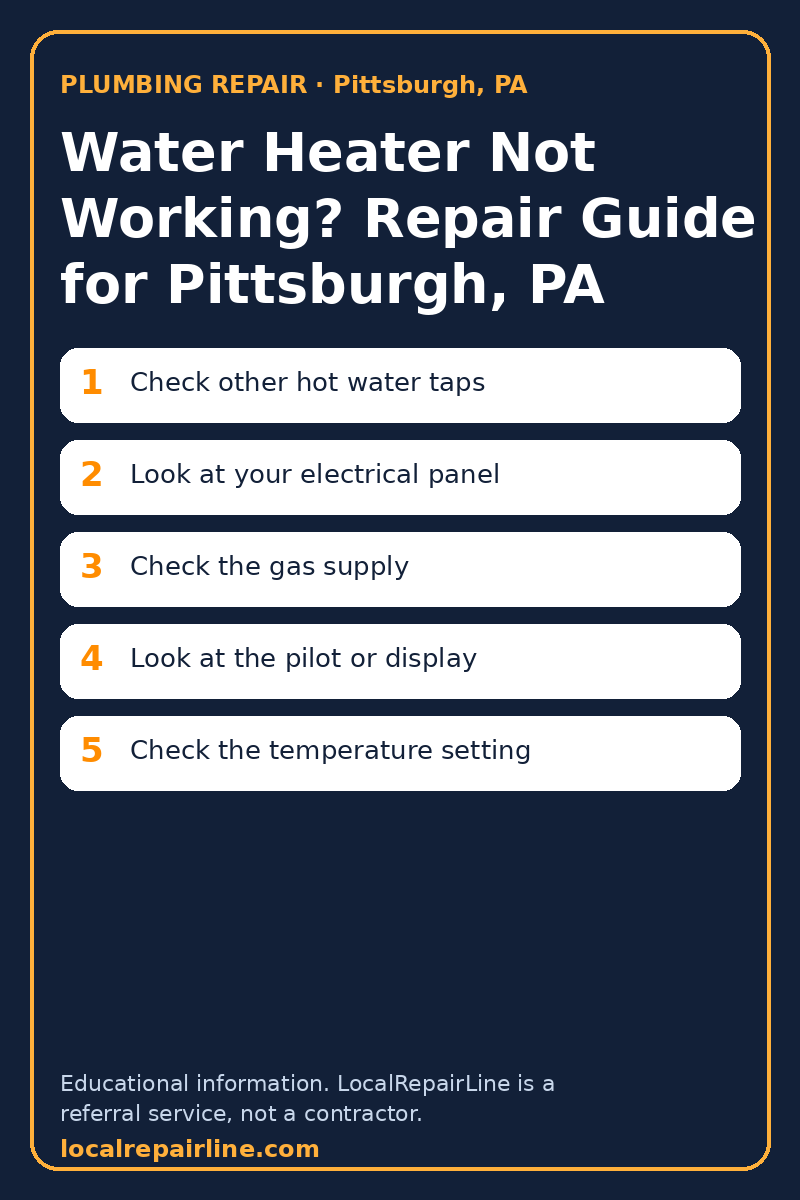
What Your Symptoms Mean
The way your water heater misbehaves tells you a lot. Here are the common patterns and what they often point to.
No hot water at all
On an electric unit, this often means a tripped breaker, a tripped high-limit reset, or a burned-out heating element. On a gas unit, think pilot light, thermocouple, or gas supply.
Lukewarm water or running out fast
This can mean a failed lower heating element on an electric tank, or a lot of sediment built up at the bottom. It can also simply mean the tank is too small for how much hot water your household uses now.
Rumbling, popping, or banging
Those sounds usually come from sediment at the bottom of the tank. Water gets trapped under the layer of minerals and boils, which makes the noise. It's hard on the tank and it wastes energy.
Rust-colored water
Rusty hot water, with cold water running clear, suggests the inside of the tank is corroding. That's often a sign the tank is nearing the end of its life.
Leaks
A little moisture at a fitting is one thing. Water pooling under the tank is another. A leak from the tank body itself generally can't be repaired.
- Drips at a pipe connection: sometimes fixable.
- Water from the relief valve pipe: can mean excess pressure or temperature and needs a pro.
- Water from the tank's base or seams: usually means replacement.
Water Heater Not Working Repair Pittsburgh PA: Why Winter Exposes Weak Units
Pittsburgh winters are cold and snowy, with regular stretches below freezing. The water coming into your house is far colder in January than in July, so your heater has to work much harder to bring it up to temperature.
That extra load shows up in weak units first. A heater with a worn element, a sediment-clogged tank, or a tired burner can limp along in summer and quit during the first hard cold snap.
Cold snaps also push demand up all at once. Your furnace is running, the family wants longer showers, and laundry piles up. A water heater that was barely keeping up now falls behind.
Pittsburgh's four seasons add another wrinkle. The freeze-thaw swings of late fall and early spring can stress pipes and plumbing connections. Fittings near the heater can loosen or start weeping, and small leaks that were hidden may suddenly show.
Many homes also have the heater in a basement or utility area. In an older house, that space may be cold, cramped, or full of aging pipe and old shutoff valves. All of that can complicate a diagnosis, and a stuck valve you didn't know about can make a simple repair harder.
Gas vs. Electric: Troubleshooting Differences
The basics are different depending on what powers your tank.
Gas water heaters
- Check the pilot light and gas valve.
- A pilot that keeps going out can mean a worn thermocouple or a draft problem.
- Soot, a yellow flame, or a burning smell means stop and call a pro.
- Any gas valve or burner work belongs to a professional, not a homeowner.
Electric water heaters
- Check the breaker first.
- Many units have a small reset button behind an access panel. Pressing it means opening that panel, so shut off the breaker first and only do it if you're comfortable.
- A failed heating element or thermostat is a common repair, but it involves live wiring.
- Two elements usually work together, so one failing can cause lukewarm water or short supply.
A good rule: looking, switching a breaker, or checking a setting is fine. Opening burner compartments, touching gas connections, or swapping electrical parts isn't a weekend guess.
Repair or Replace? How Age, Rust, and Repeat Failures Decide It
This is where many people lose money. A repair on a tank that's about to fail is cash spent on borrowed time.
Use these factors to decide:
- Age: Check the date on the label. Tank-style heaters wear out over time, and how long yours lasts depends on the model, the water, and how well it's been maintained. If it's well into its later years, lean toward replacing.
- Rust: Rusty water, rusty fittings, or corrosion near the bottom of the tank are bad signs.
- Leaks from the tank: If the tank itself leaks, replacement is the answer.
- Repeat failures: If you've had a part replaced and something else fails soon after, the unit is wearing out.
- Repair size: A simple, inexpensive part on a relatively young heater usually makes sense. A major part on an old tank usually doesn't.
- Hot water needs: If your household has grown, a bigger or different unit may serve you better.
A rough rule of thumb is that if the repair is a large share of what a new heater would cost and the unit is older, replace it. Costs vary by house, so ask your plumber to compare the two options honestly.
Warning Signs You Should Not Handle Yourself
Some problems aren't worth guessing at. If you notice any of the following, this is the point to talk to a local plumbing pro in Pittsburgh, PA, such as the LocalRepairLine team, instead of experimenting:
- Water pooling around the tank
- A gas smell near the heater
- Rust-colored hot water
- Rumbling or popping from the tank
- A breaker that keeps tripping, or a pilot that won't stay lit after you've already reset it
If you smell gas, don't flip switches or use a flame. Get everyone out of the house and contact your gas utility or emergency services from outside.
For a leak, turn off the power (breaker for electric, gas control to off for gas) if you can reach it safely and it's dry. Shut the cold water supply valve to the tank. Then call a plumber.
Repeating resets or relights doesn't fix a failed part. It can mask a safety problem.
What to Expect When a Local Plumber Diagnoses Your Water Heater
A good diagnosis isn't a mystery. Here's what usually happens.
The plumber will ask about your symptoms and how long they've been going on. Then they'll look at the unit's age, the venting or electrical connections, and signs of leaks or corrosion.
They'll test the parts involved, such as the thermostat, elements, thermocouple, or gas valve, depending on your setup. They may also check water pressure and the relief valve.
After that, you should get a clear choice between repair and replacement, along with the reasoning. Ask what's failing, whether the tank shows signs of internal rust, and what else might fail soon.
Costs vary by house. Factors include the type of unit, the part needed, how easy it is to reach the heater, venting changes, and whether the old tank has to be hauled away. Ask what's included before work starts.
FAQ
Why is my water heater not heating up?
The most common causes are a tripped breaker, a failed heating element or thermostat on an electric unit, and a pilot or thermocouple problem on a gas unit. Cold incoming water in Pittsburgh winters can also make a weak heater seem like it has quit. Check the breaker or pilot first, and call a plumber if a reset doesn't help.
How do I know if my water heater needs repair or replacement?
Look at its age, whether the water runs rusty, and whether the tank itself is leaking. A leaking tank or rust inside the tank usually points to replacement. A simple part failure on a younger unit is often worth repairing, and a plumber can compare both options for your house.
Need a plumbing repair pro in Pittsburgh, PA?
Talk to an independent local contractor who serves your area.
📞 Call (833) 350-0420Plumbing repair in Pittsburgh, PACall hours: 8am–8pm ET, 7 days