Water Heater Not Working? Repair Steps for Akron, OH Homes
Searching for water heater not working repair Akron OH because the shower ran cold this morning? Don't panic yet. Plenty of no-hot-water problems come down to a tripped breaker, a pilot that blew out, or a thermostat that got bumped.
This guide walks you through what to check, what the symptoms mean, and when to stop and bring in a pro. It also helps you decide whether a repair is worth paying for or whether the tank is about done.
Start Here: Is It Really a Water Heater Problem?
Before you blame the tank, rule out a few lookalikes. A single faucet with no hot water is often a fixture problem, not the heater.
Ask yourself:
- Is the hot water missing everywhere, or just at one sink or shower?
- Is the water lukewarm instead of fully cold?
- Did it start suddenly, or has it been fading for weeks?
If only one fixture is off, the cause may be a mixing valve or cartridge in that faucet. If every hot tap is cold, the heater is the likely culprit. A slow fade, with showers getting shorter over time, points to sediment or a worn part.
Need a plumbing repair pro in Akron, OH?
Talk to an independent local contractor who serves your area.
📞 Call (833) 350-0420Plumbing repair in Akron, OHCall hours: 8am–8pm ET, 7 daysYour call may first be answered by a short screening service that asks what the problem is and where you are. Stay on the line and you will be connected to an independent local pro.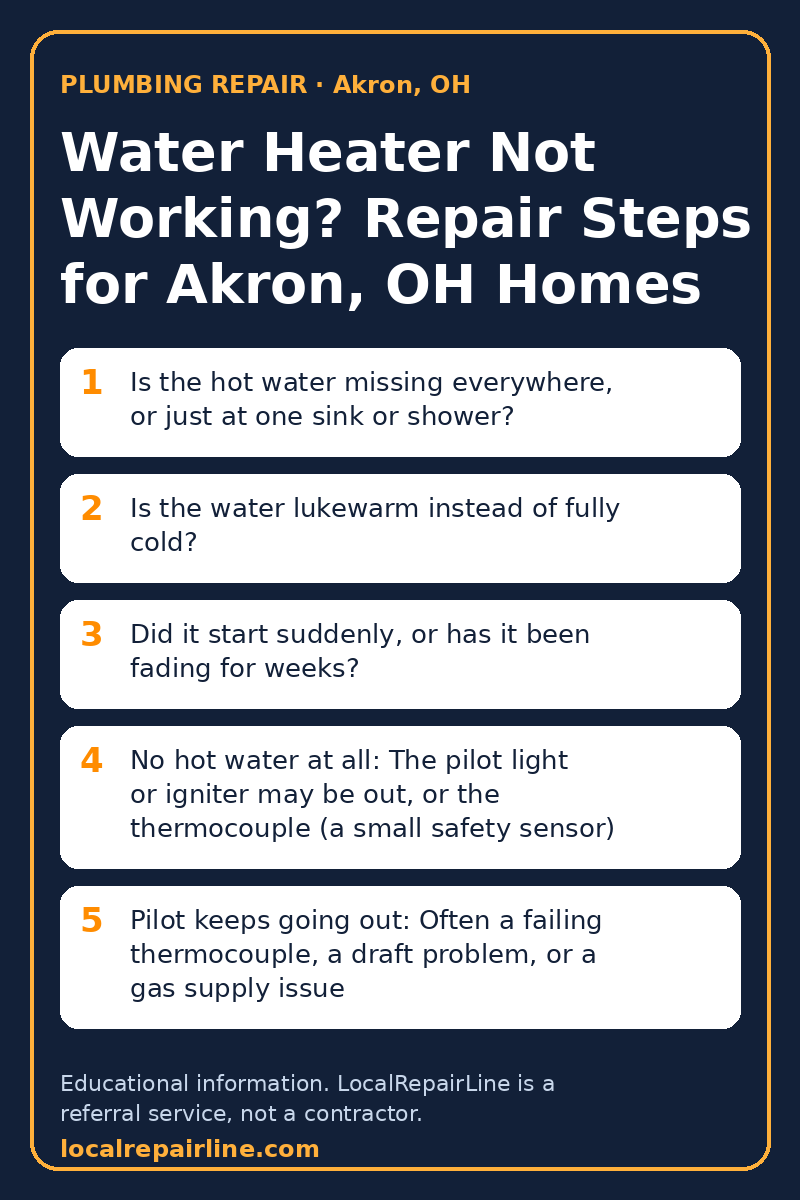
Gas vs. Electric: What Your Symptoms Are Telling You
Check the label on the side of the tank if you're not sure which type you have. A gas unit has a gas line and a vent pipe on top. An electric unit has heavy wiring going into the tank.
Gas water heater clues
- No hot water at all: The pilot light or igniter may be out, or the thermocouple (a small safety sensor) may be worn.
- Pilot keeps going out: Often a failing thermocouple, a draft problem, or a gas supply issue.
- Rumbling or popping: Usually sediment on the tank bottom, with the burner heating water trapped under it.
Electric water heater clues
- No hot water at all: Look at the breaker first, then the reset button on the thermostat.
- Hot water, but it runs out fast: A failed lower heating element is a common cause.
- Lukewarm water: Could be a bad element or a thermostat set too low.
Electric heaters usually have two elements and two thermostats. One can die while the other keeps working, so you get some hot water, just not much.
Water Heater Not Working Repair Akron OH: Safe Checks Before Calling Anyone
Stick to the simple checks below. They're the ones a homeowner can reasonably do. If anything feels unsafe, stop.
- Check the power or gas supply. For electric units, look at the breaker in your panel and reset it once if it tripped. For gas units, make sure the gas valve on the supply line is open.
- Check the thermostat setting. Make sure the dial hasn't been bumped down. A moderate setting is typical, and the label on the tank often has guidance.
- Check the pilot light or igniter (gas). Look through the viewing window if your unit has one. If the pilot is out, follow the relighting instructions printed on the tank exactly.
- Press the reset button (electric). Turn the breaker off first, remove the access cover, press the red reset button, and replace the cover before restoring power.
- Wait and test. Give the tank time to heat, then check a hot tap.
If you ever smell gas while checking the pilot, stop right there. Leave the house and call your gas utility or emergency services from outside. Don't flip switches or try the pilot again.
Also skip anything that involves opening up wiring, replacing elements, or touching gas fittings. That's where DIY gets risky fast.
Why Akron Winters Make Water Heater Problems Worse
Akron winters are cold and snowy, and lake-effect storms can dump snow with little warning. The ground gets cold, and so does the water coming into your house.
That means your heater has a bigger temperature jump to make. A tank that handled fall just fine may fall behind in January.
A sudden cold snap can also expose weak parts. A tired heating element, a flaky thermostat, or a dirty burner may limp along in mild months and then quit when demand goes up.
Winter changes how you use hot water, too. Longer showers, more laundry, and houseguests during the holidays all draw more from the tank.
That's why "my hot water runs out fast in winter" is often a mix of colder incoming water and a part that's already on its way out.
Akron's humid summers matter too. A heater in a damp basement or utility closet can pick up outside rust and corrosion over the years. Rust on the outside of the tank, especially near the bottom or around fittings, is worth taking seriously.
Repair or Replace: Avoiding the Costly Mistake
The worst outcome is paying for a repair on a tank that fails a few months later. A few things help you decide.
Tank age. Look for the serial number on the label, which usually encodes the manufacture date. How long a tank lasts depends a lot on water quality, how hard it works, and how well it's maintained, so check the manufacturer's paperwork for guidance. If yours is old or past what that paperwork suggests, a repair is a riskier bet.
Rust. Surface rust on pipes or fittings may be fixable. Rust at the tank's base, rusty streaks, or rust-colored hot water point toward a tank that's corroding.
Leaks. A leaking fitting or relief valve can be repaired. Water seeping from the tank body itself usually means replacement.
Repeat failures. If you've had a thermostat, then an element, then a pilot problem in a short stretch, the unit is telling you something.
Repair usually makes sense when:
- The tank is fairly young and clean.
- The problem is a single, clearly identified part.
- There's no rust or leaking from the tank body.
Replacement deserves a serious look when the tank is old, rusting, leaking, or breaking down repeatedly. Costs vary by house, depending on the unit type, venting, and how easy the heater is to reach. Ask for the repair and replacement options side by side so you can compare.
Warning Signs You Should Stop and Call a Plumber
If you've done the safe checks and the water is still cold, that's your cue. This is the point to talk to a local plumbing pro in Akron, OH through localrepairline.com instead of guessing. Further DIY adds risk, and a pro can diagnose the real cause.
These signs mean it's time to have a plumber take a look:
- Water pooling around the base of the tank
- A gas smell near the heater
- Popping, banging, or loud rumbling from the tank
- Rust-colored hot water
- Scorch marks, soot, or a burning smell around a gas unit
- A pilot that won't stay lit after one careful attempt
Gas heaters also carry a carbon monoxide risk if the vent is blocked or backdrafting. Make sure you have working CO detectors near sleeping areas. If one goes off, get everyone outside and call for help.
What to Expect When a Local Plumber Diagnoses Your Heater
A good visit starts with questions. When did it stop working? Was there anything unusual just before, like noises or a smell?
Then the plumber will usually inspect the unit, check the venting or wiring, and test the main parts. On a gas unit, that's often the thermocouple, burner, and gas valve. On an electric unit, it's the elements and thermostats.
It's reasonable to ask what the likely cause is and to have it explained in plain terms. Ask about the tank's age and condition, and what the repair would involve compared with replacement. Costs vary by house, so it's fair to ask what could change the final bill.
If the plumber recommends replacement, ask why. Age, rust, or a leaking tank body are solid reasons. A clear answer helps you feel good about the decision either way.
FAQ
Why is my water heater not heating water even though it has power or gas?
The supply being on doesn't mean every part is working. On electric units, a failed heating element or thermostat can leave the tank cold with the breaker on. On gas units, a worn thermocouple, dirty burner, or faulty gas valve can do the same, so a plumber should check it.
How do I know if my water heater needs repair or replacement?
Look at age, rust, leaks, and repeat failures. A younger tank with one failed part is usually a repair candidate. An older tank that's rusting, leaking from the body, or breaking down again and again is often better replaced.
How much does it cost to repair a water heater in Ohio?
Costs vary by house. The price depends on the part that failed, whether the unit is gas or electric, how easy it is to reach, and how much labor is involved. Ask for a clear written breakdown, and compare it against replacement if your tank is older.
Why does my hot water run out fast or turn lukewarm in winter?
Winter incoming water is much colder, so the heater has to work harder to reach the same temperature. A weak element, a thermostat set too low, or sediment in the tank can make the problem worse. If it keeps happening, a plumber can check the unit and help you sort out whether a part is wearing out.
Need a plumbing repair pro in Akron, OH?
Talk to an independent local contractor who serves your area.
📞 Call (833) 350-0420Plumbing repair in Akron, OHCall hours: 8am–8pm ET, 7 days