Water Heater Not Working? Repair Steps for Dayton, OH Homes
You step into the shower, wait, and the water never warms up. If you're searching water heater not working repair Dayton OH, you probably want two things: a fast answer and a clear idea of what to do next.
This guide walks through quick checks, safe fixes, and the point where guessing stops being smart. It also covers the repair-or-replace question, which is worth thinking through before you spend money.
Is It Really Your Water Heater? Quick Checks Before You Panic
Sometimes the heater is fine and something else is off. A few minutes of checking can save you a service call.
- Test other faucets. If only one tap runs cold, the problem may be that fixture, not the heater.
- Check the breaker or gas supply. For electric heaters, look at the panel for a tripped breaker. For gas, make sure the gas valve on the line is open.
- Look at the thermostat setting. Someone may have turned it down, or it may have drifted. Check your heater's label or manual for the recommended setting.
- Look around the tank. Check the floor for dampness, rust trails, or puddles.
- Think about recent events. A power flicker, a storm, or a house full of guests taking back-to-back showers can all explain a cold stretch.
If everything looks normal and you still have no hot water, move on to the symptoms below.
Need a plumbing repair pro in Dayton, OH?
Talk to an independent local contractor who serves your area.
📞 Call (833) 350-0420Plumbing repair in Dayton, OHCall hours: 8am–8pm ET, 7 daysYour call may first be answered by a short screening service that asks what the problem is and where you are. Stay on the line and you will be connected to an independent local pro.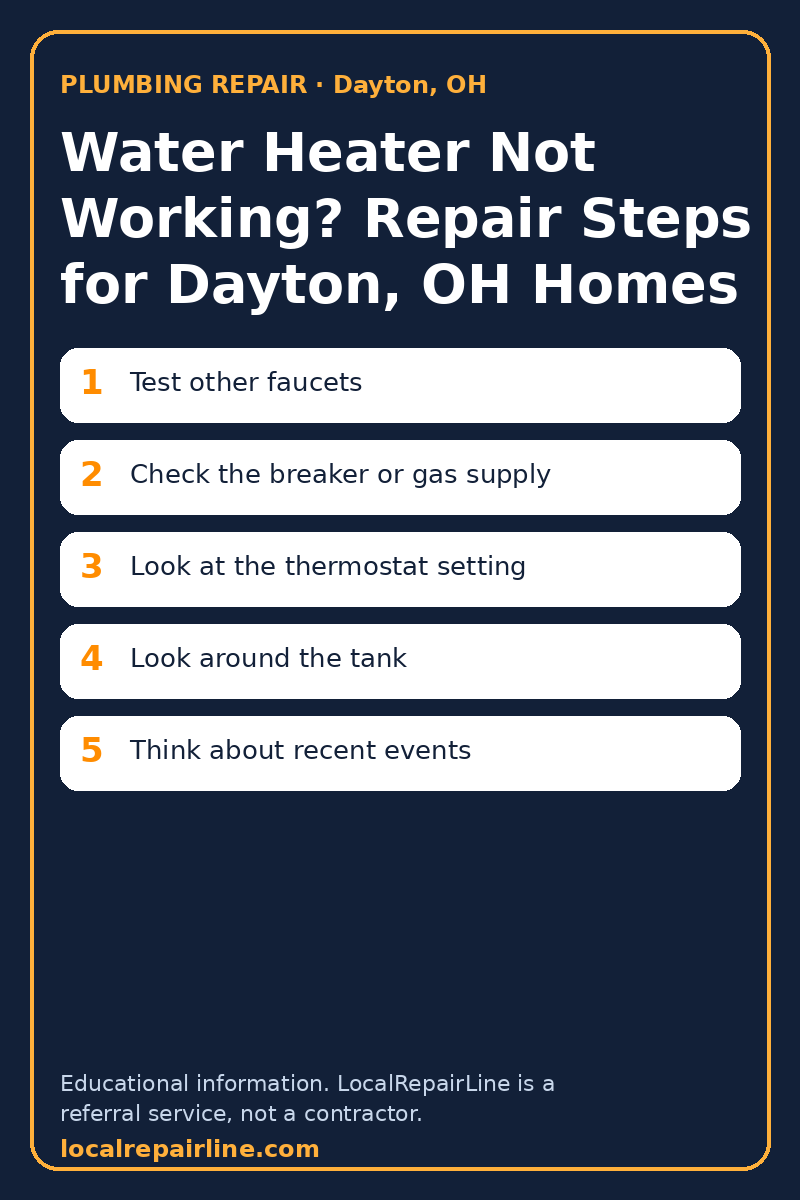
No Hot Water, Lukewarm Water, or Strange Noises: What Each Symptom Means
Your heater usually tells you what's wrong, if you know how to read it.
No hot water at all
On an electric unit, this often points to a tripped breaker, a tripped reset button, or a failed heating element or thermostat. On a gas unit, a pilot light that went out or a failed ignition part is a common cause.
Lukewarm water
One failed element in an electric heater can leave you with water that never gets really hot. On a gas heater, a thermostat issue or a buildup of sediment can do the same. A tank that's too small for your household can also feel lukewarm once the hot water runs out.
Running out fast
Sediment collects at the bottom of the tank over time. It takes up room that hot water should occupy and makes the burner or elements work harder. A failing dip tube, which sends cold water to the wrong part of the tank, can also cut your hot water short.
Popping, rumbling, or banging
Light popping or rumbling often means sediment. Loud banging deserves more attention, especially if it's new or getting worse. Water hammer in the pipes can also sound similar, so a pro can help sort out which one you have.
Safe Fixes You Can Try Yourself (Gas vs. Electric)
Stick to simple resets and checks. If a step isn't clearly spelled out on the label of your heater, stop there.
Electric heaters
- Turn the breaker off, then back on.
- Shut the power off at the breaker before opening any access panel.
- Press the red reset button on the upper thermostat once, if your model has one.
- Restore power and give the tank time to heat.
If the breaker trips again or the reset button keeps popping, don't keep resetting it. Something is wrong inside, and repeated resets can make it worse.
Gas heaters
- Check that the gas valve is open and the thermostat dial is set to a heating temperature.
- If the pilot is out, follow the lighting instructions printed on the heater's label, step by step.
- Wait the full time the label lists before assuming it worked.
If the pilot won't stay lit, or you smell gas at any point, stop. That's a job for a plumber, not a second attempt.
A note on flushing the tank
Flushing sediment can help an older heater, but the water inside is hot enough to scald. Drain valves can also clog or leak once opened. If you aren't comfortable with it, leave it to a plumber.
Warning Signs It's Time to Stop and Call a Plumber
Some problems are not DIY problems. This is the point to talk to a local plumbing pro in Dayton, OH instead of guessing, and you can start at localrepairline.com.
- Water pooling around the tank. A leaking tank usually can't be patched.
- A gas smell. Leave the house, then call from outside. Don't flip switches or use anything that could spark.
- Scorch marks or melted wiring. Shut off power at the breaker if you can do so safely.
- A breaker that keeps tripping. That's the system telling you it's overloaded or faulty.
- Loud banging or booming. It may be sediment, but it may also be pressure trouble.
- No hot water after you've reset it and checked the pilot or breaker. You've done the reasonable DIY steps.
If you can reach the shutoff safely, closing the cold water supply to the tank and turning off the gas or power can limit damage while you wait. If you can't reach it safely, don't try.
Repair or Replace? How Age, Tank Condition, and Repair Cost Add Up
This is a decision worth thinking through. Fixing an older tank can make sense in some cases, but you'll want to weigh it against the tank's age and condition.
Start with age. Tank heaters wear out over time, and how long yours lasts depends on water quality and upkeep. Check the label for a manufacture date. If you can't read it, a plumber can usually decode the serial number.
Then look at tank condition:
- A leaking tank means replacement. Parts can't fix a hole in the tank.
- Heavy rust on the outside or rusty hot water often means the inside is wearing out.
- A tank full of sediment may keep struggling even after a repair.
Next, weigh repair cost. Costs vary by house, but the general pattern holds:
- Thermostats and heating elements are parts a plumber can often swap without replacing the whole unit.
- Gas control valves, burner assemblies, and tank-related issues take more work to diagnose and fix.
- Replacement means a new unit with a fresh start on age and wear.
A reasonable rule: if the heater is young and the part is simple, repair. If it's near the end of its usual life and the repair is a major one, replacement may be worth a closer look. Ask the plumber to price both so you can compare.
Why Winter in Dayton Makes Water Heater Problems Worse
Dayton winters are cold and snowy, and the water coming into your house is colder too. Your heater has to raise that water by a bigger jump, so it runs longer and harder.
That extra work exposes weak spots. A tired element, a flaky thermostat, or a thick layer of sediment may limp along in mild weather and quit in January. That's why a heater can seem to fail "out of nowhere" during a cold snap.
Summers are hot and humid, which brings a different problem. A slow leak or a failing heater in a basement or utility closet can go unnoticed for weeks. Take a quick look around the tank whenever you're down there.
Spring and fall bring big temperature swings across the Miami Valley, which makes them a good time for a checkup. Looking over the heater before heavy winter demand starts gives you more time to plan a repair or replacement.
Water Heater Not Working Repair Dayton OH: What to Expect From a Local Plumber
Knowing the process makes the visit less stressful.
A plumber will usually start by asking about your symptoms and how old the heater is. Then they'll inspect the unit, check power or gas, and test key parts like thermostats, elements, or the pilot assembly. They'll also look for leaks, rust, and venting concerns on gas models.
After that, you should get a clear explanation of what failed and your options. Good questions to ask:
- What exactly is failing, and what caused it?
- What does repair cost compared with replacement?
- How long should the repair last given the heater's age?
- Does anything else need attention, like venting or shutoff valves?
Costs vary by house, depending on the heater type, how easy the unit is to reach, and what's wrong. It's reasonable to ask for a clear answer and to ask whether the scope and parts can be put in writing.
FAQ
Why is my water heater not heating water?
On an electric heater, the usual suspects are a tripped breaker, a tripped reset button, or a failed element or thermostat. On a gas heater, a pilot light that went out or a failed ignition part is common. Start with the quick checks above, and if simple resets don't bring the heat back, it's time to call a plumber.
Need a plumbing repair pro in Dayton, OH?
Talk to an independent local contractor who serves your area.
📞 Call (833) 350-0420Plumbing repair in Dayton, OHCall hours: 8am–8pm ET, 7 days