Water Heater Not Working? Toledo, OH Repair Guide
Cold shower, lukewarm dishes, and a tank that suddenly seems to be on strike. If you're searching for water heater not working repair Toledo OH, you probably want three things: what's wrong, what you can safely check yourself, and whether it's worth fixing.
This guide covers all three. It also explains why winter around Lake Erie is when tired heaters tend to give out.
Signs Your Water Heater Has Stopped Working (and What Each One Means)
Different symptoms point to different problems. Here's a rough map.
- No hot water at all: On an electric unit, this often means a tripped breaker, a tripped reset button, or a failed heating element. On gas, think pilot light, thermocouple, or gas supply.
- Lukewarm water: The thermostat may be set too low, or one of two electric elements may have failed. A tank packed with sediment can also cause this.
- Hot water runs out fast: A broken dip tube, a failed lower element, or heavy sediment can shrink the usable hot water.
- Rumbling or popping noises: Sediment at the bottom of the tank is trapping steam bubbles under it. That makes the heater work harder and wears it out.
- Rusty or discolored hot water: The inside of the tank may be corroding. That's a sign of age.
- Water around the base: A leak could be a loose fitting or a failed tank. Either way, it's worth having a plumber look at it.
One clue worth noting: if only the hot side is acting up, the heater is the likely culprit. If hot and cold are both off, look at your main supply or the water coming into the house.
Need a plumbing repair pro in Toledo, OH?
Talk to an independent local contractor who serves your area.
📞 Call (833) 350-0420Plumbing repair in Toledo, OHCall hours: 8am–8pm ET, 7 daysYour call may first be answered by a short screening service that asks what the problem is and where you are. Stay on the line and you will be connected to an independent local pro.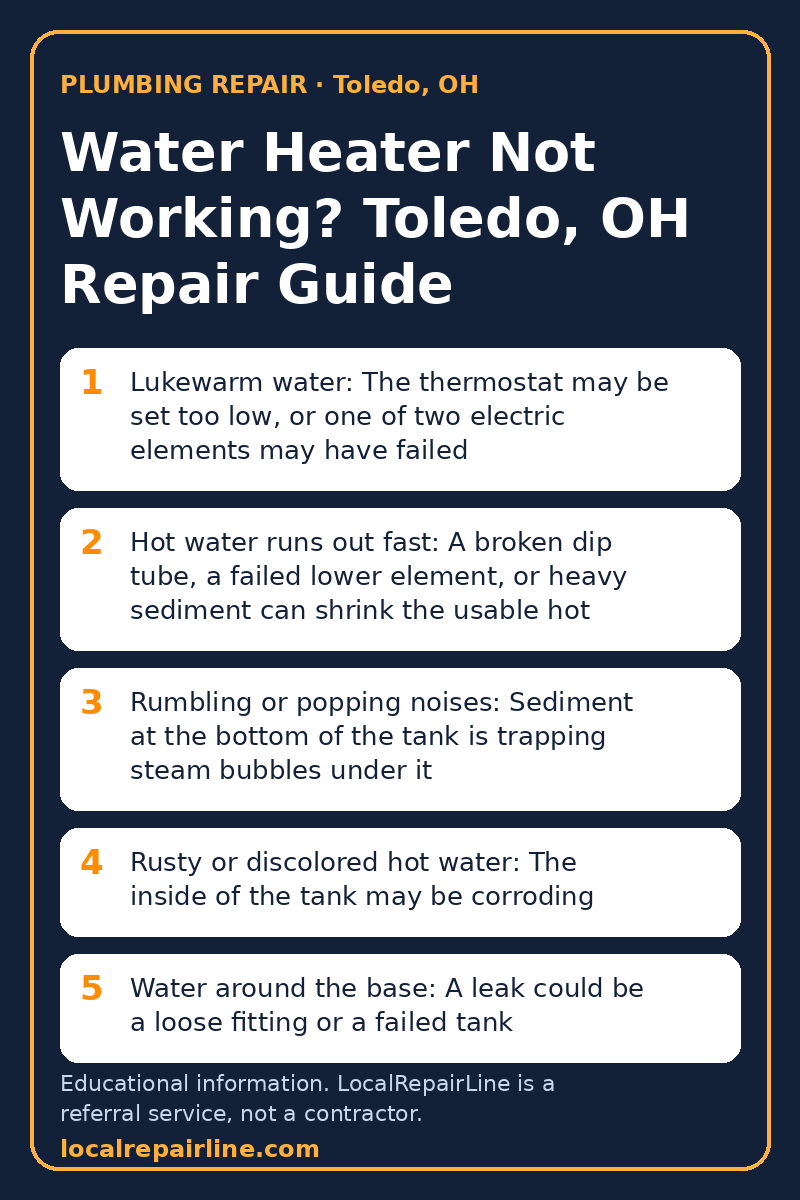
Safety First: When to Shut It Off Before Troubleshooting
Water heaters combine electricity or gas with hot water under pressure. Most checks are simple, but some situations mean stop and step back.
Shut the heater off and don't keep poking at it if you notice any of these:
- A gas smell, or a rotten-egg odor near the heater. Leave the house, then call your gas utility from outside.
- Water pooling around the tank or dripping from the tank itself.
- Scorched, melted, or burned-looking wiring or panel covers.
- Water discharging from the temperature and pressure (T&P) relief valve or its pipe.
- Loud banging, or any sign the tank is bulging.
- A breaker that trips again right after you reset it.
If water is leaking, turn off the cold water supply valve on top of the heater. Then turn off the power at the breaker, or set a gas unit's control to "off."
Quick Checks for Electric and Gas Water Heaters
Do these in order. They take a few minutes and cover the most common simple causes.
Electric water heaters
- Check the breaker. Find the heater's breaker in your panel. If it's tripped, flip it fully off, then back on.
- Look at other circuits. If other things lost power too, the problem may be bigger than the heater.
- Check the thermostat setting. Many households keep it around the middle range. Make sure no one turned it down.
- Try the reset button. Turn the breaker off first. Then remove the access panel, press the red reset button on the upper thermostat, replace the cover, and restore power. Only do this if you're comfortable around the panel.
- Wait and test. Give the tank some time to reheat, then check a hot tap.
If the reset button trips again, don't keep pressing it. That usually signals a failed part or a wiring problem.
Gas water heaters
- Check that the gas control is on. Make sure the knob is set to "on" or your preferred temperature, not "pilot" or "off."
- Look for the pilot flame. Use the small window near the bottom. If the flame is out, follow the relighting instructions printed on the heater's label.
- Confirm the gas supply. Check that the gas shutoff valve is open and that your stove or furnace is also working.
- Check the thermostat setting. Make sure it wasn't bumped lower.
- Watch the flame. A steady blue flame is normal. Yellow, orange, or flickering flames, or soot, mean you should stop and call for help.
If the pilot won't stay lit after one or two careful tries, the thermocouple or gas valve may be failing. That's not a guess-and-check job.
When to call a Toledo plumber instead of guessing
Say you've done the breaker, reset button, thermostat, and pilot checks and still have no hot water. Or you've seen any warning sign: pooling water, a gas smell, rumbling or popping, or rusty water. That's the point to get a local plumbing pro in Toledo, OH through localrepairline.com to look at it instead of experimenting further.
Gas, electricity, and pressurized hot water all make a wrong guess costly. A plumber can find the actual failure instead of replacing parts at random.
Why Toledo Winters Make Water Heater Problems Worse
Toledo sits on the western shore of Lake Erie, with cold, snowy winters shaped by the lake. In those months, the water coming into your house is very cold. Your heater has to raise it much further than it does in summer.
That extra work shows up weak spots. A worn heating element, a tired burner, or a tank full of sediment may get by in warm months, then fall behind when every shower demands more heat. A failure that feels sudden in January may have been building for a while.
Summer brings a different risk. Warm, humid weather brings thunderstorms, power outages, and surges. Those can trip breakers or damage electric heater components. If your heater quit after a storm, check the breaker first, and mention the storm to your plumber.
Hot water while you wait on a repair
A heater outage in a cold snap is miserable. A few safe stopgaps:
- Heat water in pots on the stove for washing up.
- Keep showers short and use a quick wash-up instead.
- Don't use space heaters, kitchen ovens, or anything unsafe to warm the room. Use blankets and layers.
- Leave the heater off if it's leaking or smells like gas.
Water Heater Not Working Repair Toledo OH: Repair or Replace?
This is where people either save money or regret spending it. A simple rule: the older the tank and the more serious the failure, the less sense a repair makes.
Age matters most
Tank-style heaters wear out over time, and how quickly depends on water quality, maintenance, and use. If yours is getting old, or you can't tell how old it is, a repair may only buy a short reprieve. If it's fairly young, repair usually makes more sense.
You can often find the age on the manufacturer's label. The serial number commonly encodes the build date, and the manufacturer can tell you how to read it.
Type of failure matters too
Typically worth repairing:
- A tripped or failed thermostat
- A bad heating element
- A faulty thermocouple or pilot assembly
- A worn T&P valve (a plumber should handle this)
Usually points toward replacement:
- A leaking tank (the tank itself can't be patched)
- Heavy corrosion or rusty water coming from inside the tank
- Repeated repairs in a short time
- A repair cost that's a large share of a new unit's cost
A quick decision framework
- Young tank, simple part failure: repair.
- Mid-life tank, one moderate repair: weigh it. Ask the plumber how the repair cost compares with replacement.
- Old tank, big repair or any tank leak: replace.
Costs vary by house. Access, venting, gas lines, and electrical capacity can all affect the price, so ask the plumber to explain what's driving it before you decide.
What a Plumber Will Do During a Water Heater Repair Visit
Knowing what to expect makes the visit less stressful. A typical visit goes like this:
- Questions first. They'll ask about symptoms, when it started, and what you've already tried.
- Visual inspection. They'll look for leaks, corrosion, scorching, and venting problems.
- Testing. For electric units, that means checking power, thermostats, and elements. For gas, it means checking the pilot, thermocouple, gas valve, burner, and venting.
- Safety checks. Expect a look at the T&P valve and the gas or electrical connections.
- A clear recommendation. You should hear what failed, what repair would cost, and how that compares with replacement.
Ask about the heater's age and whether other parts are likely to fail soon. A good plumber will explain options plainly and won't rush you into a decision.
FAQ
Why is my water heater not heating water?
On electric heaters, the usual causes are a tripped breaker, a tripped reset button, a bad thermostat, or a failed heating element. On gas models, look at the pilot light, the thermocouple, and the gas supply. Work through the quick checks above first, and call a plumber if they don't bring hot water back or you notice any warning sign.
Need a plumbing repair pro in Toledo, OH?
Talk to an independent local contractor who serves your area.
📞 Call (833) 350-0420Plumbing repair in Toledo, OHCall hours: 8am–8pm ET, 7 days