Burst Pipe Plumber in Columbus, OH: What to Do First
Searching for a burst pipe plumber Columbus OH homeowners can call? Before you dial, spend the first few minutes stopping the water and keeping everyone safe. Shutting off the water first keeps the damage from spreading while you sort out your next steps.
This guide covers the shutoff steps, the safety checks, why pipes burst in central Ohio, and what to ask before a plumber starts work.
First 15 Minutes: How to Stop a Burst Pipe in Your Columbus Home
Stay calm and move in order. Water keeps flowing until you stop it, so the shutoff comes first.
- Shut off the main water valve. It's usually where the water line enters the house, often in a basement, utility room, or near the water heater. Turn it fully closed.
- Open a faucet or two on the bottom floor. This helps drain the pipes and relieve pressure.
- Turn off your water heater. If the tank can't refill, you don't want it running empty. Follow the steps for your gas or electric unit.
- Move belongings out of the wet area. Lift rugs, electronics, and boxes off the floor if it's safe.
- Take photos and a short video before you start cleaning up.
- Start removing standing water only if the power situation is safe (see the next section).
If you can't find the main valve, or it won't turn, find the street-side shutoff or the utility's access point. Don't force a stuck valve with tools that could snap it.
When it's time to call a local plumber
Once the water is off, you've done the part you can safely handle. Call a qualified local plumbing pro in Columbus, OH, such as the LocalRepairLine team, if any of these are true:
- There's still standing water.
- A ceiling or wall is wet, stained, or bulging.
- You have no running water and can't tell why.
- You aren't sure where the break is.
A plumber can locate the break, repair it, and check the rest of your system for damage you can't see. Hidden breaks are hard to pin down by guesswork, so having someone trace them is usually the more reliable route.
Need a plumbing repair pro in Columbus, OH?
Talk to an independent local contractor who serves your area.
📞 Call (833) 350-0420Plumbing repair in Columbus, OHCall hours: 8am–8pm ET, 7 daysYour call may first be answered by a short screening service that asks what the problem is and where you are. Stay on the line and you will be connected to an independent local pro.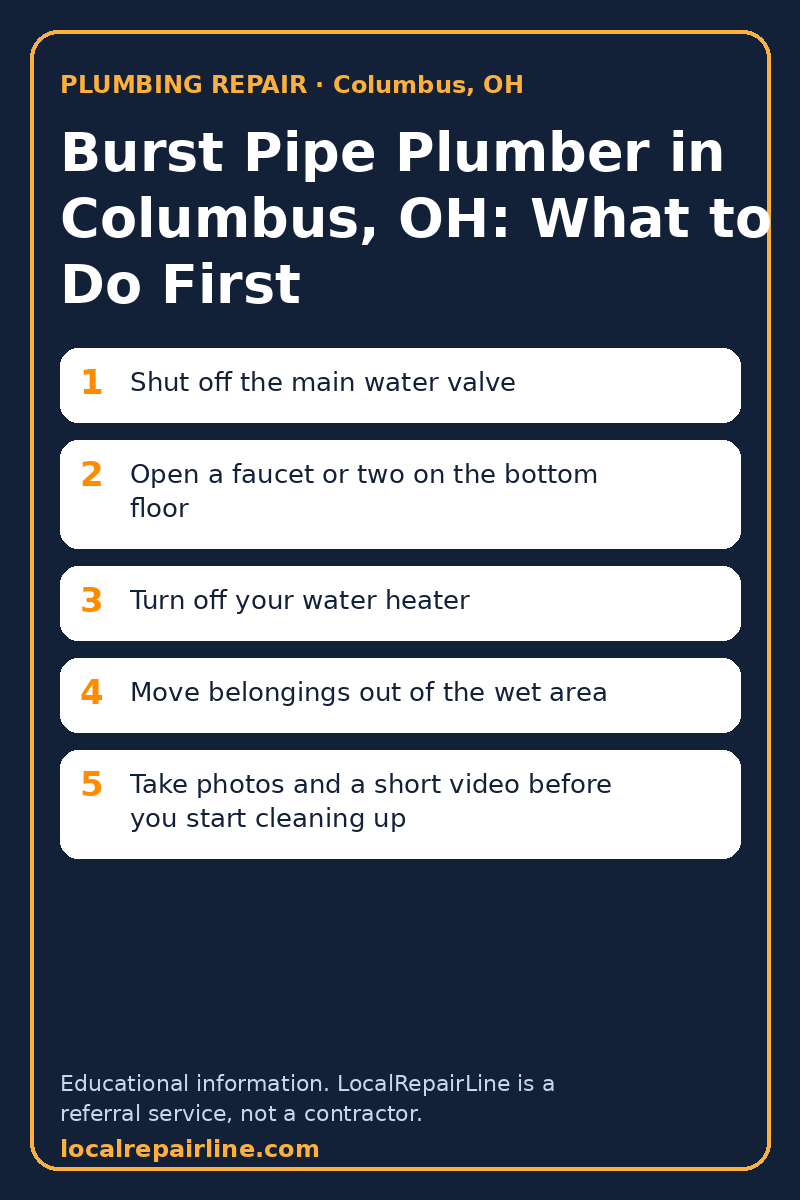
Safety Check: Water, Electricity, and When to Leave the House
Water and electricity are a bad mix, and a burst pipe can put them in the same room.
- Don't step into standing water if it's near outlets, appliances, or a breaker panel.
- Don't touch electrical equipment that's wet or sitting in water.
- If it's safe to reach the panel, a dry hand and a dry floor matter. If you have any doubt, leave it and call an electrician or your utility.
- Stay out from under a bulging ceiling. Water can pool above and drop all at once, and a wet ceiling can come down.
Leave the house and call for help if water is reaching the electrical panel, you smell gas, or ceilings or floors look like they're sagging. Your safety matters more than your stuff.
Why Pipes Burst in Central Ohio (Cold Snaps, Thaws, and Aging Plumbing)
Columbus has four distinct seasons, and winters bring regular hard frosts and the occasional sharp arctic cold snap. When water in a pipe turns to ice, it expands and builds pressure. The pipe often fails near the ice, not right at it.
Central Ohio winters also swing between cold and mild spells. Pipes can cool, warm, and cool again in a single season. That repeated stress can weaken pipes, joints, and fittings, especially in older plumbing.
Pipes in unheated or poorly insulated areas are the usual suspects:
- Crawl spaces and basements along exterior walls
- Attics and garages
- Pipes in outside walls
- Outdoor spigots and their supply lines
Aging pipe adds to the risk. Old, corroded, or worn plumbing may hold up in mild weather and then give out when the stress hits.
Signs of a Hidden Burst Pipe Behind Walls, Ceilings, or Under Floors
Not every burst announces itself with a gush. Some pipes crack while frozen and only leak once things warm up. In Columbus, spring thaws and heavy rain are often when winter damage finally shows itself.
Watch for these signs:
- Water stains or discolored patches on ceilings or walls
- Paint that bubbles, peels, or feels damp
- A musty smell with no obvious source
- Warped floors or soft spots underfoot
- Sudden drops in water pressure
- The sound of running water when everything is off
- A water bill that jumps with no change in how you use water
To check for a hidden leak, make sure nothing is using water, then look at your water meter. If it keeps moving, water is going somewhere. That's a good moment to call a plumber, who can use tools to trace the break without tearing open more wall than necessary.
Repair or Replace? How Plumbers Decide and What Affects the Cost
A single split in a healthy pipe may only need a section replaced. But if the pipe around the break is old, corroded, or brittle, patching one spot can just move the failure down the line.
Patching one section of aging pipe leaves the rest as it was, so it helps to know the condition of what's left. Ask the plumber what the rest of the pipe looks like, and whether other runs share the same age and material.
Costs vary by house. These factors drive the price:
- Where the break is. An exposed basement pipe is easier to reach than one inside a finished wall or under a slab.
- How much pipe needs replacing. One section costs less than a whole run.
- Pipe material and age. Some materials are simpler to work with than others.
- How much opening and patching is needed. Cutting into drywall means repair work afterward.
- Water damage. Drying, repair, and rebuilding can cost more than the plumbing fix.
- Timing and access. Hard-to-reach spots and urgent calls can affect the price.
Ask for a clear explanation of the options, not just one number. A spot repair may be the right call, and so may a larger replacement. The point is making that choice with the facts.
Documenting Damage for Your Insurance Claim
Do this before you clean up. Good records make a claim smoother.
- Take wide photos of each affected room, then close-ups of the damage.
- Record a slow video walking through the home.
- Photograph the broken pipe before it's removed, if possible.
- Keep damaged items until your insurer says you can discard them.
- Write down when you noticed the problem and what you did to stop it.
- Save every receipt, including plumbing, drying, and temporary repairs.
- Ask the plumber for a written description of the cause and the repair.
Contact your insurance company after the water is off. What your policy covers is spelled out in its terms, and those differ from one policy to the next. Read your policy or ask your agent what applies to you.
What to Ask a Burst Pipe Plumber Columbus OH Before Work Starts
A calm conversation before work begins saves headaches later. Here are good questions to ask:
- Can you show proof of your qualifications and coverage for this kind of work?
- Where exactly is the break, and how did you find it?
- Is this a spot repair or a larger replacement, and why?
- What will need to be opened up, and who handles the patching afterward?
- Will you check the rest of the system for similar weak spots?
- Can I get the scope of work and any warranty in writing?
Clear answers are a good sign. If a plumber can't explain the plan in plain words, keep asking until you understand it.
FAQ
How fast do I need to shut off the water after a pipe bursts?
As soon as you notice it. Water keeps spreading into floors, walls, and ceilings until the flow stops, so the main valve comes before photos, cleanup, or phone calls.
Should I call a plumber or my insurance company first?
Shut off the water first, then call a plumber to stop the damage at its source. Contact your insurer after that, and document everything before you clean up. Your plumber and your insurer each handle a different part of the problem.
Can I fix a burst pipe myself?
Some homeowners use a temporary clamp or wrap to slow a leak until help arrives. A lasting repair is different, because the pipe around the break may be weak or damaged in ways you can't see. A plumber can check the whole run and fix it properly.
How much does burst pipe repair cost?
Costs vary by house. The location of the break, how much pipe needs replacing, the pipe material, and how much wall or floor has to be opened all play a part. Water damage cleanup and rebuilding can add to the total, so ask for the plumbing work and the repair work to be explained separately.
Need a plumbing repair pro in Columbus, OH?
Talk to an independent local contractor who serves your area.
📞 Call (833) 350-0420Plumbing repair in Columbus, OHCall hours: 8am–8pm ET, 7 days