Does Insurance Cover Frozen Pipes in Cincinnati, OH? A Guide
Search for "does insurance cover frozen pipes Cincinnati OH" and most answers sound like they were written for the whole country. Cincinnati's winters have their own habits. Mild stretches get interrupted by sudden hard cold, and pipes that were fine on Tuesday can split by Friday.
This guide covers what a typical homeowners policy pays for, what gets claims denied, and what to do first. Your own policy wording is what counts, so treat this as a map and not a verdict.
Short Answer: Does Insurance Cover Frozen Pipes Cincinnati OH Homes Deal With?
It can, depending on your policy. Some homeowners policies cover sudden and accidental water damage from a pipe that bursts because of cold, so check whether yours does. Look for the words "sudden" and "accidental."
Some policies draw a line between a sudden break and a slow leak that went on for months, so check how yours words it. It also tends to depend on whether you took reasonable steps to prevent the problem.
Policies differ by company, endorsement, and deductible. Read your declarations page and the water damage section, or ask your agent to explain them in plain terms.
Need a plumbing repair pro in Cincinnati, OH?
Talk to an independent local contractor who serves your area.
📞 Call (833) 350-0420Plumbing repair in Cincinnati, OHCall hours: 8am–8pm ET, 7 daysYour call may first be answered by a short screening service that asks what the problem is and where you are. Stay on the line and you will be connected to an independent local pro.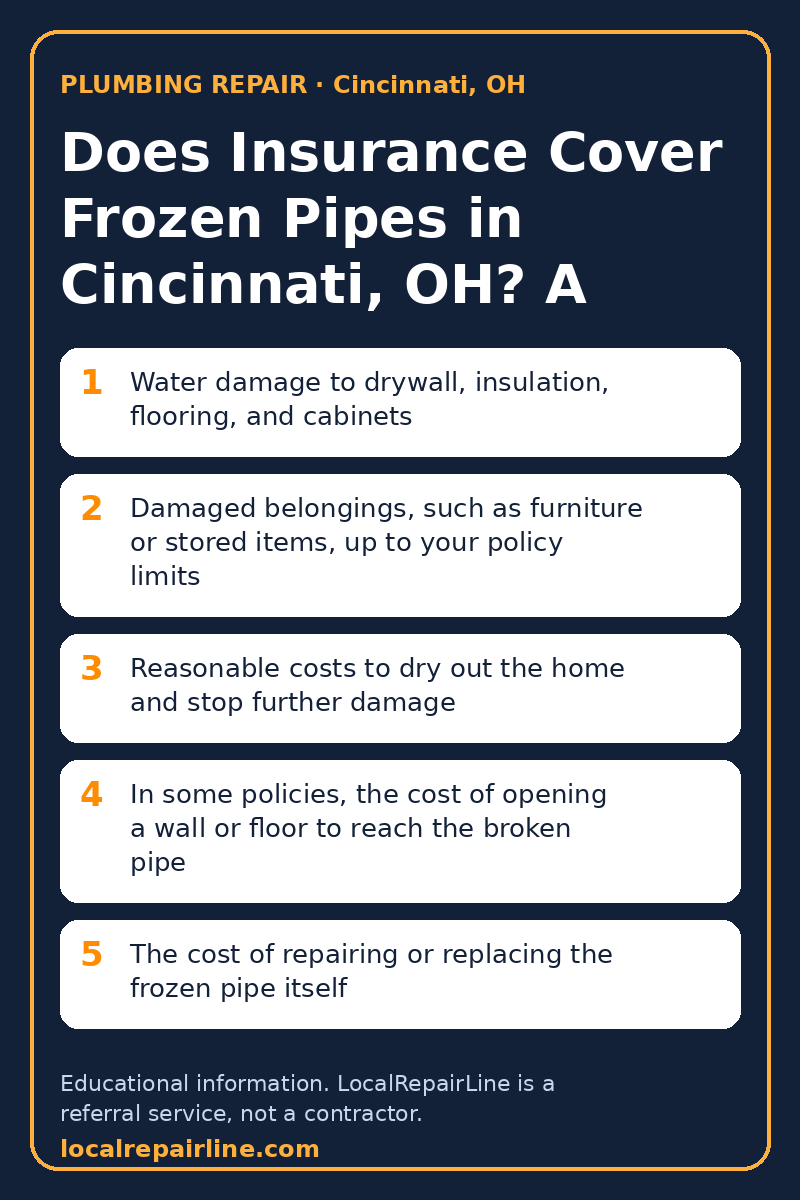
What's Usually Covered vs. Excluded After a Pipe Bursts
Think of a burst pipe as two separate problems: the damage the water caused, and the pipe itself. Your policy may treat them differently.
Commonly covered, depending on your policy:
- Water damage to drywall, insulation, flooring, and cabinets
- Damaged belongings, such as furniture or stored items, up to your policy limits
- Reasonable costs to dry out the home and stop further damage
- In some policies, the cost of opening a wall or floor to reach the broken pipe
Commonly excluded or limited:
- The cost of repairing or replacing the frozen pipe itself
- Damage from slow, ongoing leaks or long-term seepage
- Mold, or limits on mold coverage after water damage
- Damage tied to neglect, such as an unheated house with the water left on
That second list is why wording matters. Ask your insurer directly whether tear-out access and the pipe repair are included.
Why Claims Get Denied: Heat, Vacancy, and "Reasonable Care"
Your insurer may ask one basic question: did you act like someone who wanted to avoid this? Policy wording often calls it reasonable care, and you may need to show it.
Heat left off
Check whether your policy requires you to keep the home heated, or to shut off and drain the water system if you won't. A house with the thermostat turned way down or the furnace out can raise questions.
If your furnace failed during a cold snap, document that. A repair invoice or a call log can show the failure was out of your hands.
Vacant or seasonal homes
An empty house is a bigger risk for frozen pipes, and some policies address vacancy directly. Check whether your policy limits or excludes frozen pipe damage if the home sits unoccupied past a set period. Also check how it defines vacant versus unoccupied.
If you're away for weeks, ask your insurer what your policy requires. Shutting off the main and draining the lines is a common requirement.
Ignored warning signs
Pipes that had already frozen once, a known cold spot, or an open crawlspace vent all matter. If the problem was visible and you did nothing, the loss may be treated as neglect.
What to Do in the First Hour: Water Shutoff, Photos, and Calls
The order you do things in affects both the damage and the claim. Prompt action limits the loss, and evidence of what happened makes a claim easier to support.
- Shut off the main water valve. Know where it's before you need it. If water is near outlets or the panel, stay clear and don't touch electrical equipment.
- Take photos and video of the break, the standing water, and damaged items before you move anything.
- Call a local plumbing pro to stop the leak, find the break, and repair or isolate the line.
- Call your insurer or agent once the leak is under control, and check your policy for any reporting timeline. Ask what they need from you.
- Start drying out. Move belongings, remove standing water if safe, and run fans. Keep damaged materials until you've confirmed with your insurer that you can toss them.
Step three helps you avoid guessing about what failed. A plumber can shut down the line, locate the actual break, and write up what happened. A written note of what failed can help you explain the loss to your insurer, and it's hard to reconstruct later. If you're in Cincinnati and the leak is ongoing, a local plumber, such as those you can find through https://localrepairline.com, can handle the repair so you aren't relying on a temporary patch.
Keep receipts for everything you spend on emergency steps. Ask your insurer whether reasonable mitigation costs can be included in a claim.
Should You File a Claim or Pay for the Repair Yourself?
Not every frozen pipe is worth a claim. It's a quick math problem, though not always an obvious one.
Start with your deductible. If the total repair and cleanup would cost less than that amount, a claim likely pays you nothing. It could still go on your claims history.
Then look at what actually broke. A split pipe in an open basement ceiling might be a modest repair. A split pipe inside a finished wall, with soaked drywall, flooring, and insulation, is a different scale.
Things to weigh:
- Total damage vs. deductible: Get the plumber's written repair scope and a written drying or restoration plan before deciding.
- Premium impact: Claims can affect your premium or renewal, depending on the company and policy. Ask your agent in general terms before filing.
- Hidden damage: Water behind walls can run higher than it looks. Moisture can also lead to mold later.
- Costs vary by house: Access, materials, and finishes change everything, so there's no reliable rule of thumb.
If you're unsure, you can usually ask your agent questions about coverage without filing a claim. Just be honest if you've already had damage, and check your policy for its claim reporting rules.
Cincinnati Homes Most at Risk: Exterior Walls, Basements, and Crawlspaces
Cincinnati has four distinct seasons, and winter can bring snow, ice, and sudden Arctic air. In the Ohio Valley, the weather often swings between mild days and hard cold. That swing is the problem.
After a mild stretch, people stop thinking about exposed plumbing. Then a hard cold snap arrives and pipes go from fine to frozen quickly.
Spots that tend to fail first in older homes:
- Supply lines in exterior walls, especially where insulation is thin or missing
- Unheated basements, where pipes run along cold rim joists or near drafty windows
- Crawlspaces, especially with open vents or gaps in the skirting
- Pipes near hose bibs, garages, or porches, where cold air sneaks in
- Kitchen and bath lines on outside walls, where cabinets trap cold air against the pipe
Prevention steps worth taking
Showing you took reasonable care starts well before a cold snap. A few simple habits help:
- Keep the heat on, even in rooms you rarely use
- Open cabinet doors on outside walls during hard cold
- Seal gaps and close crawlspace vents
- Insulate exposed pipes in basements and garages
- Let a faucet drip during the worst of a cold snap
FAQ
Does homeowners insurance cover a burst pipe from freezing?
Often it covers the sudden water damage that results, such as ruined drywall, flooring, and belongings. The pipe repair itself may be excluded or limited. Check your policy's water damage section for the exact wording.
Will my claim be denied if I was away when the pipe froze?
Not automatically, but vacancy and unoccupied-home rules can limit coverage. Some policies expect you to shut off and drain the water system if you'll be gone for a stretch. Ask your agent how your policy defines an unoccupied home before you travel.
Should I call my insurer or a plumber first?
Shut off the main water valve first, then call a plumber to stop the leak and find the break. Contact your insurer or agent soon after and ask what they need from you. Take photos before you move anything.
Is it worth filing a claim for a small frozen pipe repair?
It depends on your deductible and the total cost of repair and cleanup. If the total is close to or below the deductible, a claim may pay little or nothing and could still show up on your history. Get written repair and drying plans first, then ask your agent general questions before deciding.
Need a plumbing repair pro in Cincinnati, OH?
Talk to an independent local contractor who serves your area.
📞 Call (833) 350-0420Plumbing repair in Cincinnati, OHCall hours: 8am–8pm ET, 7 days