Does Insurance Cover Frozen Pipes in Fort Wayne, IN? A Guide
You typed "does insurance cover frozen pipes Fort Wayne IN" into a search bar, so you're probably either looking at a wet ceiling or watching the forecast. Either way, the answer depends on your policy wording and on what caused the freeze.
This guide walks through what a standard homeowners policy tends to pay for, what gets claims denied, and what to do first so you don't hurt your own claim. Your policy wording is what counts, so treat this as a map and not a ruling.
Does Insurance Cover Frozen Pipes Fort Wayne IN Homeowners Have? The Short Answer
Start by finding the part of your policy that deals with sudden and accidental water damage. A pipe that cracks from ice and bursts may fit that description, but your policy's wording decides. Read closely whether your policy treats the damage the water causes differently from the pipe itself.
What's covered gets narrower from there. The pipe itself, the thawing work and anything tied to neglect are where policies get picky.
Fort Wayne makes this a real question. Winters are cold and snowy, and an Arctic cold snap can push temperatures well below zero. The heating season runs from fall well into spring, so the risk window is long.
Need a plumbing repair pro in Fort Wayne, IN?
Talk to an independent local contractor who serves your area.
📞 Call (833) 350-0420Plumbing repair in Fort Wayne, INCall hours: 8am–8pm ET, 7 daysYour call may first be answered by a short screening service that asks what the problem is and where you are. Stay on the line and you will be connected to an independent local pro.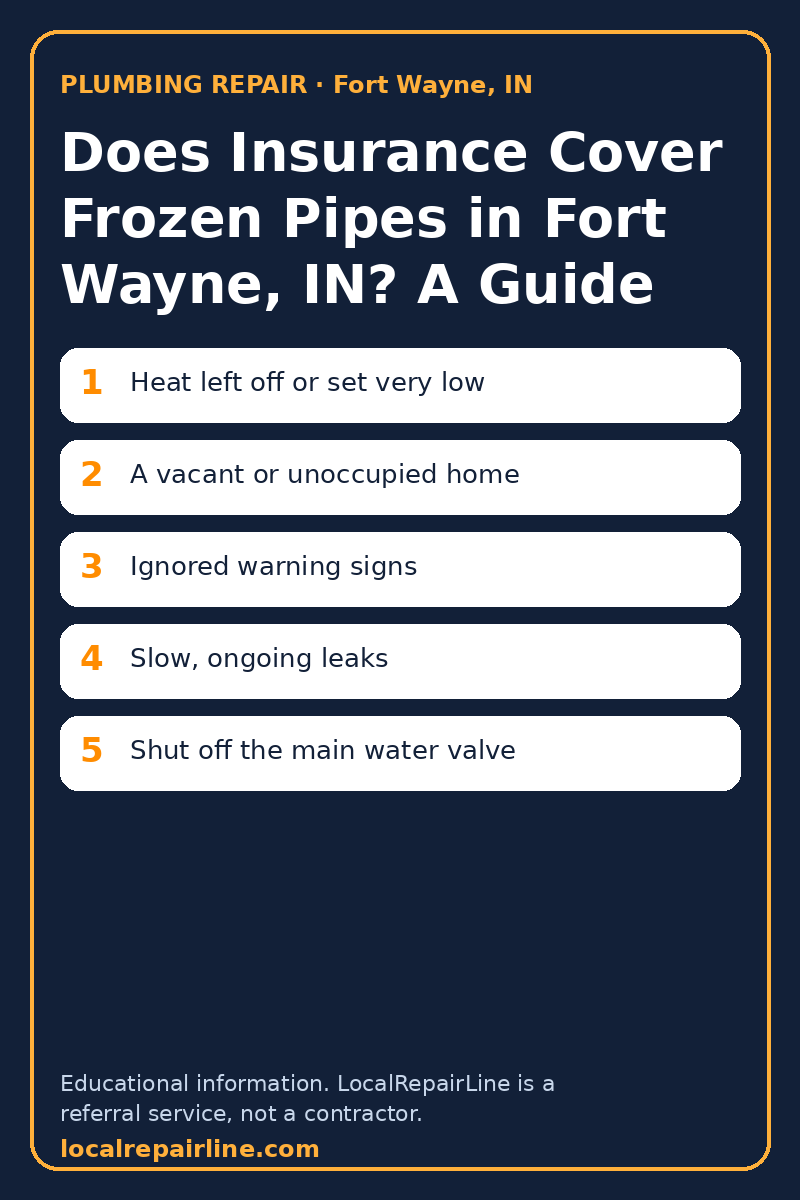
Sudden Burst vs. Neglect: Why Some Fort Wayne Claims Get Denied
Policies draw a line between something that happened suddenly and something that happened because it was allowed to happen. A pipe that bursts during a hard cold snap, in a home that was being heated, looks more like a sudden event than neglect, though your insurer makes the final call.
Claims can run into trouble when neglect looks like the cause. Common denial triggers include:
- Heat left off or set very low. Check whether your policy says anything about keeping the home heated.
- A vacant or unoccupied home. Your policy may have limits if no one has lived there for a set stretch. Check your wording.
- Ignored warning signs. Known leaks, a drafty crawl space, or a pipe that froze last winter can all be used against you.
- Slow, ongoing leaks. Policies may treat long-term seepage differently from a sudden burst, so read how yours describes each.
The late-winter thaw trap
Fort Wayne's late winter often swings between deep cold and thaw. A pipe can crack during the cold, hold together while ice plugs the crack, and only start leaking when temperatures climb.
That means the water may show up days after the damage happened. Write down when you noticed it, and don't assume a quiet pipe is a healthy one.
Pipe Repair vs. Water Damage: What Policies Usually Pay For
This is the part most people miss. There are usually two separate pieces to a frozen-pipe claim, and policies often treat them differently.
The pipe repair. Fixing or replacing the cracked section is sometimes treated as ordinary maintenance. Some policies cover it as part of a covered loss, and others don't.
The resulting damage. Wet drywall, ruined insulation, warped flooring, damaged cabinets and soaked ceilings are the kinds of damage a sudden-burst claim may cover, depending on your policy. Water removal and drying are often part of that, too.
Thawing a pipe that's frozen but not burst is a gray area. Whether your policy pays for thawing work when nothing has been damaged yet is something to ask your agent.
Some policies do cover reasonable steps you take to prevent a loss, but wording varies. Ask your agent directly instead of guessing.
What to Do in the First Hour After Pipes Freeze or Burst
Speed matters here, because water keeps doing damage while you sort out paperwork. Your policy may also spell out steps you're expected to take to limit the loss, so check that section.
Work through this list in order:
- Shut off the main water valve. Know where it's before you need it.
- Cut power to wet areas if it's safe. If water is near outlets or the panel, stay out and call for help.
- Open faucets to let any trapped water drain and relieve pressure.
- Take photos and video of everything before you move or toss anything.
- Move valuables and small furniture out of the wet area.
- Call your insurance company to report the loss and ask what they require.
When to call a plumber
Once the water is off, you may be looking at a cracked pipe, a wet wall or ceiling, or no water at all coming from the taps. That's the point to bring in a local plumbing pro in Fort Wayne, IN, such as those listed at https://localrepairline.com, instead of guessing.
A pipe that's cracked inside a wall or under a floor can't be found by looking. A plumber can locate the break, stop the damage and write down the cause. That written cause can help show this was a sudden failure and not long-term neglect.
Heating a wall with a space heater or hair dryer in a panic is a good way to turn one problem into two. Let a pro find the problem first.
How to Document Damage So Your Claim Holds Up
The costliest mistake is repairing or cleaning up before everything is recorded. Once the soggy drywall is in the dumpster, you have nothing left to show what the damage looked like.
Build your record while things are still as they were:
- Wide photos of each affected room, then close-ups of the damage.
- Video walking through the house, narrating what you see.
- The cracked or split pipe itself, kept if possible, and photographed in place before removal.
- Notes on the date and time you noticed the problem, and what the temperature had been doing.
- A written statement from the plumber describing where the break was and what caused it.
- Every receipt for emergency work, drying, repairs and temporary housing, if you have to leave.
Keep a list of damaged belongings too, with rough age and condition. That list is easier to build now than three weeks from now.
Hold onto damaged materials until you've checked with your insurer. If something has to come out right away to stop mold or a safety hazard, photograph it first and let your insurer know.
Costs Homeowners Regret: Deductibles, Partial Repairs and Repeat Claims
Not every frozen-pipe problem is worth a claim. Your deductible is the amount you pay before insurance pays anything, and a small leak can cost less than that.
Costs vary by house, and so do deductibles. Get a clear picture of the damage in writing before you decide to file.
Things worth thinking through
- Small damage, high deductible. Filing may pay you little or nothing, and it still goes on your record.
- Partial repairs. Fixing only the visible leak and ignoring wet insulation behind the wall can lead to mold or rot later, which may then be treated as a maintenance problem.
- Repeat claims. A second burst from the same unaddressed weak spot can be much harder to get paid than the first.
- Waiting too long. Your policy may set a deadline or process for reporting a loss, so check your wording on reporting.
If you're unsure, calling your agent to ask questions isn't the same as filing a claim. Ask how they handle it, and ask what your policy says about water damage and vacancy.
Protecting Pipes Before the Next Fort Wayne Cold Snap
Prevention is cheaper than any claim, and it also keeps your record clean. With a heating season that stretches from fall well into spring, it's worth doing early.
- Keep the heat on and set at a reasonable temperature, even when you're traveling.
- Open cabinet doors under sinks on exterior walls during hard cold.
- Let a faucet drip slowly during a deep cold snap.
- Insulate exposed pipes in basements, crawl spaces and garages.
- Disconnect outdoor hoses and shut off exterior spigots before winter.
- Seal drafts near pipes where cold air sneaks in.
- Know where your main shutoff is, and make sure everyone in the house does too.
If you'll be away, have someone check the house regularly. Ask your insurer what they expect for an unoccupied home.
FAQ
Does homeowners insurance cover frozen pipes that haven't burst yet?
Usually not. Most policies pay for damage that has happened, and a frozen pipe with no leak isn't a loss yet. Some policies cover reasonable steps to prevent damage, so ask your agent before you pay for thawing work.
Will insurance pay for a burst pipe if I was away from home during winter?
It depends on your policy. Many cover a sudden burst even if you were traveling, as long as you kept the heat on and took reasonable care. Others limit coverage if the home sat vacant or unheated for a set time, so check the wording on vacancy and heating.
Should I call my insurance company or a plumber first when a pipe bursts?
Shut off the water first, then do both quickly. Your policy and your agent can tell you what steps and paperwork a claim calls for, and a local plumber can find the break and stop the damage. Take photos before anything gets moved or repaired.
Does insurance cover the cost of thawing and repairing the frozen pipe itself?
Often not for the pipe, though it varies. Many policies pay for the water damage a burst causes and treat the pipe repair as maintenance, while some cover it as part of the loss. Read your policy or ask your agent how they handle the repair itself.
Need a plumbing repair pro in Fort Wayne, IN?
Talk to an independent local contractor who serves your area.
📞 Call (833) 350-0420Plumbing repair in Fort Wayne, INCall hours: 8am–8pm ET, 7 days