Does Insurance Cover Frozen Pipes in Grand Rapids, MI?
If you're searching does insurance cover frozen pipes Grand Rapids MI with a cold snap outside or water already on the floor, here's the quick version. Many standard homeowners policies do pay for sudden water damage from a pipe that froze and burst. They're pickier about the pipe repair itself, and about whether you took reasonable care to prevent the problem.
Your exact answer depends on your policy, so treat this as a guide, not a ruling.
Short Answer: Does Insurance Cover Frozen Pipes Grand Rapids MI Homeowners Deal With?
Usually, yes, when the damage is sudden and accidental. A pipe that splits and floods a kitchen or basement is the kind of event most homeowners policies are built for.
"Usually" is doing real work in that sentence. Coverage often comes down to three separate costs, and each one gets treated differently:
- The water damage: soaked drywall, flooring, insulation, and belongings. This is the part most often covered.
- The pipe repair: fixing or replacing the failed pipe. This is the part people argue about.
- Your deductible: what you pay before the insurer pays anything. This decides whether filing makes sense at all.
Keep those three in mind. Most of the surprises come from treating them as one bill.
Need a plumbing repair pro in Grand Rapids, MI?
Talk to an independent local contractor who serves your area.
📞 Call (833) 350-0420Plumbing repair in Grand Rapids, MICall hours: 8am–8pm ET, 7 daysYour call may first be answered by a short screening service that asks what the problem is and where you are. Stay on the line and you will be connected to an independent local pro.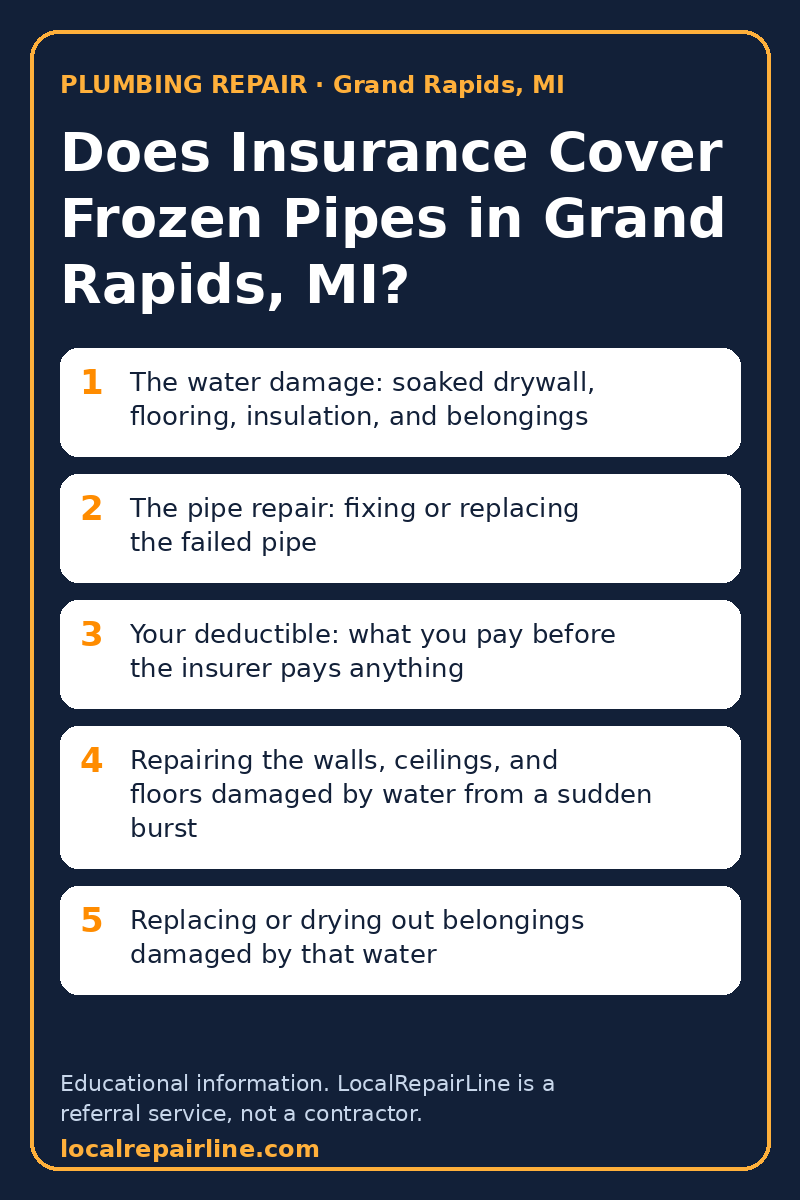
What's Usually Covered vs. Denied: Pipe Repair, Water Damage, and Cleanup
Policies differ, so read yours. Still, the pattern is common enough to plan around.
Often covered
- Repairing the walls, ceilings, and floors damaged by water from a sudden burst
- Replacing or drying out belongings damaged by that water
- Water removal and drying, which many policies treat as part of limiting further damage
- In some policies, the cost of opening a wall or floor to reach the failed pipe
Often debated or excluded
- The pipe itself. Some policies pay to fix the break. Others cover the damage the water caused but not the plumbing that failed.
- Damage that built up slowly from a small leak nobody dealt with
- Damage from neglect, such as a home left cold with no one checking on it
- Pipes that were frozen but never burst, since no water damage means little to claim
That last point surprises people. A pipe that's frozen solid but still intact may not trigger a claim at all. Thawing it is often your cost, though your policy wording is what settles it.
Ask your insurer directly how your policy treats "tear out" costs, meaning opening walls to reach the pipe. That one line item can add up fast, and costs vary by house.
Why Claims Can Get Denied in Michigan: Heat Left Off, Vacant Homes, and Neglect
Many policies include conditions built around one idea: reasonable care. They often expect you to keep the home heated or take other sensible steps, like shutting off and draining the water, if you'll be away.
In a Grand Rapids winter, that expectation is easy to understand. Lake-effect snow, long cold stretches, and sudden dips after a mild week mean a pipe can go from fine to frozen quickly.
Here are the situations that can cause trouble under a policy's terms:
- Heat turned way down or off. Saving on a bill is understandable, but many policies have conditions about maintaining heat. Check the wording on yours.
- Vacant or unoccupied homes. Many policies limit coverage if a house sits empty for a stretch. Check the wording on how long counts.
- Known problems left alone. A drafty crawl space, an exposed pipe on an outside wall, or an earlier leak you ignored can raise questions about whether the loss was sudden and whether you took reasonable care.
- Slow damage. Policies lean toward covering sudden events, not seepage over weeks.
Spring thaw adds its own twist. A pipe that froze and cracked in January may not leak until temperatures climb and the ice melts. The water shows up weeks later, so it helps to be able to explain when and why the pipe actually failed.
That's one reason clear documentation matters. More on that below.
What to Do in the First Hour: Shut Off Water, Document, Call Your Insurer
Speed matters here. Water spreads, and many policies expect you to take reasonable steps to limit further damage.
- Shut off the main water valve. Know where it's before you need it. If you can't find it or it won't turn, that's a reason to get help quickly.
- Stay safe around water and electricity. If water is near outlets, panels, or appliances, stay away and shut off power only if you can reach the breaker without standing in water.
- Take photos and video. Capture the burst pipe, the wet areas, damaged belongings, and the thermostat setting. Do it before you clean up.
- Call your insurer. Report the loss, ask what your policy covers, and ask what they need from you. Write down the date, time, and who you spoke with.
- Start limiting damage. Move belongings, soak up standing water, and run fans if it's safe. Keep receipts for anything you buy or pay for.
Don't throw out damaged materials until your insurer says it's okay, or you've photographed them thoroughly.
This is the point to call a local plumber
If water is leaking, a pipe is split, or a line is frozen and not thawing, stop guessing. Once the main is off and your insurer is notified, this is the moment to call a local plumbing pro in Grand Rapids, MI, and localrepairline.com is one place to look for plumbing repair there.
A plumber can stop the damage, repair or isolate the failed section, and check the rest of the system for other weak spots. Just as important, they can document where the pipe failed and why. That record can matter later.
Why a Plumber's Written Report Can Strengthen Your Claim
A claim generally comes down to what happened, where, and whether it was sudden. A plumber is in a good position to answer that in writing.
Before repairs start, ask the plumber to note:
- Where the pipe failed, such as an exterior wall, crawl space, garage, or basement
- What caused the failure, such as ice expansion, a split along the pipe, or a joint that cracked
- What condition the pipe and nearby area were in, including insulation and any exposed runs
- Photos of the damaged section before it's removed or replaced
Ask them to keep the failed piece if possible, or at least photograph it clearly. Your insurer may want to see it.
This kind of record helps show the difference between a sudden freeze-related break and long-term leaking or wear. It can also support your case that the home was being heated and cared for.
It won't decide the outcome of a claim. But a clear, specific description is more useful than "a pipe broke."
Is It Worth Filing? Deductible vs. Repair Cost and Your Claims History
Not every frozen pipe is worth a claim. This is where the three costs from earlier come back.
If the damage is small, say a short section of pipe and a bit of wet drywall, the total may land near or below your deductible. In that case,
Need a plumbing repair pro in Grand Rapids, MI?
Talk to an independent local contractor who serves your area.
📞 Call (833) 350-0420Plumbing repair in Grand Rapids, MICall hours: 8am–8pm ET, 7 days