Does Insurance Cover Frozen Pipes in Cleveland, OH? A Guide
Searching "does insurance cover frozen pipes Cleveland OH" usually means one of two things. Water is already coming through a ceiling, or the faucets have stopped running and you're bracing for what happens when things warm up. Either way, you want a straight answer.
It can, depending on your policy. Many homeowners policies are written to address sudden damage from a burst pipe. But the details decide the claim, and Cleveland winters make those details matter more than most.
Does Insurance Cover Frozen Pipes Cleveland OH Homeowners Ask About? The Short Answer
Many homeowners policies are written to cover water damage that's sudden and accidental, though the exact wording varies. A pipe that cracks during a hard cold night and floods your kitchen may fit that description.
What the policy covers can vary a lot, though. Some policies pay for the water damage but not for the pipe itself. Others have special rules about heat, vacancy, or maintenance. Costs and coverage vary by house and by policy, so your actual paperwork matters more than any general rule.
Your policy likely has a deductible, which is the part you pay before the insurer pays anything. A smaller repair can land below that number, and then filing a claim may not help you.
Need a plumbing repair pro in Cleveland, OH?
Talk to an independent local contractor who serves your area.
📞 Call (833) 350-0420Plumbing repair in Cleveland, OHCall hours: 8am–8pm ET, 7 daysYour call may first be answered by a short screening service that asks what the problem is and where you are. Stay on the line and you will be connected to an independent local pro.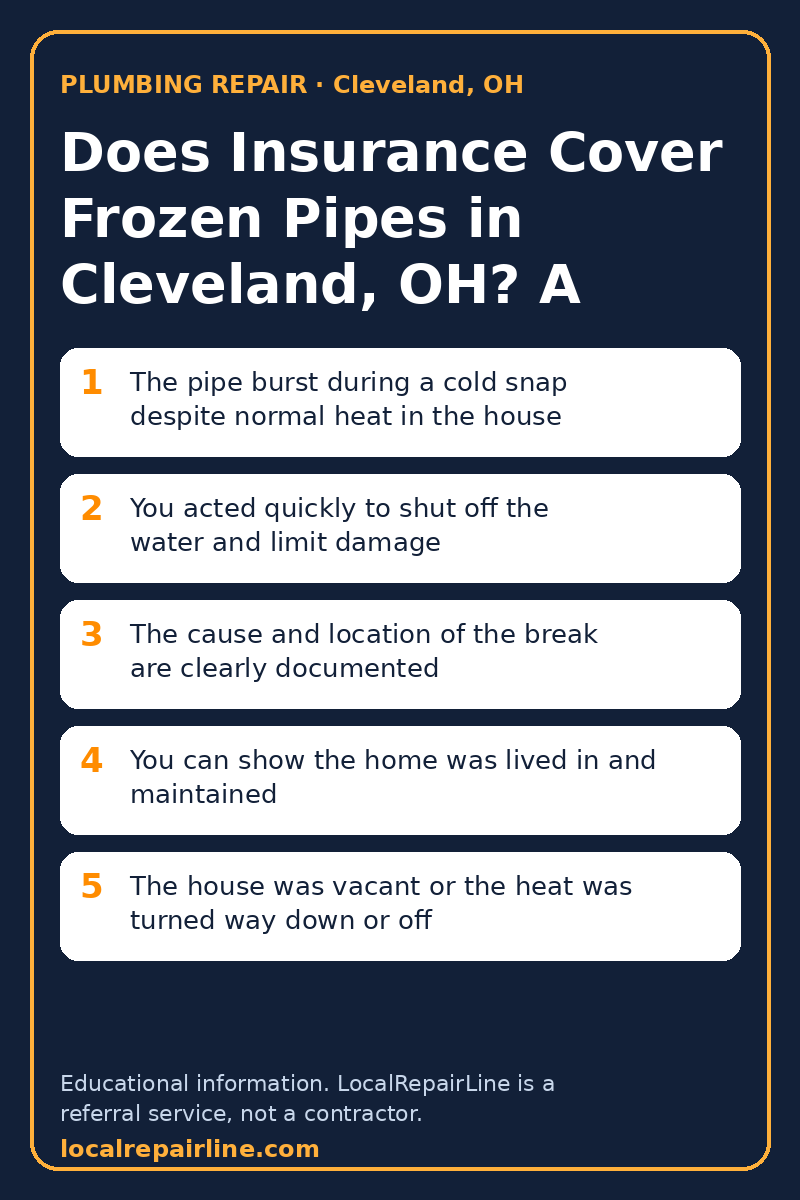
When Insurers Pay for Burst Pipe Damage (and When They Deny It)
The question that usually matters is whether the damage was sudden or came from something preventable, so it helps to see how your policy words that difference. Here's how that tends to play out.
Situations that line up with the usual "sudden and accidental" wording look like this:
- The pipe burst during a cold snap despite normal heat in the house.
- You acted quickly to shut off the water and limit damage.
- The cause and location of the break are clearly documented.
- You can show the home was lived in and maintained.
Situations that can cause trouble under common policy wording look like this:
- The house was vacant or the heat was turned way down or off.
- The pipe had been leaking or dripping for a long time.
- Damage kept spreading because nobody did anything for days.
- Wet materials were thrown out before anyone documented them.
- The policy excludes the specific kind of loss, such as the cost of the pipe repair itself.
None of this is a trick. Read your policy's wording on sudden accidents versus ongoing or neglected problems, since those are often treated differently. Your job is to make the story of what happened easy to prove.
What Cleveland Winters Do to Your Plumbing and Your Claim
Cleveland sits on Lake Erie, and lake-effect weather brings heavy snow and raw, damp cold through the winter months. Regular stretches of very cold nights are exactly when uninsulated pipes in exterior walls, garages, and basements are most at risk.
Older homes add to the problem. Pipes tucked into exterior walls, run through unheated basements, or strung through crawl spaces get little protection from the outdoor air.
Here's the part that surprises people. Northeast Ohio weather can swing quickly from deep cold to a thaw, and the thaw is often when the damage shows up. A pipe can crack while the ice inside it is solid, and nothing leaks. Then the ice melts and water pours out of the split.
That timing matters for your claim. You may not know exactly when the pipe cracked, so a plumber's findings about the cause and location of the break carry real weight. They help show the damage came from a cold event and not from a slow leak you missed.
Step-by-Step: What to Do Right After Pipes Freeze or Burst
Many policies ask you to take reasonable steps to protect the home from further damage, so check your policy's wording. Acting quickly also limits the damage itself.
Here's a sensible order:
- Shut off the main water supply if water is leaking. Know where that valve is before winter.
- Turn off electricity to wet areas if you can do it safely. If water is near outlets, panels, or appliances, stay out and call a pro.
- Open faucets once the water is off, to let remaining water drain out of the lines.
- Take photos and video of everything before you move or clean anything.
- Call a local plumber to stop the leak, find the break, and write down what they find.
- Contact your insurance company to report the loss and ask what they need from you.
- Start reasonable cleanup to limit damage, such as moving belongings and soaking up standing water, while keeping what's damaged for the adjuster.
On the question of who to call first, you can do both quickly. Your plumber handles the emergency, and your insurer opens the claim. Neither call should wait for the other.
How to Document Damage So Your Claim Holds Up
Good records can decide a claim. Most people only think about this after the repairs are done, and by then the evidence is gone.
Take photos and video before any repair or tear-out. Shoot wide, then close. Show the burst section of pipe, the water stains, the wet drywall, the floor, and anything ruined.
Ask your plumber for written findings. A useful write-up usually includes:
- Where the pipe failed and what kind of pipe it was.
- The likely cause, such as ice in an uninsulated wall or basement run.
- Where and how the water was shut off.
- What repairs were done and what work remains.
Keep the broken section of pipe if the plumber will give it to you. Also keep receipts for everything, including emergency repairs, drying equipment, and temporary housing if you need it.
Don't rip out soaked drywall, insulation, or flooring until it's been photographed and your insurer knows. Tearing out first leaves you with less proof and a harder conversation with your insurer.
Repair Costs Homeowners Often Get Surprised By
The bill for a burst pipe is rarely just the pipe. Costs vary by house, but these are the pieces that tend to catch people off guard:
- The deductible. You pay it first, and a modest loss may not be worth claiming.
- The pipe repair itself. Some policies pay for water damage but not for fixing the failed pipe.
- Access and tear-out. Plumbers often have to open walls or ceilings to reach the break, and that work can be separate from the repair.
- Drying and mold prevention. Wet materials need to dry out fast, and drying equipment and labor add up.
- Rebuild work. Drywall, paint, flooring, and trim after the repair can cost more than the plumbing.
- Old plumbing. In older homes, a plumber may find other weak spots once walls are open.
Ask your insurer which of these your policy treats as covered, and get that answer before work starts.
When to Call a Plumber Instead of Guessing
Here's the moment to stop troubleshooting on your own. If no water comes out of a faucet during a cold snap, if you see a bulging or cracked pipe, or if water is already leaking, call a local plumbing pro in Cleveland, OH, such as one you can find through localrepairline.com.
Don't try to thaw lines with an open flame or crank up a space heater and walk away. A pipe can look fine and still be split inside the wall.
A local plumber can stop the leak and find the break. They can also put the cause and location in writing, and that paperwork supports your claim. Prompt action limits damage, and a documented professional visit gives you a clear record of what happened and when.
How to Protect Your Pipes Before the Next Cold Snap
Prevention is worth the effort, and some policies include conditions about heat and upkeep, so check yours. Before the deep cold hits:
- Insulate pipes in exterior walls, garages, crawl spaces, and unheated basements.
- Seal drafts and gaps near pipes where cold air can reach them.
- Keep your heat on, even when you travel, at a steady, reasonable temperature.
- Open cabinet doors under sinks on exterior walls during very cold nights.
- Let a faucet drip slightly on the coldest nights.
- Disconnect garden hoses and shut off outdoor spigots.
- Learn where your main shutoff valve is and make sure it turns.
If you'll be gone for a while, ask a neighbor or friend to check the house. Also read your policy's wording on vacancy and heat before you leave, since some policies limit coverage when a home sits empty or underheated.
FAQ
Does homeowners insurance cover a burst pipe in Cleveland?
It may, if your policy covers sudden and accidental water damage, so your policy's wording decides. Check whether it covers the resulting water damage and how it words slow leaks or neglect. Read your policy or ask your insurer how it handles frozen pipes.
Will my policy pay to fix the frozen pipe itself?
Not always. Some policies pay for the water damage to your home but not for repairing the pipe that failed. Coverage varies by policy, so ask your insurer before repair work begins.
Should I call my insurance company or a plumber first?
You can do both right away. Call a plumber to stop the leak and document the break, and contact your insurer to report the loss. Neither call needs to wait for the other, and acting quickly helps limit damage.
Can a claim be denied if the house was empty or the heat was off?
It can be. Many policies have conditions about vacancy and keeping the home heated, and a claim may be reduced or denied if those weren't met. Check your policy's wording before you travel or leave a home unheated during winter.
Is it worth filing a claim for a small repair?
Not always. If the loss is close to or below your deductible, a claim may not pay anything. Costs vary by house, so get a plumber's findings and a written repair scope, then compare them to your deductible before deciding.
Need a plumbing repair pro in Cleveland, OH?
Talk to an independent local contractor who serves your area.
📞 Call (833) 350-0420Plumbing repair in Cleveland, OHCall hours: 8am–8pm ET, 7 days