Does Insurance Cover Frozen Pipes in South Bend, IN? A Guide
Searching "does insurance cover frozen pipes South Bend IN" usually means something is already wrong. Maybe a faucet is dry, a ceiling is stained, or you can hear water where it shouldn't be.
Short version: whether a burst pipe is covered comes down to what your homeowners policy says about sudden water damage. It also depends on whether you can show you acted reasonably. This guide covers both.
Does Insurance Cover Frozen Pipes South Bend IN? The Short Answer
It can, for the damage after a pipe bursts, depending on your policy. Check whether your policy lists a sudden, accidental burst as a covered event. That can include the water damage to walls, floors, and belongings.
Coverage often gets shakier in three places:
- The pipe repair itself, which some policies treat differently than the damage it caused
- Damage that built up slowly over time
- Situations where the insurer decides the freeze could have been prevented
Your policy is the final word, and policies differ. Read the water damage section, or call your agent and ask how they handle frozen pipe claims.
Need a plumbing repair pro in South Bend, IN?
Talk to an independent local contractor who serves your area.
📞 Call (833) 350-0420Plumbing repair in South Bend, INCall hours: 8am–8pm ET, 7 daysYour call may first be answered by a short screening service that asks what the problem is and where you are. Stay on the line and you will be connected to an independent local pro.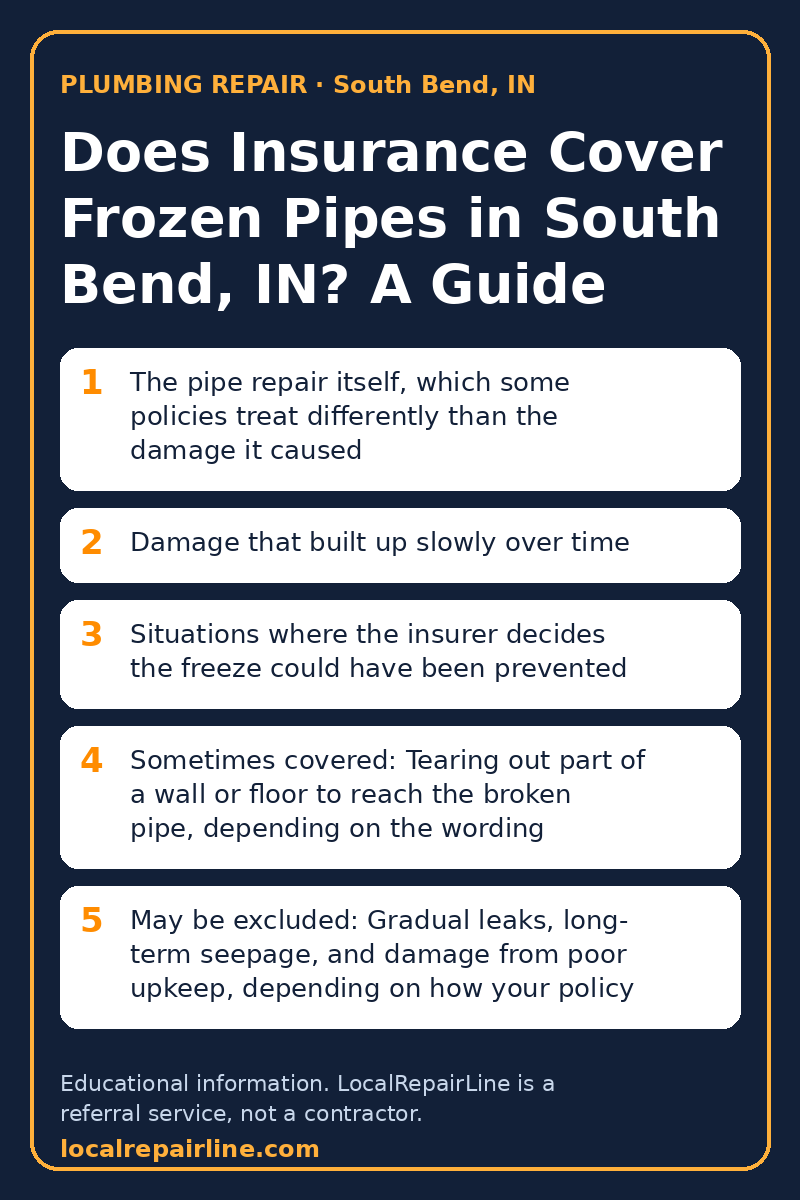
What Homeowners Policies Usually Cover (and Exclude) After a Pipe Bursts
Your policy may separate the cause from the result. A burst pipe that floods a kitchen is a sudden event. A pipe that has quietly seeped for months may be treated as a maintenance issue or neglect, depending on the policy wording.
Here is what policies commonly address:
- May be covered: Sudden water damage to drywall, flooring, cabinets, and personal belongings after a burst, if your policy's wording includes it
- Sometimes covered: Tearing out part of a wall or floor to reach the broken pipe, depending on the wording
- May be excluded: Gradual leaks, long-term seepage, and damage from poor upkeep, depending on how your policy is written
- Often excluded or limited: Damage in a home left vacant or unheated
Your deductible matters too. A small repair may cost less than the deductible, and that's worth knowing before you file.
Costs vary by house. The size of the leak, the materials involved, and how long water sat all change the total.
Why Claims Get Denied: Vacant Homes, Neglect, and Missing Heat
The line between a sudden event and neglect can matter a lot in how a claim is handled. Your policy may require you to take reasonable steps to protect the house. If you didn't, that could affect how the claim is handled.
Some examples of how it can look:
- Heat left off or set very low. A furnace that quit and went unnoticed is one thing. Turning the heat down to save money during a hard cold snap is another.
- A vacant or seasonal home. Check your policy for conditions about how long a home can sit empty and whether heat or water must stay on.
- An ignored drip. A wet cabinet or a stain that grew for weeks looks like neglect, not an accident.
- Waiting to act. If water ran for days because nobody shut it off, the insurer may argue you made the damage worse.
None of this means a claim is doomed. It means your records should show you responded quickly and sensibly.
The South Bend thaw problem
Lake-effect winters near Lake Michigan bring long stretches of cold, and northern Indiana cold snaps can drop well below zero overnight. A pipe can split while the water inside is ice, and you won't see a thing.
The trouble shows up when temperatures climb. A thaw, especially in late winter or early spring, melts the ice plug and the split starts leaking. Then the cycle repeats with the next cold night.
That delay can make the damage look gradual. Sorting out when it really started is exactly why good documentation matters.
What to Do in the First Hour: Shut-Off, Photos, and Documentation
Your goal in the first hour is to stop the water, protect your belongings, and create a clear record. Do it in this order:
- Shut off the main water valve. Know where it's before you need it. If you can't reach it safely, don't wade through standing water near outlets.
- Turn off electricity to wet areas if it's safe to do so. If water is near panels or outlets and you aren't sure, stay out and get help.
- Take photos and video before you touch anything. Capture the split pipe, wet walls, ceiling stains, floors, and damaged items from several angles.
- Note the time and conditions. Write down when you noticed it, what the weather was, and where your thermostat was set.
- Limit further damage. Move belongings, mop up standing water, and open cabinet doors. Keep your receipts for anything you buy.
- Keep the damaged pieces if you can. A section of split pipe can be useful evidence.
Save everything in one place, like a phone folder or a notebook. You'll be glad you did when the adjuster asks questions.
When to call a plumber instead of guessing
Say you've shut off the water and taken your photos, but you still see a split pipe, a wet ceiling, or a faucet with no water in the cold. This is the point to call a local plumbing pro in South Bend, IN instead of guessing, and localrepairline.com is one place to find plumbing repair in the area.
A plumber can stop the damage, find the actual break, and tell you what failed and why. Ask for written findings that describe the cause, the location, and the repair. That paper can support your claim, because it backs up the "sudden and accidental" story with a trained opinion.
Ask before repairs start whether they can note what they found. Photos taken before and after the work help as well.
Frozen but Not Burst: Is Thawing Covered, and Who Pays?
A frozen pipe that hasn't burst yet is a gray area. Nothing has been damaged, so there may be no loss for the insurer to pay. Your policy may treat thawing as routine upkeep, in which case the cost would fall on you.
Some policies do cover damage that happens while thawing, like a pipe that splits once it warms. A few may reimburse certain costs to prevent a loss. Check your wording, or ask your agent directly.
If you suspect a frozen line, a few cautious steps help:
- Keep the faucet slightly open so water can move as ice melts
- Warm the area gently with a space heater placed safely, or by opening cabinet doors
- Never use an open flame on a pipe
- Stop and call a plumber if you smell something odd, see bulging, or find a leak
Thawing too fast or too hot can cause the break you were trying to avoid. If you can't find the frozen section, that's a good time to bring in help.
Working With Your Insurer and a Local Plumber on the Claim
People often ask who to call first. Usually, stop the water and get the repair started to prevent more damage, then notify your insurer promptly. Check your policy for how soon you must report and what steps it requires you to take to limit the loss.
Here is a practical way to keep the claim clean:
- Report the loss quickly. Give a plain description and ask what they need from you.
- Ask before major repairs. Your policy may expect emergency steps like shutting off water and stopping a leak. Bigger rebuilding work may need the adjuster to see the damage first.
- Keep your plumber's written findings. Include the invoice and any notes about cause.
- Save every receipt. That covers plumbing, drying equipment, temporary lodging, and replaced items.
- Be honest about timing. If you found the leak after a thaw, say so. Damage from a cold snap can stay hidden until temperatures rise.
Repairing everything before you document it can leave you with little proof. Without before photos, the adjuster has only your word.
Waiting on a slow drip is another risk. A small leak that grows can turn a covered event into an argument about neglect, and a repair that costs a modest amount can balloon.
Prevention Habits for South Bend Winters That Protect Your Coverage
Prevention keeps pipes intact, and it also strengthens your position if something goes wrong anyway.
- Keep the heat on, even if you travel. Set it to a safe, steady temperature during cold snaps.
- Open cabinet doors under sinks on exterior walls when it's very cold.
- Let a faucet drip slightly during extreme overnight lows.
- Seal gaps where cold air gets in, like around rim joists and utility entries.
- Disconnect and drain outdoor hoses before winter.
- Know where your main shut-off is, and make sure everyone in the house can find it.
- If you'll be away, have someone check the house regularly.
- Check your policy before winter, and ask what it requires of you.
After a cold snap and thaw, walk through the house. Check ceilings, cabinets, and basement walls for stains, damp spots, or a musty smell. Catching something early costs less and helps your claim.
FAQ
Does homeowners insurance cover a burst pipe from freezing?
It can, if your policy covers sudden and accidental water damage and a freeze-related burst fits that wording. The details depend on your policy, including exclusions for neglect and conditions about heat. Ask your agent how they treat the pipe repair versus the resulting damage.
Will my insurance pay to thaw frozen pipes that haven't burst?
Possibly not, since no damage has happened yet and your policy may treat thawing as upkeep. Some policies cover certain costs or any damage that follows. Check the wording or ask your insurer before you pay for anything.
Can my insurance deny a frozen pipe claim?
Yes, it can happen. Claims may be denied or reduced when the policy excludes the cause, when the home was vacant or unheated, or when the damage looks gradual instead of sudden. Good photos, a written plumber's report, and prompt reporting give you a stronger record, and you can ask your insurer to explain any denial in writing.
Need a plumbing repair pro in South Bend, IN?
Talk to an independent local contractor who serves your area.
📞 Call (833) 350-0420Plumbing repair in South Bend, INCall hours: 8am–8pm ET, 7 days