Heat Pump Not Heating in Denver, CO? Causes and Fixes
If you typed "heat pump not heating Denver CO" into a search bar while standing next to a cool vent, take a breath. Sometimes the system is fine and just doing its winter job. Other times it needs a pro.
This guide helps you tell the difference, run a few safe checks, and know when to stop guessing.
Is Your Heat Pump Really Broken, or Just in Defrost Mode?
Heat pumps pull heat from outdoor air, even cold air. In winter, moisture on the outdoor coil can turn to frost. To clear it, the system runs a defrost cycle.
During defrost, the unit briefly flips into a cooling-style mode. The outdoor fan may stop, you may see steam rising, and the air from your vents can feel cool or lukewarm for a few minutes.
Denver's weather makes this more common. A sunny, mild afternoon can melt snow fast, then a very cold night moves in. That swing means more moisture on the coil, then more frost, then more defrost cycles.
Here is how to tell normal from not normal:
- Normal: cool air for a short stretch, steam from the outdoor unit, then warm air returns on its own.
- Normal: a light coat of frost on the outdoor coil that clears during the day.
- Not normal: cool air that lasts most of an hour or more, or never warms back up.
- Not normal: the whole unit wrapped in thick ice, or defrost that seems to run again and again with no heat in between.
If the warm air comes back, you're probably fine. If it doesn't, keep reading.
Need an HVAC repair pro in Denver, CO?
Talk to an independent local contractor who serves your area.
📞 Call (833) 669-0233HVAC repair in Denver, COCall hours: 8am–8pm ET, 7 daysYour call may first be answered by a short screening service that asks what the problem is and where you are. Stay on the line and you will be connected to an independent local pro.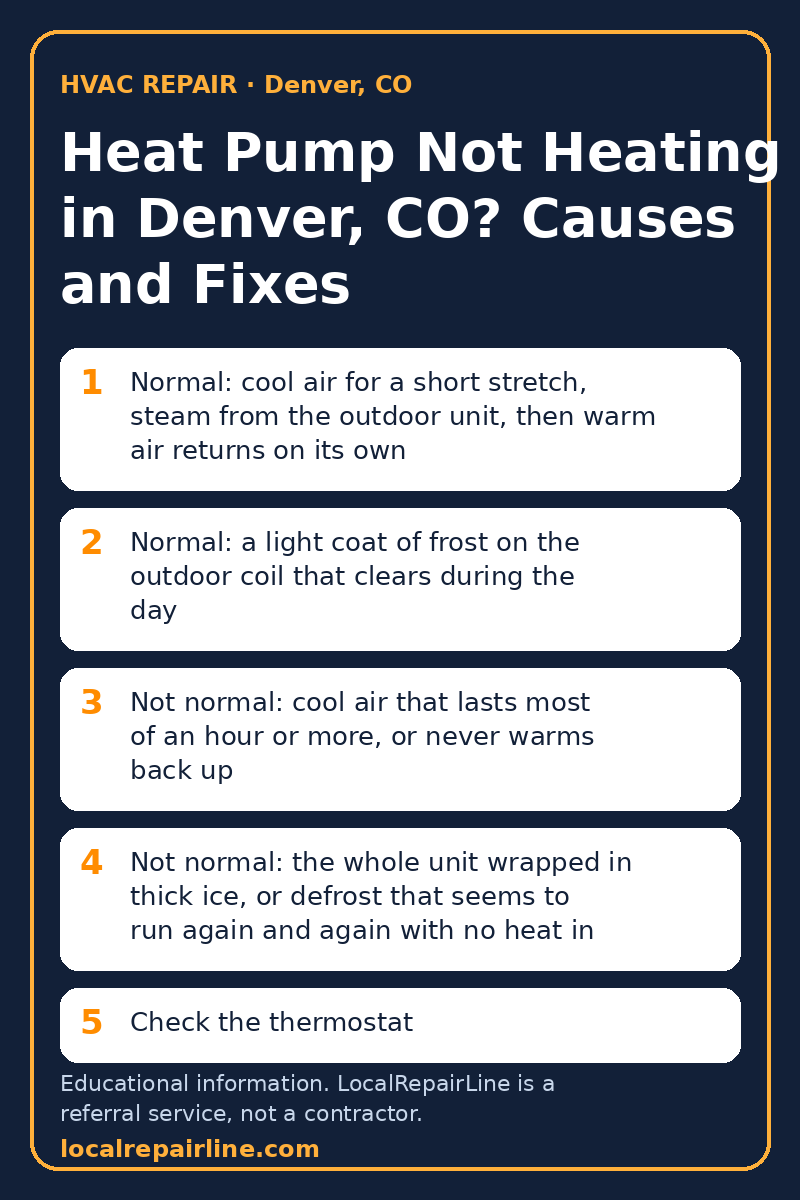
Quick Checks to Make Before You Call Anyone
These take a few minutes and cost nothing but a little time. Stay on the safe side: don't open panels or touch wiring.
- Check the thermostat. Make sure it's set to Heat (not Cool or Off), and set the temperature a few degrees above the current room temperature. Dead batteries can cause odd behavior on some models.
- Look at the air filter. A clogged filter chokes airflow and can make the air feel weak or lukewarm. Swap it if it's dirty.
- Check the breakers. Look at the breaker panel for a tripped switch. If the outdoor unit has a shutoff box nearby, make sure it's in the on position.
- Clear snow from the outdoor unit. Brush off snow by hand and keep a couple of feet of open space around it.
- Open your vents. Make sure supply registers aren't closed or blocked by furniture or rugs.
- Wait out a defrost cycle. Give the system 15 to 20 minutes before deciding something is wrong.
If a breaker trips again right after you reset it, leave it off and call someone. Repeated tripping points to an electrical or compressor issue.
Heat Pump Not Heating Denver CO: Common Reasons It Stops in Winter
Once the basics check out, here are the usual suspects.
Airflow problems
Dirty filters, blocked returns, and closed vents all reduce heat delivery. This is the easiest category to fix and the most overlooked.
Ice buildup the unit can't shed
If the defrost system isn't working, ice keeps growing until the coil can't pull in heat. Sensors, control boards, or a stuck reversing valve can be behind it. These repairs are not DIY jobs.
Low refrigerant
A heat pump uses a sealed refrigerant loop. If it's low, the cause is a leak, since the system doesn't "use up" refrigerant. Symptoms include weak heat, ice on the coil or lines, and longer run times.
Reversing valve trouble
This valve switches the system between heating and cooling. If it sticks, you may get cool air when you want heat.
Compressor or fan problems
Grinding, buzzing, or a humming unit that won't start can mean a failing motor, capacitor, or compressor. Don't keep running a system that sounds wrong.
Thermostat or control faults
Sometimes the unit is fine and the signal is wrong. A wiring or control fault can leave the system stuck in the wrong mode.
Snow, Ice, and Cold Snaps: Protecting Your Outdoor Unit
Denver can see snow from fall through spring, and the pattern is often snow, bright sun, melt, then a hard cold night. That melt-and-refreeze cycle is what causes trouble around outdoor equipment.
A few habits help:
- Clear snow away from the sides and top of the unit after storms. Use your hands or a soft broom.
- Don't chip ice with a shovel or hammer. Coil fins and refrigerant lines are easy to damage.
- Check that roof runoff or gutters aren't dripping onto the unit, where water can refreeze.
- Keep the unit from sitting in a puddle or low spot that turns to ice overnight.
- Keep leaves, mulch, and debris away from the base.
If ice builds up heavily and won't clear on a sunny day, that's a sign the defrost system or the refrigerant loop needs attention.
Emergency Heat vs. Auxiliary Heat: What Your Thermostat Is Telling You
Many thermostats show "Aux" or "Emergency Heat," and the two are easy to confuse.
Auxiliary heat kicks in automatically when the heat pump needs help. That usually happens on very cold days, during defrost, or when the house is far below the set temperature. It's backup heat working alongside the heat pump, often electric strips or a furnace. Seeing "Aux" now and then during a Denver cold snap is normal.
Emergency heat is a manual setting. It shuts the heat pump out and runs only the backup source. It's meant for short-term use when the heat pump has failed.
The tradeoff is cost. Backup electric heat generally costs more to run than the heat pump doing its job. Leaving the thermostat on emergency heat for weeks can push your electric bill up quickly, and it hides the real problem.
If your system has been on emergency heat for more than a day, or "Aux" seems to run constantly even on mild afternoons, something is wrong.
Repair or Replace? Costs and Choices to Weigh
Costs vary by house, by system type, and by what's failed. Still, a few decisions come up again and again.
Repeated refrigerant top-offs
Adding refrigerant to a leaking system is like refilling a tire with a slow leak. It may buy you a few weeks, but it doesn't fix the cause. If you've paid for more than one top-off, ask about finding and repairing the leak, or whether the coil or unit is worth replacing.
Running emergency heat to "make it through"
It keeps the house warm, but it can add up on the electric bill and let a small problem grow into a bigger one.
Ignoring early warning signs
Longer run times, odd noises, ice that lingers, and uneven rooms are all signs worth checking early.
Questions to weigh
- How old is the system, and has it needed several repairs recently?
- Is the problem a smaller part (a sensor, capacitor, or control board) or a major one (compressor, coil)?
- Is the unit built for cold climates, or does it struggle when temperatures drop?
- Does the repair make sense next to the cost of a new system?
A technician can walk you through both options. Ask for the cause in plain language and whether the repair is likely to hold.
When to Call a Local Heat Pump Pro
You've checked the thermostat, replaced a dirty filter, confirmed the breaker is on, and cleared the snow. If the house is still cold, it's time to stop troubleshooting and call someone, such as a local Denver heating pro through localrepairline.com.
Call sooner if you notice any of these:
- A breaker that trips again after you reset it
- Thick ice that doesn't clear on a sunny day
- Grinding, buzzing, or a hum with no start-up
- A burning smell from the unit or vents
- Cool air that lasts an hour or more
- Emergency heat running for more than a day
When you call, describe what you saw and what you already tried. Mention the thermostat settings, any noises, and whether ice built up. That helps a technician narrow down the problem faster.
If it's very cold and the house is losing heat, think about safe temporary warmth and protecting pipes while you wait for a repair.
FAQ
Why is my heat pump blowing cool air in winter?
It may be in a defrost cycle, which is normal and usually lasts a few minutes. If the cool air continues for most of an hour or never turns warm, check the thermostat, filter, and vents. If those look fine, a defrost fault, low refrigerant, or a stuck reversing valve could be the cause.
How long should a defrost cycle last?
A defrost cycle is typically brief, and warm air should return on its own. Giving the system 15 to 20 minutes before worrying is a reasonable rule of thumb. If the unit seems to defrost over and over with no heat in between, have it looked at.
Is it safe to use emergency heat?
Emergency heat is meant for short-term use when the heat pump isn't working, but how it behaves depends on your system, so check your owner's manual or ask a technician if you're unsure. It runs only the backup heat source, which usually costs more to operate. Using it for days or weeks can raise your electric bill and hide the real problem, so get the heat pump checked.
Can I pour hot water on the ice on my outdoor unit?
It's better not to. Hot water can refreeze quickly on a cold night and may add to the ice. Brush off loose snow by hand, avoid chipping at ice, and call a pro if heavy ice keeps coming back.
Should I repair or replace an older heat pump?
It depends on the system's age, the repair history, and what has failed. A smaller part like a sensor or capacitor is often a different decision than a compressor or coil. Costs vary by house, so ask a technician to explain the cause and compare the repair with replacement.
Need an HVAC repair pro in Denver, CO?
Talk to an independent local contractor who serves your area.
📞 Call (833) 669-0233HVAC repair in Denver, COCall hours: 8am–8pm ET, 7 days